Volume 31, Number 12—December 2025
Online Report
Diphtheria Antitoxin Production and Procurement Practices and Challenges
Caroline Marshall , William Perea Caro1, Alejandro Costa, Lee Lee Ho, Peter J. Gardner, Christophe Guitton1, Julien Potet, and Erin Sparrow1
, William Perea Caro1, Alejandro Costa, Lee Lee Ho, Peter J. Gardner, Christophe Guitton1, Julien Potet, and Erin Sparrow1
Figure
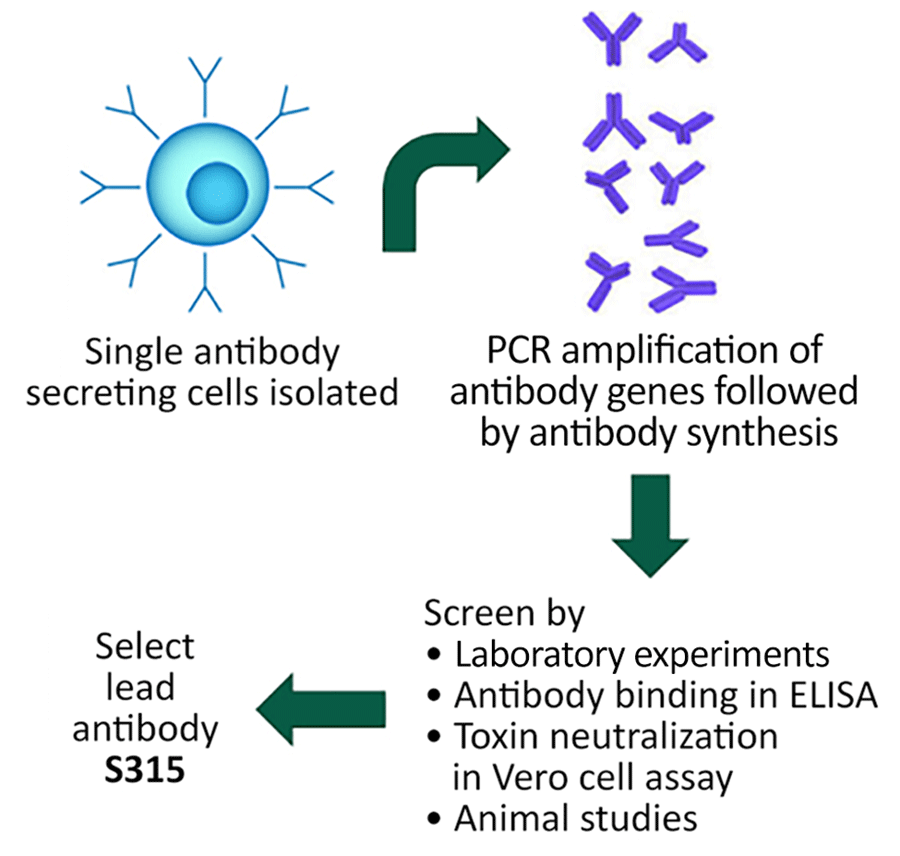
Figure. Development of S315, a human monoclonal antibody produced through the isolation of antibody-secreting cells in human volunteers boosted with a combination tetanus/diphtheria vaccine. Antibody-producing genes are amplified, synthesized, and screened through antibody binding and toxin neutralization.
1Retired.
Page created: September 26, 2025
Page updated: January 01, 2026
Page reviewed: January 01, 2026
The conclusions, findings, and opinions expressed by authors contributing to this journal do not necessarily reflect the official position of the U.S. Department of Health and Human Services, the Public Health Service, the Centers for Disease Control and Prevention, or the authors' affiliated institutions. Use of trade names is for identification only and does not imply endorsement by any of the groups named above.