Volume 32, Number 1—January 2026
About the Cover
Nocardia and the Death of Raphael (1520)
Philippe Charlier , Geneviève Héry-Arnaud, Kira Kofoed, and Jean Armengaud
, Geneviève Héry-Arnaud, Kira Kofoed, and Jean Armengaud
Figure 2
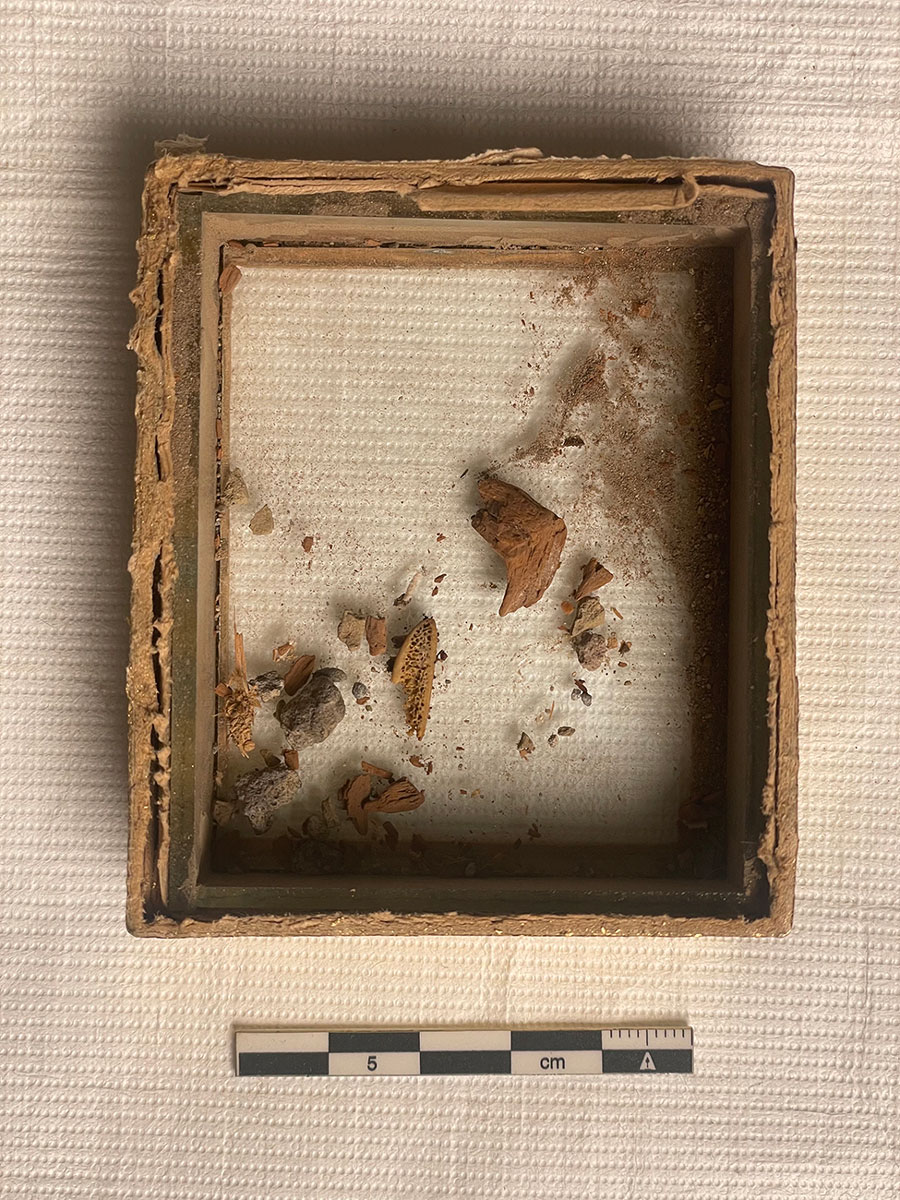
Figure 2. General view of samples from Raphael’s grave and cadaver analyzed for investigation of possible Nocardia infection. Ingres Museum, Montauban, France. Photograph by Philippe Charlier.
Page created: January 21, 2026
Page updated: January 29, 2026
Page reviewed: January 29, 2026
The conclusions, findings, and opinions expressed by authors contributing to this journal do not necessarily reflect the official position of the U.S. Department of Health and Human Services, the Public Health Service, the Centers for Disease Control and Prevention, or the authors' affiliated institutions. Use of trade names is for identification only and does not imply endorsement by any of the groups named above.