Disclaimer: Early release articles are not considered as final versions. Any changes will be reflected in the online version in the month the article is officially released.
Volume 32, Number 7—July 2026
Etymologia
Fasciolopsis buski

Suggested citation for this article
Figure 1
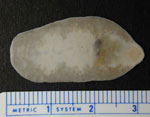
Figure 1. Adult Fasciolopsis buski fluke. Source: DPDx (https://www.cdc.gov/dpdx).
Figure 2

Figure 2. Photograph of George Busk, for whom Fasciolopsis buski is named. Source: Wellcome Library, London, UK.
The intestinal fluke Fasciolopsis buski is the largest trematode that parasitizes humans, reaching up to 75 mm in length (Figure 1). The genus Fasciolopsis was established by Arthur Looss in 1899 and the term derived from the Latin word fasciola, meaning small band, and the Ancient Greek suffix -ὄψῐς (-opsis), meaning resemblance, referring to the similarity with the members of the genus Fasciola. The species was named for the English surgeon George Busk (Figure 2), who identified the adult worm in 1852 from the duodenum of a sailor from India. The first comprehensive description of the species was provided by Edwin Lankester in 1857, and the parasite’s lifecycle was definitively clarified by Koan Nakagawa in 1921.
Fasciolopsiasis is a foodborne trematodiasis that is endemic in rural areas of South and Southeast Asia. The parasite affects both humans and pigs, and pigs act as the main zoonotic reservoir for the parasite. The cercariae, released into the water by various species of planorbid snails, encyst on underwater vegetation. Infection occurs via ingestion of metacercariae on the surface of the water or encysted on freshwater edible plants.
References
- Groove DI. A history of human helminthology. Wallingford (UK): C.A.B. International; 1990.
- Siles-Lucas M, Becerro-Recio D, Serrat J, González-Miguel J. Fascioliasis and fasciolopsiasis: current knowledge and future trends. Res Vet Sci. 2021;134:27–35. DOIPubMedGoogle Scholar
Figures
Suggested citation for this article: Calatri M. Fasciolopsis buski. Emerg Infect Dis. 2026 Jul [date cited]. https://doi.org/10.3201/eid3207.241403
Original Publication Date: June 17, 2026
Related Links
Table of Contents – Volume 32, Number 7—July 2026
| EID Search Options |
|---|
 Advanced Article Search – Search articles by author and/or keyword.
|
 Articles by Country Search – Search articles by the topic country.
|
 Article Type Search – Search articles by article type and issue.
|
Please use the form below to submit correspondence to the authors or contact them at the following address:
Michele Calatri, Faculty of Medicine and Surgery, University of Cagliari, S.S. 554 bivio per Sestu Monserrato, Cagliari 09042, Italy
Top