Volume 31, Number 12—December 2025
Dispatch
Human Infection by Zoonotic Eye Fluke Philophthalmus lacrymosus, South America
Thomas Weitzel , Esteban M. Cordero1, Trinidad Mujica1, Carolina Aravena, Brianne E. Phillips, Michael J. Yabsley, Gregory A. Lewbart, Diego Páez-Rosas, María Isabel Jercic, and Sofía Capasso
, Esteban M. Cordero1, Trinidad Mujica1, Carolina Aravena, Brianne E. Phillips, Michael J. Yabsley, Gregory A. Lewbart, Diego Páez-Rosas, María Isabel Jercic, and Sofía Capasso
Figure 1
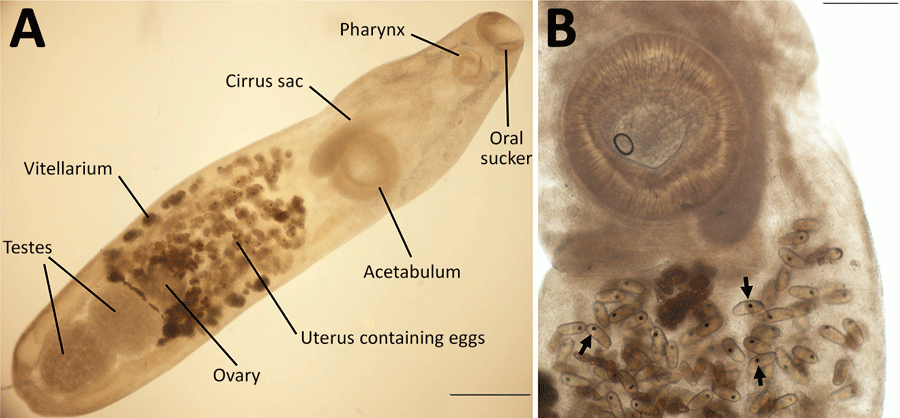
Figure 1. Specimen of Philophthalmus lacrymosus fluke extracted from conjunctiva of a female traveler from England in Chile. A) Full view of the unstained specimen showing oral sucker, pharynx, cirrus sac, acetabulum, uterus containing eggs, ovary, testes, and vitellarium. B) Intrauterine eggs showing fully formed miracidia with eyespots (arrows). Scale bars: panel A, 500 µm; panel B, 200 µm.
1These authors contributed equally to this article.
Page created: November 20, 2025
Page updated: January 12, 2026
Page reviewed: January 12, 2026
The conclusions, findings, and opinions expressed by authors contributing to this journal do not necessarily reflect the official position of the U.S. Department of Health and Human Services, the Public Health Service, the Centers for Disease Control and Prevention, or the authors' affiliated institutions. Use of trade names is for identification only and does not imply endorsement by any of the groups named above.