Volume 32, Number 10—October 2026
Dispatch
Detection of Highly Pathogenic Avian Influenza A(H5N1) Virus in Cat and Rats during Outbreak in Backyard Poultry, United States, 2025
Suzanna M. Storms, Jade Rathmann, Lynette Hemker, Miranda Vieson, and Leyi Wang
Figure 2
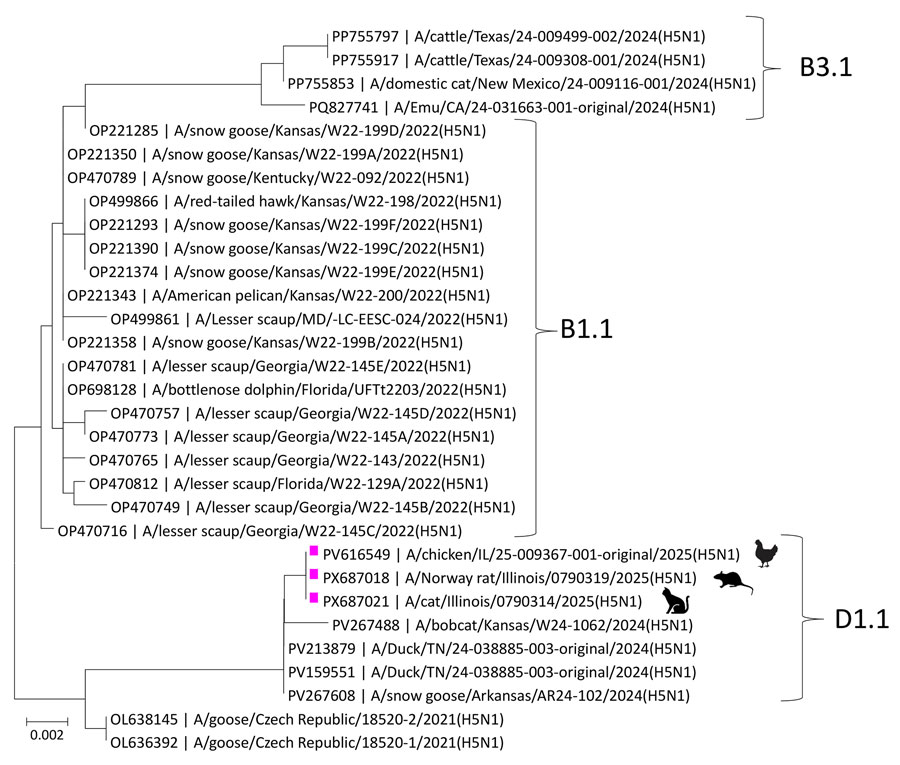
Figure 2. Phylogenetic tree of hemagglutinin gene sequences from highly pathogenic avian influenza A(H5N1) virus in cat and rats during outbreak in backyard poultry, United States, 2025. The cat, rat, and chicken from this study (pink squares) are closely related to other avian strains, as well as an isolate from a bobcat (GenBank accession no. PV267488). GenBank accession numbers are provided. Scale bar indicates nucleotide substitutions per site.
Page created: August 20, 2026
Page updated: September 28, 2026
Page reviewed: September 28, 2026
The conclusions, findings, and opinions expressed by authors contributing to this journal do not necessarily reflect the official position of the U.S. Department of Health and Human Services, the Public Health Service, the Centers for Disease Control and Prevention, or the authors' affiliated institutions. Use of trade names is for identification only and does not imply endorsement by any of the groups named above.