Disclaimer: Early release articles are not considered as final versions. Any changes will be reflected in the online version in the month the article is officially released.
Volume 32, Number 11—November 2026
Perspective
The Impermanence of Public Health Gains—Lessons Learned from Measles Resurgence, Bangladesh, 2026
 , Tanzir Ahmed Shuvo, M. Zakiul Hassan, Mohammad Abdul Aleem, Gazi M. Salahuddin Mamun, A.F.M. Zakaria, Mahmudur Rahman, and Fahmida Chowdhury
Suggested citation for this article
Abstract
The global resurgence of measles is a major public health concern. After the success of its Expanded Programme on Immunization, Bangladesh experienced a measles resurgence in 2026. The country faced major setbacks after measles vaccination coverage declined because of political instability, discontent among field-level staff, change in procurement policy, COVID-19–related service disruptions, and delayed supplementary immunization campaigns. During March 15–September 13, 2026, Bangladesh reported 170,638 suspected and 20,006 confirmed measles cases, including 919 deaths among suspected and 100 deaths among laboratory-confirmed cases. The outbreak disproportionately affected unvaccinated and underimmunized children. Political turmoil during 2024–2025 disrupted vaccine procurement, delayed mass vaccination campaigns, weakened the health workforce, and compromised financial and logistic continuity. Simultaneously, disruptions in vitamin A supplementation and worsening child malnutrition amplified disease severity. To prevent future resurgence, immunization programs must be depoliticized, supported by buffer vaccine stocks, strengthened through microlevel surveillance, and integrated with nutrition and primary healthcare services.
Measles is an extremely contagious viral disease; each primary case generates an average of 12–18 secondary infections (1). Although global measles cases declined by 71% from 2000 to 2024, the World Health Organization (WHO) reported 395,521 cases in 2024 and 254,384 in 2025; by the end of April 2026, global case counts had reached 86,503 (1,2). Like other countries, Bangladesh’s measles outbreak during early 2026 served as a clear reminder that public health achievements are never permanent; they are dynamic states of equilibrium that require constant maintenance, political or structural stability, and resource security.
Bangladesh was praised as a global exemplar of the Expanded Programme on Immunization (EPI) for decades; its successful vaccination coverage increased from 2% in the late 1970s to near-universal levels by the 2010s (3,4). Measles-containing vaccine (MCV) 1 coverage increased from 74% in 2000 to 94% in 2016, and MCV2, a routine second MCV dose introduced in 2012, reached 93% in 2016 (5). Bangladesh achieved its regional rubella control goal in 2018 and subsequently targeted measles and rubella elimination by 2020 (6). However, the COVID-19 pandemic and the early 2026 measles outbreak have challenged that narrative, revealing underlying weaknesses in Bangladesh’s health system. The 2026 measles outbreak was not merely a biological phenomenon driven by a highly contagious virus, it was a systems-sensitive emergency that exposed the intersection of vaccination disruption resulting from political upheaval (Appendix Table), nutritional neglect, disruption of regular vaccine procurement, perceived adverse effects of COVID-19 vaccination, widespread misconceptions, and the long-term disruption of routine immunization services in the aftermath of the COVID-19 pandemic (7–9).
Previous publications have documented the early measles resurgence, immunization gaps, vaccination disruptions, and health-system pressures in Bangladesh (7,10–12). Building on the evidence in those publications, this perspective provides an integrated analysis of the epidemiologic, demographic, nutritional, socioeconomic, political, and health-system factors that might have contributed to the magnitude and severity of the outbreak, while drawing lessons for strengthening measles prevention, preparedness, and response in Bangladesh and similar settings.
The measles outbreak came to the attention of the government and other health agencies on March 15, 2026, and by September 13, 2026, Bangladesh reported 170,638 suspected and 20,006 confirmed cases and reported 919 deaths among suspected and 100 deaths among laboratory-confirmed cases (13). Case-fatality rates were 0.54% among suspected and 0.50% among confirmed cases (13). Case definitions were described previously (14).
Genomic analysis of 55 measles virus whole-genome sequences showed that all virus samples belonged to the B3 subclade (15). Phylogenetically, the Bangladesh viruses were closely related to B3 viruses reported from other countries (including Bangladesh), supporting circulation of a globally recognized lineage rather than emergence of a distinct vaccine-escape strain (16,17). Four amino acid changes were identified within antigenic regions of the haemagglutinin protein; however, several of those changes were previously reported in measles viruses from other settings (15). Those amino acid changes alone do not establish reduced vaccine susceptibility, and further immunologic and functional studies are required to determine their potential effect on antibody recognition. Overall, the genomic findings provided no evidence of a novel measles lineage or genetic evolution sufficient to explain the current resurgence through vaccine escape.
The 2026 measles outbreak in Bangladesh is characterized by its clinical severity and its extensive geographic spread; all 64 districts in the country are affected (18). By May 3, 2026, the Directorate General of Health Services (DGHS) and WHO identified Bangladesh’s capital city, Dhaka, as the primary epicenter, and noted that cases were concentrated in overcrowded informal settlements (13,18). The spatial concentration of the 2026 outbreak in Dhaka’s informal settlements (slums) highlights gaps in urban health governance (19).
During this outbreak, hospitals, particularly the Infectious Diseases Hospital (IDH) in Mohakhali, Dhaka, were overwhelmed by a concentration of hypoxic, malnourished, and severely ill children, and in March 2026 the crude in-hospital mortality rate was 4.7% (20). That high mortality rate, concentrated in tertiary referral hospitals, suggests potential gaps in identifying and treating measles in secondary and primary healthcare centers. Moreover, our data only reflect hospitalized patients, and the burden among persons who did not seek healthcare at the community level remains unknown (14).
Political Upheaval and the Disruption of Routine Immunization Activity in 2024
Bangladesh’s routine immunization program provided 2 doses of measles–rubella vaccine free of charge through the EPI. The first dose is administered to infants at 9 months of age and the second at 15 months (5). Vaccination is available at all government hospitals, upazila (subdistrict) health complexes, dedicated public clinics, and participating private maternal centers. However, the political instability in Bangladesh during 2024 and 2025 (Appendix Table) disrupted routine immunization and was associated with the 2026 measles outbreak.
A student-led uprising in 2024 and the subsequent political transition from the prior administration disrupted administrative continuity and had a consequential effect on public health administrative and leadership during the interim caretaker government’s transitional rule (3,4,10). That period of institutional reorganization unintentionally disrupted routine decision-making channels and interrupted operational continuity within the Ministry of Health and Family Welfare (MoHFW). Consequently, systematic EPI oversight was disrupted, delaying scheduled nationwide vaccination campaigns. Before administrative stability was fully restored, the cumulative oversight gaps allowed the cohort of immunologically naive children to expand, ultimately transforming a localized coverage deficit into a widespread nationwide outbreak.
For years, Bangladesh procured vaccines through UNICEF (https://www.unicef.org) with major support from Gavi (https://www.gavi.org) and government cofinancing. After the 2024 political transition, the interim government shifted to an open tender system in 2025, causing procurement delays, nationwide vaccine shortages, disruption in routine immunization, and cancellation of the measles vaccine campaign (21). That shift in measles vaccine procurement from UNICEF to open tender system contributed to nationwide vaccine stockouts. Those stockouts, in turn, extended the population immunity gap by expanding the cohort of immunologically naive children 6–9 months of age, thereby fueling the rapid resurgence of measles (21).
Nevertheless, the newly appointed Health Minister, Sardar Mohammed Sakhawat Husain, reportedly told in the Jatiya Sangsad (Bangladesh’s national parliament) that the political turmoil over the previous 2 years had disrupted vaccine procurement and caused failures in routine national vaccination campaigns (4). Thus, the 2026 outbreak might not have been a failure of medical technology but rather a failure of the health system function, amplified by prolonged disruptions in immunization services and program oversight.
Accumulation of Unvaccinated Children and Disrupted Follow-up Immunization Campaigns
One of the primary drivers of the 2026 outbreak was the accumulation of susceptible children. The follow-up measles and rubella vaccination campaign, a door-to-door campaign generally conducted every 4 years as a catch-up strategy, is intended to reach children missed by fixed-site services, particularly those in hard-to-reach, mobile, poor, and urban-slum populations (10). The last follow-up campaign took place in 2020; the next was scheduled for 2024 (3,11). However, the political instability in 2024, combined with widespread health worker strikes and funding uncertainties, led to the indefinite postponement of that critical immunization safety net (3,10,11,22). That administrative failure resulted in a substantial cohort of zero-dose (i.e., unvaccinated) children, creating a critical immunity gap within the pediatric population (10). UNICEF assessments during the outbreak found that 72% of cases were among zero-dose children, and another 16% were among partially vaccinated children (11). Another report showed that by 2025, Bangladesh had ≈5 million children who were not fully immunized, including 70,000 who had received no doses and >400,000 who were underimmunized (20). That demographic vulnerability resulted directly from disruptions in routine immunization and the failure to implement catch-up mechanisms that could identify and reach unimmunized children.
In addition, neither national nor international organizations highlighted that critical immunization gap on any platform or in the media, and no red flag was raised by the EPI before 2026. That institutional silence stemmed from a combination of data-tracking failures and bureaucratic distractions after the 2024 political transition. Specifically, routine EPI surveillance relied on underestimated population denominators, which obscured the true magnitude of the decline in vaccination coverage (23).
Furthermore, the surveillance system lacked automated risk-linked thresholds to trigger early warnings. The transition from UNICEF prefinancing to an open tender procurement system diverted leadership attention toward logistic restructuring rather than epidemiologic risk assessment. Consequently, international agencies favored private diplomatic dialogue over public reporting. Those organizations might have exercised diplomatic caution and avoided public platform alerts to maintain working relationships with the sensitive postrevolutionary interim administration, inadvertently keeping the gap out of public and media view and leaving the widening immunologic vulnerability unaddressed until the 2026 outbreak.
Longitudinal Erosion of Vaccine Coverage during 2014–2024
The 2026 crisis was associated with a documented, multiyear decline in vaccination coverage that exacerbated the outbreak. Although crude national figures often remained above the 90% vaccine threshold, a closer analysis of valid coverage vaccines administered at the correct age and interval revealed a more precarious immunologic reality (24). National coverage metrics use aggregate data that frequently mask localized pockets of underimmunization, an epidemiologic vulnerability known as the fallacy of the average (25). When unvaccinated populations cluster geographically, such as in densely populated urban slums or remote rural subdistricts in hard-to-reach areas, effective local herd immunity falls far below the critical threshold required to prevent transmission (25). In Bangladesh, that structural error was compounded by denominator errors that omitted millions of children from official targets, allowing highly vulnerable, localized cohorts to expand unnoticed until they achieved the critical mass necessary to fuel an explosive nationwide resurgence of measles (23). Moreover, WHO immunization data suggest that the overall vaccination coverage decreased during and after the COVID-19 pandemic (26). Vaccination coverage further declined in 2025, whereas concurrent adverse conditions contributed to progression toward the outbreak (unpub. data).
Figure
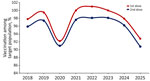
Figure. National measles-containing vaccination coverage trend among the eligible target population in study of lessons learned from measles resurgence, Bangladesh, 2026. Graph shows administrative vaccination data for children >9...
Administrative data indicated a sharp decline in MCV coverage in 2020 (Figure). MCV1 coverage fell from 98% to 92% by 2025, while MCV2 coverage decreased from 96% to 91% in the same period (unpub. data). The 2023 Coverage Evaluation Survey reported full vaccination coverage of 86.1% nationally and that urban areas lagged behind rural regions (83.8% vs. 88.8%) (24). Although that difference was modest, aggregate estimates might mask pockets of lower coverage in densely populated urban slum areas. For example, the 2019 EPI Evaluation Survey reported only 75% valid vaccination coverage by 12 months of age among children in Dhaka slum areas, whereas overall Dhaka district coverage was 86.8%, illustrating how aggregate estimates can mask substantially lower coverage in specific urban populations (25,27). Such pockets of underimmunized populations enable rapid spread of measles in densely populated urban settings. In several countries, including Bangladesh, measles vaccination coverage decreased during and after the COVID-19 pandemic (26).
Healthcare System Preparedness and Clinical Case Management
By March 2026, Bangladesh’s health system was under severe pressure, and by August 15, 2026, a total of 123,494 suspected measles patients were admitted to hospitals (13). The Infectious Diseases Hospital in Dhaka, originally a 100-bed facility, experienced severe overcrowding and limited intensive care capacity (28). The DGHS and WHO identified Dhaka as the primary outbreak epicenter, where a total of 62,286 suspected and 10,505 confirmed cases and 62 deaths had occurred by August 15, 2026; cases were mainly concentrated in overcrowded informal settlements (13,18). Moreover, another study showed that hospital bed occupancy generally exceeded 164%–175% in 2025, further limiting Bangladesh’s ability to manage seasonal surges (29).
UNICEF and partners’ assessments identified several critical facility-level failures, including staffing shortages, nosocomial transmission, and logistical supply gaps (11,28). The government’s response, which included launching an emergency vaccination campaign for 1.2 million children in 18 high-burden districts on April 5, 2026, was a necessary tactical measure that highlighted the reactive nature of the health system (11,18). The outbreak also exposed critical systemic failures extending far beyond simple vaccination gaps, particularly in isolation capacity, infection prevention and control, and clinical case management. Despite DGHS and WHO directives for 4-day case isolation and extended precautions for immunocompromised patients, hospital overcrowding and weak referral systems drove nosocomial amplification and sustained transmission (11,19).
Furthermore, political instability in 2024 led to the reassignment of key personnel and persistent vacancies in senior EPI leadership positions (30), weakening program planning and implementation. Repeated healthcare worker strikes further disrupted routine immunization services (31).
Legacy of COVID-19–Era Global and Regional Immunization Disruption
The 2026 outbreak in Bangladesh is an extreme manifestation of the global resurgence of measles and the backsliding of immunization progress due to the COVID-19 pandemic (8,9). Moreover, 81% of cases were in children <5 years of age, highlighting the potential consequences of immunization disruptions during the COVID-19 pandemic (13). Worldwide data showed reduced measles vaccination during the pandemic (8,26). Pandemic-related disruptions to local immunization programs and rising vaccine hesitancy after the pandemic exacerbated this outbreak in Bangladesh (32). Similar results were reported in studies conducted in India and Pakistan (8,33,34). The measles outbreak in Bangladesh is a reminder that vaccine gaps do not simply disappear when a pandemic ends; rather, those gaps could accumulate.
The high rates of illness and death during the 2026 measles outbreak likely resulted from interacting epidemiologic, nutritional, socioeconomic, and health system vulnerabilities. Collectively, those vulnerabilities created a reinforcing pathway from high transmission and susceptibility to delayed care, severe complications, and excess mortality. We describe the vulnerabilities further in the following sections.
Disruption in Vitamin A Supplementation
The severity of the 2026 measles cases was exacerbated by a parallel decline in nutritional interventions in Bangladesh. In 2025, disruptions to the national Vitamin A Plus campaign meant that only 1 of the 2 scheduled annual dosing rounds were completed (11). Vitamin A is critical for reducing measles-related death; without it, children are more likely to experience severe complications (33,35). Hospitals also reported that the children admitted during the outbreak were malnourished and had weight-for-height percentages far below standard (33). According to 1 study, malnutrition acts as a powerful epidemiologic multiplier that accelerates measles transmission and severity (36). The MoHFW decision in April 2026 to prioritize available vitamin A stocks specifically for children with measles was a necessary but late-stage response to a problem that should have been addressed through preventive supplementation in 2025 (11).
Demographic Vulnerability and Transmission Shift
A deeply concerning trend observed during this outbreak was the high percentage of infections among infants <9 months of age (19). Historically, maternal antibodies protected infants against measles, but only through the first 6 months after birth, leaving many infants 6–9 months of age vulnerable to measles infection before they receive the first vaccine dose (37). As population immunity levels dropped below the 95% threshold required for herd protection, those unprotected cohorts became the primary victims of intense community transmission (7,35). In some hospitals, such as Rajshahi Medical College, up to 57% of confirmed cases involved infants <9 months of age (38). That pattern suggests that reduced vaccination coverage weakened the protective effect of population immunity, increasing infants’ exposure to measles virus. Moreover, hyperdense informal urban settlements formed localized micropockets of underimmunization, driven by high population mobility and a systemic deficit in routine surveillance tracking.
In Dhaka, cases clustered heavily in informal settlements such as Demra, Kamrangirchar, and Korail slums (19). Those areas are characterized by high population density, limited visibility to health services, and environmental stressors (7,19,20,33). Dhaka division also reported the highest cumulative burden, with >62,286 suspected cases, highlighting how static immunization delivery models can fail to maintain herd immunity among transient populations during an outbreak and how current urban health infrastructure might be insufficient to meet the public health needs of a rapidly urbanizing population during a crisis (13,18,19). To resolve that operational mismatch, static healthcare delivery should be complemented by an agile, mobile vaccination framework. Flexible, microtargeted teams operating during nonstandard hours at transit hubs and markets could reach highly transient populations more effectively.
Suboptimal Economic Condition
The 2026 measles surge imposed substantial economic hardship, and affected families spent an average of BDT 16,000 (Bangladeshi taka) on treatment and related costs, alongside income losses from prolonged caregiving (39). Among affected households, 89% borrowed money and 61% used savings, highlighting the outbreak’s potential to cause economic loss and vulnerability (39). Those costs highlight the risk for catastrophic and impoverishing healthcare expenditure (39). The economic burden of measles also could worsen health outcomes by delaying care-seeking and limiting access to essential treatment, nutrition, and supportive care.
The 2026 measles outbreak in Bangladesh is a tragic case-study in the failure of acceptable national averages. To prevent a recurrence, the following lessons could be integrated into future public health strategies.
Tracking National Aggregate Coverage
Routine monitoring of national and subnational (district-level, urban, rural slum, and hard-to-reach areas) vaccination coverage is essential for identifying immunity gaps before they translate into outbreaks. Coverage data should be reviewed regularly according to age, geographic area, and relevant population characteristics to identify underimmunized populations. Timely identification of declining coverage would enable health authorities to target catch-up vaccination programs.
Reducing Vaccine Misconceptions
Vaccine misconceptions could be reduced by disseminating accurate information through trustworthy media; professionals, such as physicians, vaccinologists, and teachers; and mass awareness campaigns (29,32). Moreover, a legal framework could help curb antivaccine activities and misinformation.
Depoliticizing Public Health Logistics
The delay of the 2024 mass follow-up vaccination campaign because of political unrest was the single most avoidable cause of the 2026 surge in deaths (3,4). To address that delay, immunization programs must be treated as essential state functions with autonomous funding and procurement mechanisms protected from political transitions. Creating a national vaccine stock would provide a cushion during national crises (7,11).
Integrating Syndemic Management
A syndemic approach requires addressing measles alongside the interacting health, social, and political conditions that amplify its impact (40). The 2026 crisis reflected a synergy between viral transmission and malnutrition, including vitamin A deficiency (11). Therefore, outbreak control should integrate vaccination with nutritional support, early identification and management of complications, and strengthened routine child health services. Follow-up vaccination should be incorporated into routine immunization activities rather than as an episodic emergency response (7,20).
Developing Urban-Specific Immunization Strategies
Urban informal settlements can contain localized clusters of underimmunized children because of population mobility, overcrowding, socioeconomic disadvantage, and limited access to routine health services (41). We describe that pattern as the slum cluster phenomenon, referring to the concentration of susceptible or incompletely vaccinated children within densely populated informal settlements, which can enable sustained measles transmission after virus introduction (41,42). Immunization strategies in those settings should complement routine facility-based services through targeted outreach, mobile vaccination, and follow-up of children who have missed recommended doses (41). Urban areas like Dhaka require specialized mobile vaccination teams that operate according to the schedules and movement patterns of informal settlement residents, rather than administrative convenience (7,41).
Linking Surveillance to Rapid Public Health Response
The 2026 outbreak was underway by December 2025, yet the emergency measles vaccination campaign was not launched until April 2026 (3,11,18), highlighting the need to link early warning with timely public health action. Routine surveillance of measles cases, hospital admissions, vaccination coverage, and other relevant indicators should be linked to predefined thresholds that trigger rapid epidemiologic assessment and, when warranted, activation of response teams and targeted vaccination activities (19,20). Other countries with similar healthcare settings also could adopt such initiatives.
The 2026 measles resurgence in Bangladesh was not adequately explained by a single national coverage trend or by COVID-19 disruption alone. The outbreak was largely driven by accumulated immunity gaps resulting from disruptions in routine immunization, declining vaccination coverage, vaccine supply constraints, lack of health system preparedness, and missed supplementary immunization opportunities. Those vulnerabilities enabled sustained transmission, particularly among young and undervaccinated children, and were further amplified by population mobility and weaknesses in timely surveillance and response. Preventing future outbreaks requires sustained and equitable coverage of at least 95% with both measles-containing vaccine doses, reliable vaccine supply, and systematic identification and follow-up of missed-dose and zero-dose children. Maintaining adequate vaccine stocks, strengthening hospital infection prevention and clinical preparedness, and addressing vaccine misinformation should be integral to a resilient measles elimination program.
In summary, the 2026 measles outbreak in Bangladesh demonstrates that strong historical performance does not ensure future protection; maintaining it requires constant vigilance, adaptive governance, and equitable healthcare delivery. The ≈803 lives lost in 2026 must serve as the impetus for a fundamental shift in how immunization is governed, funded, and delivered in an increasingly politically unstable world.
Mr. Bhuiya is a public health researcher in the Infectious Diseases Division at icddr,b, Dhaka, Bangladesh. His research interests focus on infectious disease surveillance, particularly respiratory viruses, antimicrobial resistance, and emerging infections.
Athor contributions: S.B. conceptualized the analysis and developed the original draft. S.B., T.A.S., M.Z.H., G.S.M., M.A.A., A.F.M.Z., M.R., and F.C. critically reviewed, revised, and approved the final draft.
Acknowledgments
We would like to thank Homayra Rahman Shoshi for her valuable contribution to the linguistic editing of this manuscript.
icddr,b is grateful to the governments of Bangladesh and Canada for providing core/unrestricted support. S.B., T.A.S., M.Z.H., G.S.M., M.A.A., and F.C. are supported by icddr,b; A.F.M.Z. is supported by Department of Anthropology, Shahjalal University of Science and Technology, Sylhet, Bangladesh; and M.R. is supported by The Eastern Mediterranean Public Health Network (EMPHNET), Dhaka, Bangladesh.
During the preparation of this work, we used Grammarly AI (https://www.grammarly.com) to assist with grammar checking and language refinement. After using that tool, we thoroughly reviewed and edited the content, as needed, and take full responsibility for the final content of the publication.
References
- Sumon S. Bangladesh faces deadly measles outbreak after delayed vaccination drive. Arab News. 2026 Apr 13 [cited 2026 May 10]. https://www.arabnews.com/node/2639761/world
- Ellis-Peterson H. Bangladesh launches measles vaccination drive as child death toll passes 100. The Guardian. 2026 Apr 7 [cited 2026 May 10]. https://www.theguardian.com/world/2026/apr/07/bangladesh-measles-vaccination-drive-child-death-toll
- Khanal S, Bohara R, Chacko S, Sharifuzzaman M, Shamsuzzaman M, Goodson JL, et al. Progress toward measles elimination—Bangladesh, 2000–2016. MMWR Morb Mortal Wkly Rep. 2017;66:753–7. DOIPubMedGoogle Scholar
- World Health Organization. Achieving measles and rubella elimination [cited 2026 May 11]. https://www.who.int/bangladesh/activities/achieving-measles-and-rubella-elimination
- Lateef S. Measles: 38 children dead in Bangladesh outbreak. BMJ. 2026;393:s654. DOIPubMedGoogle Scholar
- Basu S, Ashok G, Debroy R, Ramaiah S, Livingstone P, Anbarasu A. Impact of the COVID-19 pandemic on routine vaccine landscape: a global perspective. Hum Vaccin Immunother. 2023;19:
2199656 . DOIPubMedGoogle Scholar - Hossen MT, Alam MSB, Islam MS, Montomoli E, Clemens R, Costa Clemens SA, et al. Impact of the COVID-19 pandemic on the routine immunization system in Bangladesh. PLoS One. 2025;20:
e0334503 . DOIPubMedGoogle Scholar - Raqib R, Rahman M. Measles is resurging in Bangladesh—but this outbreak was entirely preventable. BMJ. 2026;393:s819. DOIPubMedGoogle Scholar
- United Nations Children’s Fund Bangladesh. Measles outbreak situation report no 1. 2026 Apr 8. [cited 2026 May 11]. https://www.unicef.org/media/179846/file/Bangladesh-Humanitarian-Situation-Report-No.1(Measles-Outbreak)-8-April-2026.pdf
- Hassan MZ, Islam MA, Mahmood AS, Shoshi HR, Bari MTIA, Rahman M, et al. Measles resurgence in Bangladesh: a preventable crisis in a transitioning immunisation system. Lancet Reg Health Southeast Asia. 2026;•••: Epub ahead of print. DOIGoogle Scholar
- Directorate General of Health Services. Measles press release [in Bengali]. 2026 Sep 13 [cited 2026 Sep 14]. https://dghs.gov.bd/pages/press-releases
- Rabbi MF, Muztahid P, Mahdi FA. Nationwide surveillance and control measures during large measles outbreak, Bangladesh, 2026. Emerg Infect Dis. 2026;•••: Epub ahead of print. DOIGoogle Scholar
- icddr,b. No proof of genetic changes in measles viruses in Bangladesh capable of reducing vaccine protection. 2026 Aug 1 [cited 2026 Sep 1]. https://www.icddrb.org/press-releases/no-proof-of-genetic-changes-in-measles-viruses-in-bangladesh-capable-of-reducing-vaccine-protection-02-08-2026
- Bucris E, Zuckerman NS, Levin T, Kanaaneh Y, Erster O, Indenbaum V, et al.; National Measles Working Group. National Measles Working Group. Genomic and epidemiologic insights into ongoing measles outbreak, Israel, 2025–2026. Emerg Infect Dis. 2026;32:1678–82. DOIPubMedGoogle Scholar
- Choudhury SD, Khan MA, Amin E, Abedin J, Munro S, Kaczmarek M, et al. Molecular detection and genetic diversity of measles and parainfluenza viruses circulating in humans in Bangladesh: a cross-sectional study. Health Sci Rep. 2026;9:
e71832 . DOIPubMedGoogle Scholar - World Health Organization. Nationwide response mobilized to contain measles outbreak in Bangladesh. 2026 Apr 15 [cited 2026 May 10]. https://www.who.int/southeastasia/news/detail/15-04-2026-response-measlesBN
- World Health Organization. Disease outbreak news: measles—Bangladesh [cited 2026 Jun 5]. https://www.who.int/emergencies/disease-outbreak-news/item/2026-DON598
- Jamil S, Asif U, Mohammadnezhad M. Unusual measles mortality in Bangladesh signals an immunisation emergency. Lancet. 2026;407:1596–7. DOIPubMedGoogle Scholar
- Rahman A. Measles explodes in Bangladesh after vaccination breakdown, killing hundreds of children. Science. 2026 Apr 30 [cited 2026 May 22]. https://www.science.org/content/article/measles-explodes-bangladesh-after-vaccination-breakdown-killing-hundreds-children
- Al Jazeera. Suspected measles outbreak kills nearly 100 children in Bangladesh. 2026 Apr 6 [cited 2026 May 25]. https://www.aljazeera.com/news/2026/4/5/suspected-measles-outbreak-kills-nearly-100-children-in-bangladesh
- Moral S. Measles outbreak: millions of children left out of vaccination target. Prothom Alo. 2026 Jul 12. [cited 2026 Jul 15]. https://en.prothomalo.com/bangladesh/wphrk3dqc8
- Expanded Programme on Immunization. Routine EPI coverage evaluation survey 2023 [cited 2026 Jun 5]. https://www.sdg.gov.bd/uploads/indicator-data/EPI%20CES%202023%20-%20First%2028%20pages.pdf
- Mhatre SL, Schryer-Roy AM. The fallacy of coverage: uncovering disparities to improve immunization rates through evidence. Results from the Canadian International Immunization Initiative Phase 2—operational research grants. BMC Int Health Hum Rights. 2009;9:S1. DOIPubMedGoogle Scholar
- World Health Organization. Measles vaccination coverage [cited 2026 Jun 15]. https://immunizationdata.who.int/global/wiise-detail-page/measles-vaccination-coverage
- Expanded Programme on Immunization. Coverage evaluation survey 2019 EPI Bangladesh [cited 2026 Jun 17]. https://objectstorage.ap-dcc-gazipur-1.oraclecloud15.com/n/axvjbnqprylg/b/V2Ministry/o/office-dghs/2024/12/05944887099b432e8ad22cfed808ef74.pdf
- BEACON. Request for information (RFI): measles outbreak reported to overwhelm hospitals amid vaccine shortage in Dhaka and other areas of Bangladesh. RFI on case numbers, diagnostic information, clinical data, and other relevant details; 2026 Mar 29 [cited 2026 May 15]. https://beaconbio.org/en/report/?reportid=a2f7e51f-5d4c-4441-9902-44ddb77fa6bc&eventid=e1186ca5-57eb-4db1-8676-26480828e29c
- Bhuiya S, Chowdhury F, Islam MA, Shuvo TA, Aleem MA, Basher AK, et al. A strategic blueprint for strengthening respiratory syncytial virus prevention among under-five children in low- and middle-income countries: Bangladesh as a model for new immunisation approaches. J Glob Health. 2026;16:03013. DOIPubMedGoogle Scholar
- Lotus AS. bdnews24.com. Measles surges amid ‘patchwork’ response as experts’ advice ignored, coordination falters. 2026 May 4 [cited 2026 Sep 23]. https://bdnews24.com/health/e80adc990d4a
- Adhikary TS. Healthcare workers’ demo disrupts vaccination, medical services. The Daily Star. 2025 Dec 2 [cited 2026 May 22]. https://www.thedailystar.net/news/bangladesh/news/healthcare-workers-demo-disrupts-vaccination-medical-services-4049291
- Larson HJ, Gakidou E, Murray CJL. The vaccine-hesitant moment. N Engl J Med. 2022;387:58–65. DOIPubMedGoogle Scholar
- Koster FT, Curlin GC, Aziz KM, Haque A. Synergistic impact of measles and diarrhoea on nutrition and mortality in Bangladesh. Bull World Health Organ. 1981;59:901–8.PubMedGoogle Scholar
- Summan A, Nandi A, Shet A, Laxminarayan R. The effect of the COVID-19 pandemic on routine childhood immunization coverage and timeliness in India: retrospective analysis of the National Family Health Survey of 2019–2021 data. Lancet Reg Health Southeast Asia. 2023;8:
100099 . DOIPubMedGoogle Scholar - Jashim SU. Vaccine gaps and malnutrition fuel child deaths in measles outbreak. Jago News 24. 2026 Mar 30 [cited 2026 Jun 12]. https://www.jagonews24.com/en/national/news/91285
- Amodan BO, Ssendikwanawa E, Namayanja J, Opio BR, Biroma G, Morukileng J, et al. Epidemiological investigation of measles outbreak in a refugee settlement in Lamwo District, Uganda. Pan Afr Med J. 2025;51:13. DOIPubMedGoogle Scholar
- Tiley KS, Ten Hulscher-van Overbeek H, Basnet S, van Binnendijk R, Clarke E, Cose S, et al. The waning of maternal measles antibodies: a multi-country maternal-infant seroprevalence study. J Infect. 2025;91:
106531 . DOIPubMedGoogle Scholar - BEACON. Follow-up on measles outbreak in Bangladesh: 674 cases and 38 child deaths reported, with 70% in infants below vaccination age. 2026 Apr 1 [cited 2026 May 15]. https://beaconbio.org/en/report/?reportid=41a6f8f7-917e-4f50-aeed-bc98a52149bf&eventid=e1186ca5-57eb-4db1-8676-26480828e29c
- United Nations Office for the Coordination of Humanitarian Affairs Reliefweb. Nearly 9 in 10 families borrow to meet measles treatment costs: BDRCS-IFRC assessment finds. 2026 Aug 6 [cited 2026 Aug 15]. https://reliefweb.int/report/bangladesh/nearly-9-10-families-borrow-meet-measles-treatment-costs-bdrcs-ifrc-assessment-finds
- Singer M, Clair S. Syndemics and public health: reconceptualizing disease in bio-social context. Med Anthropol Q. 2003;17:423–41. DOIPubMedGoogle Scholar
- Crocker-Buque T, Mindra G, Duncan R, Mounier-Jack S. Immunization, urbanization and slums—a systematic review of factors and interventions. BMC Public Health. 2017;17:556. DOIPubMedGoogle Scholar
- Horng L, Kakoly NS, Abedin J, Luby SP. Effect of household relocation on child vaccination and health service utilisation in Dhaka, Bangladesh: a cross-sectional community survey. BMJ Open. 2019;9:
e026176 . DOIPubMedGoogle Scholar
Figures
Suggested citation for this article: Bhuiya S, Shuvo TA, Hassan MZ, Aleem MA, Mamun GMS, Zakaria AFM, et al. Public health gains are never permanent—lessons learned from measles resurgence, Bangladesh, 2026. Emerg Infect Dis. 2026 Nov [date cited]. https://doi.org/10.3201/eid3211.261019
Original Publication Date: October 02, 2026
Table of Contents – Volume 32, Number 11—November 2026
| EID Search Options |
|---|
 Advanced Article Search – Search articles by author and/or keyword.
|
 Articles by Country Search – Search articles by the topic country.
|
 Article Type Search – Search articles by article type and issue.
|
Please use the form below to submit correspondence to the authors or contact them at the following address:
Saju Bhuiya, Infectious Diseases Division, icddr,b, 68 Shaheed Tajuddin Ahmed Sarani, Mohakhali, Dhaka 1212, Bangladesh
Top