Volume 32, Number 2—February 2026
Dispatch
Desulfovibrio Bacteremia in Patients with Abdominal Infections, Japan, 2020–2025

 , Tomohisa Watari, and Yoshihito Otsuka
Cite This Article
Citation for Media
Abstract
We reviewed 8 episodes of Desulfovibrio bacteremia in Japan (2020–2025) and confirmed 4 species by 16S rRNA gene and whole-genome sequencing. We detected β-lactamase genes in 2 D. desulfuricans (blaDES-1-like), 1 D. falkowii (blaMUN-1), and 2 D. fairfieldensis (blaCfiA-like). Mass spectometry failed to identify D. falkowii or D. legallii.
Desulfovibrio species bacteria are gram-negative, sulfate-reducing, obligately anaerobic curved or spiral rods that inhabit aquatic and soil environments, as well as the gastrointestinal tracts of humans and animals (1,2). Reported manifestations include bacteremia and intraabdominal infections, such as abscesses and cholecystitis (2). Several Desulfovibrio species have been implicated in human disease, including D. desulfuricans, D. fairfieldensis, D. vulgaris, and D. piger (3,4). D. desulfuricans is the most commonly reported species in Desulfovibrio bacteremia, which can result from translocation from the gastrointestinal tract (2). Species-level identification can be challenging in clinical laboratories. Routine matrix-assisted laser desorption/ionization time-of-flight (MALDI-TOF) mass spectrometry libraries might lack reference spectra for less commonly recognized species (5). As a result, routine identification may be uncertain, even at the genus level.
The optimal therapy for Desulfovibrio infections has not been determined as of January 2026. Reported isolates often show low MICs for metronidazole, whereas MICs for some β-lactams can be high; extended-spectrum β-lactamases, such as DES-1, have been described in D. desulfuricans (6,7). Species-resolved antimicrobial susceptibility data and resistance determinants remain limited beyond those for D. desulfuricans and D. fairfieldensis. We describe 8 episodes of Desulfovibrio bacteremia associated with abdominal infection in Japan and assess the limits of routine identification, confirming species by 16S rRNA gene and whole-genome sequencing. We also summarize patient characteristics, outcomes, antimicrobial MICs, and β-lactamase genes.
We retrospectively reviewed clinical and laboratory data in cases of Desulfovibrio bacteremia at Kameda Medical Center, a tertiary-care hospital in Kamogawa, Japan, during January 2020–June 2025; we included episodes in which Desulfovibrio spp. were isolated from blood cultures. We considered all positive blood culture bottles collected during the same clinical episode as 1 case. We counted a new episode only when it was clearly associated with new symptoms or signs, a new anatomic focus, or resolution of a previous episode. We assessed outcomes during hospitalization, which we defined as the period from initiation of antimicrobial therapy through hospital discharge. The ethics committee of Kameda Medical Center approved the study (approval no. 25-061) and waived the requirement for informed consent because of the retrospective study design and use of deidentified data.
We processed blood cultures with the BACTEC FX system (Becton, Dickinson and Company, https://www.bd.com) and incubated them at 35°C for <7 days in accordance with our routine protocol. We defined the time to positivity as the interval from the start of incubation to the first instrument-flagged positive bottle. We performed routine identification by MALDI-TOF mass spectrometry and a desulfoviridin assay. We performed species identification with a MALDI Biotyper using the MBT Compass Library version 13 (Bruker Daltonics GmbH, https://www.bruker.com). We considered scores >2.0 as species-level identifications and scores <2.0 as uncertain. We confirmed species by 16S rRNA gene and whole-genome sequencing (Appendix Tables 1, 2). For whole-genome sequencing, we generated paired-end reads on an Illumina MiSeq instrument (Illumina, https://www.illumina.com), assembled reads de novo, evaluated assembly quality, and assigned species by comparing average nucleotide identity with type strains and reference genomes. We identified antimicrobial drug resistance determinants from draft assemblies and determined antimicrobial drug susceptibility by microdilution in Brucella broth on dry plates (Eiken Chemical, https://www.eiken.co.jp) incubated anaerobically at 35°C–37°C for 48–96 hours. (Appendix).
We identified 8 episodes of Desulfovibrio bacteremia among 4,431 patients with positive blood cultures (0.2% [95% CI 0.1%–0.4%]). All patients were >65 years of age (median 81 years; interquartile range 77–86 years); the presumed source in 7 episodes was abdominal infection (Table 1). The primary initial symptoms were fever (4/8) and abdominal symptoms (5/8) (Appendix Table 3). Median time to positivity was 4.1 days (range 2.9–5.5 days), and 3 episodes became positive on incubation day 6 (Table 1). We assessed outcomes at discharge; 1 patient died. Case 7 was considered of uncertain clinical significance because symptoms had resolved without antimicrobial therapy by the time of culture notification and the patient declined further evaluation; he was later confirmed to be alive when he returned for care for an unrelated illness ≈1 year later.
Figure 1

Figure 1. Gram-stained smear from a positive anaerobic blood-culture bottle in a study of Desulfovibrio bacteremia at a tertiary-care hospital in Japan, 2020–2025. A) D. desulfuricans spiral form; B) ...
Figure 2
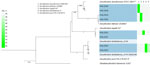
Figure 2. Phylogenetic tree of 8 Desulfovibrio isolates from study of Desulfovibriobacteremia at a tertiary-care hospital in Japan, 2020–2025. Tree is based on 16S rRNA gene sequences and...
We identified 2 isolates each of D. desulfuricans, D. fairfieldensis, D. falkowii, and D. legallii (Table 2). Gram stains from anaerobic blood culture bottles showed curved gram-negative rods (Figure 1). The desulfoviridin assay was positive for all isolates. Seven isolates passed genome quality thresholds and were assigned to species by average nucleotide identity and digital DNA–DNA hybridization (Figure 2; Appendix Tables 4–8). The remaining isolate was identified as D. legallii by 16S rRNA gene sequencing because its genome assembly did not meet completeness criteria. Previous reports emphasized D. desulfuricans and D. fairfieldensis as predominant causes of bacteremia (2), whereas our series also included D. falkowii and D. legallii. Bacteremia caused by D. falkowii or D. legallii has been reported infrequently (5,8). MALDI-TOF mass spectrometry did not identify D. falkowii or D. legallii (Table 2); that finding was consistent with a previous report of D. legallii bacteremia in which MALDI-TOF mass spectrometry failed to identify the species (5). Sequence data are available in DDBJ/GenBank under BioProject PRJDB35884 (Appendix Table 9).
Antimicrobial susceptibility testing by broth microdilution showed low MICs for ampicillin/sulbactam and metronidazole (Table 2; Appendix Table 10). Piperacillin/tazobactam MICs were 32 to >64 μg/mL for all isolates (Table 2), consistent with previous observations (6,9). We did not perform Etest susceptibility testing (bioMérieux, https://www.biomerieux.com), so could not assess agreement with broth microdilution MICs. Five isolates had ceftriaxone MICs ≥32 μg/mL and carried β-lactamase genes, including blaDES-1-like, blaMUN-1, or blaCfiA-like (Table 2), suggesting that β-lactamase activity contributes to elevated ceftriaxone MICs in some isolates. DES-1 has been described in D. desulfuricans (7). MUN-1 is an Ambler class A extended-spectrum β-lactamase (10). CfiA-family class B metallo-β-lactamases have been described in the Bacteroides fragilis group (11). D. falkowii isolate KML2505 carried blaMUN-1 with 100% identity and 100% coverage to reference isolate WP_206340447.1. D. desulfuricans isolates KML2506 and KML2508 each carried DES-family class A β-lactamases (blaDES-1-like) with 81%–82% identity and 100% coverage to the closest reference WP_063860095.1 isolate. In addition, D. fairfieldensis isolates KML2502 and KML2504 harbored subclass B1 metallo-β-lactamase homologs (blaCfiA-like) with 47% identity and 94% coverage to the closest reference, WP_005808062.1.
In this case series, Desulfovibrio bacteremia was associated with multiple species, including D. desulfuricans, D. fairfieldensis, D. falkowii, and D. legallii, suggesting broader species diversity than previously appreciated. Antimicrobial drug susceptibility testing showed low MICs for metronidazole and ampicillin/sulbactam, whereas MICs for piperacillin/tazobactam were high in all isolates. Routine MALDI-TOF mass spectrometry did not identify D. falkowii or D. legallii bacteria. Curved gram-negative rods in anaerobic blood culture bottles and a positive desulfoviridin assay may prompt suspicion for Desulfovibrio infection, which can guide empiric therapy while confirmatory identification is pending.
Dr. Watanabe is a lecturer in the Department of Bioscience and Laboratory Medicine at Hirosaki University, Hirosaki, Japan. At the time of this work, he was a clinical laboratory technologist in the Department of Clinical Laboratory at Kameda Medical Center, Kamogawa, Japan. His research interests include diagnostic microbiology, bloodstream infections, and antimicrobial resistance.
Acknowledgments
We thank Wataru Hayashi for advice on whole-genome sequencing analysis.
We used ChatGPT (model GPT-5.2) to assist with English-language editing. All authors reviewed and approved the final text and take full responsibility for its content.
This article was preprinted at https://doi.org/10.1101/2025.09.26.25336699.
References
- Postgate JR, Campbell LL. Classification of Desulfovibrio species, the nonsporulating sulfate-reducing bacteria. Bacteriol Rev. 1966;30:732–8. DOIPubMedGoogle Scholar
- Goldstein EJC, Citron DM, Peraino VA, Cross SA. Desulfovibrio desulfuricans bacteremia and review of human Desulfovibrio infections. J Clin Microbiol. 2003;41:2752–4. DOIPubMedGoogle Scholar
- Warren YA, Citron DM, Merriam CV, Goldstein EJC. Biochemical differentiation and comparison of Desulfovibrio species and other phenotypically similar genera. J Clin Microbiol. 2005;43:4041–5. DOIPubMedGoogle Scholar
- Yamaizumi K, Kyotani M, Kenzaka T. Bacteremia caused by Desulfovibrio desulfuricans with the intestinal tract as the portal of entry: two case reports and a literature review. BMC Infect Dis. 2024;24:725. DOIPubMedGoogle Scholar
- Kobayashi S, Hayashi M, Yaguchi T, Taguchi J, Oshima R, Hosokawa T, et al. The first case of bacteremia caused by Desulfovibrio legallii. J Infect Chemother. 2025;31:
102762 . DOIPubMedGoogle Scholar - Lozniewski A, Labia R, Haristoy X, Mory F. Antimicrobial susceptibilities of clinical Desulfovibrio isolates. Antimicrob Agents Chemother. 2001;45:2933–5. DOIPubMedGoogle Scholar
- Morin AS, Poirel L, Mory F, Labia R, Nordmann P. Biochemical-genetic analysis and distribution of DES-1, an Ambler class A extended-spectrum β-lactamase from Desulfovibrio desulfuricans. Antimicrob Agents Chemother. 2002;46:3215–22. DOIPubMedGoogle Scholar
- Hosoda T, Suzuki M, Matsuno T, Matsui K, Ohyama K, Doi Y. Limitations of MALDI-TOF MS in identifying anaerobic bacteremia: challenges in polymicrobial infections and the role of whole-genome sequencing. Microbiol Spectr. 2025;13:
e0101425 . DOIPubMedGoogle Scholar - Nakao K, Tanaka K, Ichiishi S, Mikamo H, Shibata T, Watanabe K. Susceptibilities of 23 Desulfovibrio isolates from humans. Antimicrob Agents Chemother. 2009;53:5308–11. DOIPubMedGoogle Scholar
- Gschwind R, Petitjean M, Fournier C, Lao J, Clermont O, Nordmann P, et al. Inter-phylum circulation of a beta-lactamase-encoding gene: a rare but observable event. Antimicrob Agents Chemother. 2024;68:
e0145923 . DOIPubMedGoogle Scholar - Walsh TR, Toleman MA, Poirel L, Nordmann P. Metallo-β-lactamases: the quiet before the storm? Clin Microbiol Rev. 2005;18:306–25. DOIPubMedGoogle Scholar
Figures
Tables
Cite This ArticleOriginal Publication Date: February 09, 2026
Table of Contents – Volume 32, Number 2—February 2026
| EID Search Options |
|---|
 Advanced Article Search – Search articles by author and/or keyword.
|
 Articles by Country Search – Search articles by the topic country.
|
 Article Type Search – Search articles by article type and issue.
|
Please use the form below to submit correspondence to the authors or contact them at the following address:
Naoki Watanabe, Kameda Medical Center, 296-0044, Higashi-cho 929, Kamogawa, Chiba, Japan
Top