Volume 32, Number 4—April 2026
Synopsis
Ecologic Investigative Strategies to Determine Human Plague Exposure Sites, United States, 1991–2018
Rebecca J. Eisen , Lynn M. Osikowicz, and Erik Foster
, Lynn M. Osikowicz, and Erik Foster
Figure 2
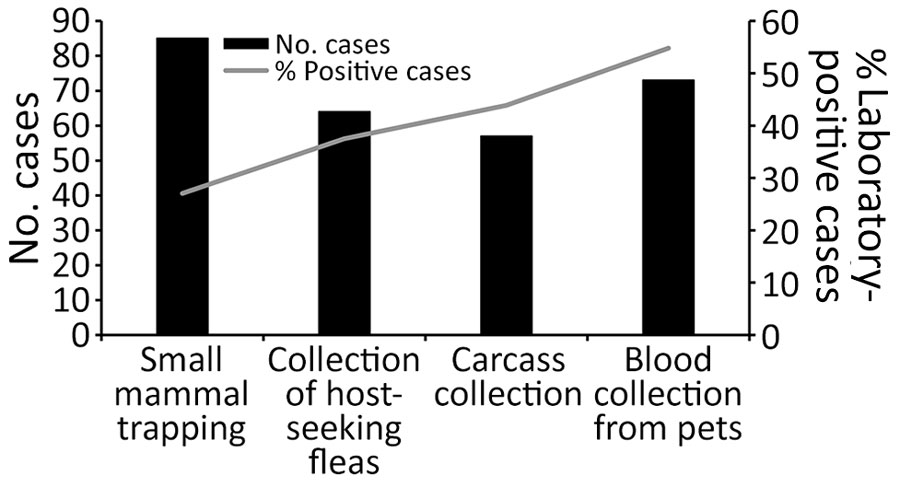
Figure 2. Numbers of plague case files (n = 140) that contained records of environmental investigations and noted using methods intended to collect laboratory testing samples, United States, 1991–2018. Methods included small mammal trapping (n = 85 cases), collection of pet serum (n = 73 cases), burrow swabbing to collect host-seeking fleas (n = 64 cases), or carcass collection (n = 57 cases). Percentages of cases where laboratory evidence of Y. pestis transmission was recorded in case files are shown for each sample acquisition method. Visual assessments were conducted for 136 cases (data not shown).
Page created: March 10, 2026
Page updated: April 15, 2026
Page reviewed: April 15, 2026
The conclusions, findings, and opinions expressed by authors contributing to this journal do not necessarily reflect the official position of the U.S. Department of Health and Human Services, the Public Health Service, the Centers for Disease Control and Prevention, or the authors' affiliated institutions. Use of trade names is for identification only and does not imply endorsement by any of the groups named above.