Volume 32, Number 7—July 2026
Research Letter
Chikungunya Outbreak, Cuba, July 2025


Cite This Article
Citation for Media
Abstract
Chikungunya transmission was confirmed in Perico, Matanzas Province, Cuba. Initial research confirmed the presence of East/Central/South African genotype related to Brazil 2025 strains in serum samples and in Aedes aegypti mosquito pools from transmission areas. Our findings underscore the need for surveillance and signal potential spread to other regions.
In 2004, the global epidemiology of chikungunya shifted, when the virus spread from Kenya to islands in the Indian Ocean. By 2013, transmission reached the French Caribbean and subsequently expanded throughout the Americas. In 2025, the Pan American Health Organization reported 631,720 suspected chikungunya cases, primarily in Brazil, Bolivia, Argentina, and Paraguay (1). Viral persistence in the Americas is driven by a combination of climatic, economic, social, demographic, and entomovirologic factors (2).
Cuba maintains a national dengue surveillance system for acute febrile illness (AFI) of unknown etiology. Serum samples are routinely tested for dengue IgM at local laboratories, and molecular testing by quantitative reverse transcription PCR (qRT-PCR) is conducted at the Arbovirus National Reference Laboratory of the Institute of Tropical Medicine Pedro Kouri (3).
On July 16, 2025, an increase in AFI cases was reported in España Republicana, Perico Municipality, Matanzas Province. Serum samples from AFI cases collected for dengue IgM detection tested negative at Perico laboratory. On July 21, the reference laboratory received 12 serum samples from patients with AFI from España Republicana and tested extracted RNA by qRT-PCR using QIAmp Viral RNA Mini Kit (QIAGEN, https://www.qiagen.com) and VIASURE multiplex test (Certest Biotec, https://www.certest.es) for dengue (DENV), Zika, chikungunya (CHIKV), Mayaro, Oropouche, and yellow fever viruses (4). Eight (66.7%) samples tested positive for CHIKV and 1 (8.3%) for DENV.
Confirmed chikungunya patients experienced high-grade fever lasting 48–72 hours and unresponsive to antipyretics, and severe disabling joint pain, predominantly in the hands, ankles, and back. Inflammation of the affected joints and a pruritic maculopapular rash were observed at various stages of the illness. Additional symptoms included oral lesions, vomiting, nausea, loss of appetite, diarrhea, and malaise. Median age was 46 (range 15–72) years. An equal number of male and female patients were affected. No severe or fatal cases were identified in that initial cluster.
To assess the extent of transmission, we collected acute serum samples from AFI patients in Perico (15 samples) and neighboring municipalities (39 samples) on July 23 (Table). All samples tested negative for dengue IgM. All Perico samples tested positive for CHIKV; 1 case had DENV co-infection. No CHIKV was detected in neighboring municipalities, although 2 samples were positive for DENV.
After confirming CHIKV transmission, national surveillance was intensified through active AFI case finding; standardized case definitions for suspected and confirmed cases were implemented (5). By epidemiologic week 52, transmission was confirmed in 15 provinces and 147 municipalities, including 49,258 suspected cases, 1,959 confirmed cases, and 46 deaths. Severe cases included neurologic complications (encephalitis, Guillain-Barré syndrome, meningoencephalitis), cardiovascular manifestations (acute myocarditis, decompensation of preexisting conditions, pulmonary thromboembolism), and perinatal or neonatal transmission.
We conducted entomologic investigations in the home of the first identified case from a town in Perico and 9 neighboring households. We collected a total of 16 Culex quinquefasciatus and 8 Aedes aegypti mosquitoes and grouped them into 3 pools: 10 engorged Cx. quinquefasciatus, 3 engorged Ae. aegypti, and 2 nonengorged Ae. aegypti. All pools tested positive for CHIKV by qRT-PCR. Cycle threshold cutoff was 40; values were 36.1 in the Cx. quinquefasciatus pool, 39.6 in the engorged Ae. aegypti pool, and 21.7 in the nonengorged Ae. aegypti pool (Appendix Table).
The detection of CHIKV in engorged mosquitoes of both species suggests the presence of the virus in the blood of residents. Detection in nonengorged Ae. aegypti mosquitoes supports active viral replication and ongoing transmission. We ruled out contamination, because all extraction and PCR negative controls were negative and mosquito samples were processed separately from human specimens.
Figure
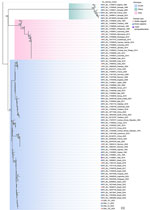
Figure. Molecular phylogenetic analysis of chikungunya virus from outbreak in Matanzas Province, Cuba, 2025. We obtained all available chikungunya virus sequences from GISAID, then filtered the sequences to ensure dataset and...
For genetic characterization, we sequenced CHIKV from 2 human serum samples and 2 mosquito pools (engorged and nonengorged Ae. aegypti) using the MinION (Oxford Nanopore Technologies, https://nanoporetech.com), achieving >80% genome coverage. Phylogenetic analysis showed that the Cuba sequences formed a monophyletic clade, sharing a most recent common ancestor with Brazil sequences from 2021 and 2025, and clustering with sequences from Uruguay, Paraguay, and Argentina from 2023 (Figure; Appendix). We classified the virus within genotype II ECSA, consistent with strains circulating in the Americas (Chikungunya Typing Tool version 3.72 (Genome Detective, https://www.genomedetective.com). We did not detect the E1-A226V mutation associated with increased infectivity in Ae. albopictus (8). We deposited sequences in GISAID (accession nos. EPI_ISL_20294022–25).
Our findings document a chikungunya outbreak in Cuba. A previous outbreak occurred in Santiago de Cuba Province in 2015 and was successfully contained; no subsequent transmission was detected (3). This outbreak underscores the importance of strengthening arbovirus surveillance systems. Early detection was achieved in a small town where the virus had not been previously reported, despite the presence of competent vectors and substantial travel exchange with other countries in the region.
In conclusion, chikungunya incidence might be increasing globally because of favorable climatic and environmental conditions, as well as the accumulation of susceptible populations. The Cuba outbreak highlights the need for integrated clinical, epidemiologic, virologic, and entomologic surveillance to explore additional mutations and clarify introduction pathways of arboviruses in the Americas.
Dr. Pérez is head of genomic surveillance of arboviruses at the virology department, Pedro Kouri Tropical Medicine Institute. Her main research interests are the diagnosis of viral diseases by molecular biology methods and the sequencing of viral genomes. Dr. Resik is head of the virology department at Pedro Kouri Tropical Medicine Institute. Her main research interests are in polio and nonpolio enteroviruses, as well as other viruses including herpes, HIV, rubella, measles, rabies, mumps, arbovirus, and respiratory viruses.
Acknowledgments
We thank Jairo Mendez, Leticia Franco, Lionel Gresh, Vagner Fonseca, Oswaldo Cruz Foundation, Belo Horizonte, Brazil University, for their useful comments, and Yosiel Molina Gómez, translator and language editor. We thank all health workers and the affected population of the province of Matanzas.
The ethics committee of the Pedro Kouri Tropical Medicine Institute reviewed and approved this project (no. 2505001). The samples processed in this study were obtained anonymously from material exceeding that used in the routine diagnosis of arboviruses.
This work was funded by the Cuban Ministry of Health. Real-time PCR reagents were provided by the Pan American Health Organization (PAHO).
Author contributions: M.G.G., S.R., and V.K. coordinated and designed the study, analyzed the results, and drafted and reviewed the manuscript. M.M.P., M.A., and R.G. conducted the laboratory work, analyzed the results, and cleaned data. M.M.P., A.J.B., S.S., M.P., and D.H. performed all real-time PCR assays. M.M.P. and R.G. performed the genetic characterization. A.C., Y.M., M.S., and M.R. conducted the field and laboratory vector studies. J.R.A., C.P., M.R., D.G., B.M.B.R., A.B.S., and L.D.R. coordinated the clinical, epidemiologic, and field studies. B.M.B.R., A.B.S., L.D.R., and L.V. collected the clinical and epidemiological data. All authors reviewed the draft and approved the final version.
References
- Pan American Health Organization. Chikungunya: analysis by country. 2025 [cited 2025 Dec 5]. https://www.paho.org/es/arbo-portal/chikunguna-datos-analisis/chikunguna-analisis-por-pais
- de Souza WM, Ribeiro GS, de Lima STS, de Jesus R, Moreira FRR, Whittaker C, et al. Chikungunya: a decade of burden in the Americas. Lancet Reg Health Am. 2024;30:
100673 . DOIPubMedGoogle Scholar - Guzmán MG, Vázquez S, Álvarez M, Pelegrino JL, Amores DR, Martínez PA, et al. Laboratory surveillance of dengue and other arboviruses in Cuba, 1970–2017 [in Spanish]. Rev Cubana Med Trop. 2019;71:1–31.
- Naveca FG, Nascimento VAD, Souza VC, Nunes BTD, Rodrigues DSG, Vasconcelos PFDC. Multiplexed reverse transcription real-time polymerase chain reaction for simultaneous detection of Mayaro, Oropouche, and Oropouche-like viruses. Mem Inst Oswaldo Cruz. 2017;112:510–3. DOIPubMedGoogle Scholar
- General Directorate of Public Health of Havana. MINSAP. Cuban chikungunya protocol. 2025 [cited 2026 Mar 10]. https://temas.sld.cu/chikungunya/files/2025/12/protocolo-cubano-chikungunya-1.3.pdf
- Kimura M. A simple method for estimating evolutionary rates of base substitutions through comparative studies of nucleotide sequences. J Mol Evol. 1980;16:111–20. DOIPubMedGoogle Scholar
- Tamura K, Stecher G, Peterson D, Filipski A, Kumar S. MEGA6: Molecular Evolutionary Genetics Analysis version 6.0. Mol Biol Evol. 2013;30:2725–9. DOIPubMedGoogle Scholar
- Tsetsarkin KA, Vanlandingham DL, McGee CE, Higgs S. A single mutation in chikungunya virus affects vector specificity and epidemic potential. PLoS Pathog. 2007;3:
e201 . DOIPubMedGoogle Scholar
Figure
Table
Cite This ArticleOriginal Publication Date: June 25, 2026
1These authors contributed equally to this article.
Table of Contents – Volume 32, Number 7—July 2026
| EID Search Options |
|---|
 Advanced Article Search – Search articles by author and/or keyword.
|
 Articles by Country Search – Search articles by the topic country.
|
 Article Type Search – Search articles by article type and issue.
|
Please use the form below to submit correspondence to the authors or contact them at the following address:
Maria G. Guzman, Instituto Medicina Tropical Pedro Kouri, Autopista Novia del Mediodía Km 6 1/2, Havana, Lisa 11600, Cuba
Top