Disclaimer: Early release articles are not considered as final versions. Any changes will be reflected in the online version in the month the article is officially released.
Volume 32, Number 8—August 2026
Research Letter
Human Lactococcus garvieae Bloodstream Infection Complicated by Spondylodiscitis, Germany
 , Pascal Migaud, Daniela Drauz, Sebastian Jaeger, Johannes Elias, and Hartmut Stocker
Suggested citation for this article
Abstract
Lactococcus garvieae bloodstream infection in a woman in Germany resulted in spondylodiscitis and bioprosthetic mitral valve endocarditis. Six weeks of ceftriaxone followed by 10 days of doxycycline led to sustained clinical and microbiological resolution. This case highlights the need for thorough diagnostic testing and individualized, shared decision-making in infective endocarditis cases.
Lactococcus garvieae bacteria causes hemorrhagic septicemia in fish (1). Human infections are rare (41 reported cases; Appendix 1) and presumably foodborne; they primarily manifest as infective endocarditis (IE) (2). We report L. garvieae bloodstream infection and IE in a woman in Germany.
In January 2025, we admitted an 85-year-old woman for conservative management of spondylodiscitis. She reported a 4-month history of progressive back pain, lower extremity edema, and night sweats; she underwent bioprosthetic mitral valve (PMV) implantation 4 years earlier for severe mitral regurgitation (Appendix 2 Table 1). Transthoracic echocardiography 15 months prior was unremarkable. She reported daily smoked fish consumption.
Physical examination revealed a holosystolic heart murmur best heard at the apex, pitting lower limb edema, and an Osler node. Laboratory investigations showed elevated leukocytes (14,580 cells/µL [reference range 3,990–10,490 cells/µL]), C-reactive protein (19.8 mg/dL [reference <0.5 mg/dL]), and procalcitonin (0.14 ng/mL [reference <0.06 ng/mL]).
We withheld empirical antimicrobial therapy until pathogen identification. L. garvieae bacteria was isolated from 4 blood cultures collected during the first 2 hospitalization days and confirmed by MALDI-TOF (matrix-assisted laser desorption ionization time-of-flight) mass spectrometry. Using published susceptibility patterns (3), we initiated intravenous ampicillin (2 g every 6 h) on hospitalization day 3, then switched to intravenous ceftriaxone (2 g every 12 h) the next day.
Figure 1
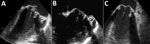
Figure 1. Transesophageal echocardiograph findings from a case of human Lactococcus garvieaebloodstream infection complicated by spondylodiscitis, Germany. A) Echocardiograph obtained on day 6 demonstrates mobile vegetations on both leaflets of...
Transesophageal echocardiography (TEE) demonstrated 6 × 16 mm vegetations on both PMV leaflets (Figure 1, panel A). Comprehensive imaging revealed no additional embolic lesions. Urinalysis was unremarkable, but rheumatoid factor was positive. Because the patient met 2 major (microbiological, imaging) and 2 minor (immunologic, predisposing PMV) published IE criteria (4), we diagnosed PMV-IE.
Our endocarditis team reviewed the patient’s case. European Society of Cardiology guidelines recommend surgery within 3–5 days for vegetations >10 mm because of increased risk for embolism or death (5). However, benefits of surgery solely on the basis of vegetation size remain uncertain, and embolic risk decreases after starting antimicrobial therapy. Our patient’s estimated French Embolic Risk Score was 6% at week 1, 9% at week 2, and 11% at week 26, but EuroSCORE II indicated a 12% perioperative risk for death. Because embolic risk was low but perioperative risk for severe injury or death remained high, the patient, in consultation with the medical teams, chose to continue conservative management with ceftriaxone for 6 weeks.
Figure 2
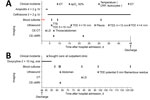
Figure 2. Summary of the clinical course from a case of human Lactococcus garvieaebloodstream infection complicated by spondylodiscitis, Germany. A) Clinical course during hospitalization, days 1–46. B) Clinical course and...
Repeat blood cultures remained sterile; inflammatory markers declined (Figure 2). TEE on day 16 demonstrated a smaller (4 × 16 mm) but more mobile vegetation. The patient’s remaining hospitalization was unremarkable. She was discharged on 4 weeks of oral doxycycline (100 mg 2×/d) for a residual 4 × 4 mm vegetation (Figure 1, panel B) and elevated C-reactive protein (6 mg/dL).
On postdischarge day 6, the patient sought care in our outpatient clinic for new-onset persistent nausea and mixed hepatocellular and cholestatic liver injury. We suspected idiosyncratic drug-induced liver injury because of rapid onset after doxycycline initiation and a Roussel Uclaf Causality Assessment Method score of 8 (probable drug-induced liver injury). HIV and hepatitis A–C and E tests and an abdominal ultrasound were unremarkable. After discontinuing doxycycline, the patient’s symptoms and laboratory values improved (Appendix 2 Figure). Follow-up at day 98 showed no new abnormalities and near-complete resolution of PMV vegetation (Figure 1, panel C). The patient remained clinically stable 11 months after discharge (Figure 2, panel B).
L. garvieae was initially described as Streptococcus garvieae in 1983 but reclassified in 1985 (2). Biochemical tests can misidentify L. garvieae as Streptococcus or Enterococcus spp. bacteria (6); therefore, diagnosis relies on MALDI-TOF mass spectrometry or ribosomal sequencing. IE is the most common manifestation of human L. garvieae infection (2), and 61% (22/36) of cases involved fever; patients sought medical attention a median of 15.5 (IQR 6.75–30) days after symptom onset (Appendix 1; Appendix 2 Table 2). The subacute, afebrile course in this case is unusual, but up to 55% of spondylodiscitis and 20% of IE case-patients are afebrile (7,8); thus, absence of fever does not rule out either diagnosis. Of note, the 2023 European Society of Cardiology update incorporated spondylodiscitis as a minor diagnostic criterion for IE (5), but the modified Duke criteria did not (4).
Genetic similarity between clinical and gastrointestinal L. garvieae isolates supports foodborne transmission and opportunistic pathogenicity (2). Infection likely is enabled by underlying gastrointestinal pathology, as reported in 67% (24/36) of L. garvieae endocarditis cases (Appendix 2 Table 2). The isolate from this case showed broad antimicrobial resistance, comparable to those from other human infections (Appendix 2 Tables 2–4). One aquaculture study showed 83% of tested L. garvieae strains harbored ≥2 resistance genes (9). Thus, from a One Health perspective, L. garvieae could serve as a gut reservoir for transferable antimicrobial resistance genes and opportunistic infections (2,10).
In summary, this rare case of multidrug-resistant zoonotic L. garvieae bloodstream infection illustrates the value of comprehensive diagnostic testing for spondylodiscitis and withholding antibiotics until pathogen identification. This case also highlights the complexity of IE management; clinical context requires interdisciplinary, individualized strategies transcending guidelines. Transparent communication of risks and uncertainties is essential for evidence-informed, patient-centered care.
Dr. Schulz is an internal medicine resident at St. Joseph Krankenhaus Berlin-Tempelhof in the infectious diseases department. His primary research interests focus on clinical HIV and health services.
Acknowledgments
Additional information and MALDI-TOF mass spectrometry results available upon reasonable request.
The patient provided informed consent to publish her case, as well as a first-person account of her illness (see page XXX).
References
- Meyburgh CM, Bragg RR, Boucher CE. Lactococcus garvieae: an emerging bacterial pathogen of fish. Dis Aquat Organ. 2017;123:67–79. DOIPubMedGoogle Scholar
- Gibello A, Galán-Sánchez F, Blanco MM, Rodríguez-Iglesias M, Domínguez L, Fernández-Garayzábal JF. The zoonotic potential of Lactococcus garvieae: an overview on microbiology, epidemiology, virulence factors and relationship with its presence in foods. Res Vet Sci. 2016;109:59–70. DOIPubMedGoogle Scholar
- Elliott JA, Facklam RR. Antimicrobial susceptibilities of Lactococcus lactis and Lactococcus garvieae and a proposed method to discriminate between them. J Clin Microbiol. 1996;34:1296–8. DOIPubMedGoogle Scholar
- Fowler VG Jr, Durack DT, Selton-Suty C, Athan E, Bayer AS, Chamis AL, et al. The 2023 Duke–International Society for Cardiovascular Infectious Diseases criteria for infective endocarditis: updating the modified Duke criteria. Clin Infect Dis. 2023;77:518–26. DOIPubMedGoogle Scholar
- Delgado V, Ajmone Marsan N, de Waha S, Bonaros N, Brida M, Burri H, et al.; ESC Scientific Document Group. 2023 ESC guidelines for the management of endocarditis. Eur Heart J. 2023;44:3948–4042. DOIPubMedGoogle Scholar
- Sirakov I, Strateva TV, Boyanov VS, Orozova P, Yordanov D, Rusenova N, et al. Identification, characterization, and epidemiological analysis of Lactococcus garvieae fish isolates obtained in a period of eighteen years. Microorganisms. 2025;13:436. DOIPubMedGoogle Scholar
- Berbari EF, Kanj SS, Kowalski TJ, Darouiche RO, Widmer AF, Schmitt SK, et al.; Infectious Diseases Society of America. 2015 Infectious Diseases Society of America (IDSA) clinical practice guidelines for the diagnosis and treatment of native vertebral osteomyelitis in adults. Clin Infect Dis. 2015;61:e26–46. DOIPubMedGoogle Scholar
- Habib G, Erba PA, Iung B, Donal E, Cosyns B, Laroche C, et al. EURO-ENDO Investigators. Clinical presentation, aetiology and outcome of infective endocarditis. Results of the ESC-EORP EURO-ENDO (European infective endocarditis) registry: a prospective cohort study. Eur Heart J. 2019;40:3222–32. DOIPubMedGoogle Scholar
- Torres-Corral Y, Santos Y. Predicting antimicrobial resistance of Lactococcus garvieae: PCR detection of resistance genes versus MALDI-TOF protein profiling. Aquaculture. 2022;553:
738098 . DOIGoogle Scholar - Castañeda-Barba S, Top EM, Stalder T. Plasmids, a molecular cornerstone of antimicrobial resistance in the One Health era. Nat Rev Microbiol. 2024;22:18–32. DOIPubMedGoogle Scholar
Figures
Suggested citation for this article: Schulz P, Migaud P, Drauz D, Jaeger S, Elias J, Stocker H. Human Lactococcus garvieae bloodstream infection complicated by spondylodiscitis, Germany. Emerg Infect Dis. 2026 Aug [date cited]. https://doi.org/10.3201/eid3208.260334
Original Publication Date: July 17, 2026
Table of Contents – Volume 32, Number 8—August 2026
| EID Search Options |
|---|
 Advanced Article Search – Search articles by author and/or keyword.
|
 Articles by Country Search – Search articles by the topic country.
|
 Article Type Search – Search articles by article type and issue.
|
Please use the form below to submit correspondence to the authors or contact them at the following address:
Philipp Schulz, Joseph-Kliniken–St. Joseph Krankenhaus Berlin–Tempelhof, Wüsthoffstr 15, Berlin 12101, Germany
Top