Volume 32, Number 9—September 2026
Research Letter
Gulf Coast Ticks (Amblyomma maculatum) and Rickettsia parkeri, Ohio, USA, 2020
Risa Pesapane , Kaylee Shrock, Cece Bryant, and Andrew J. Rosendale
, Kaylee Shrock, Cece Bryant, and Andrew J. Rosendale
Figure
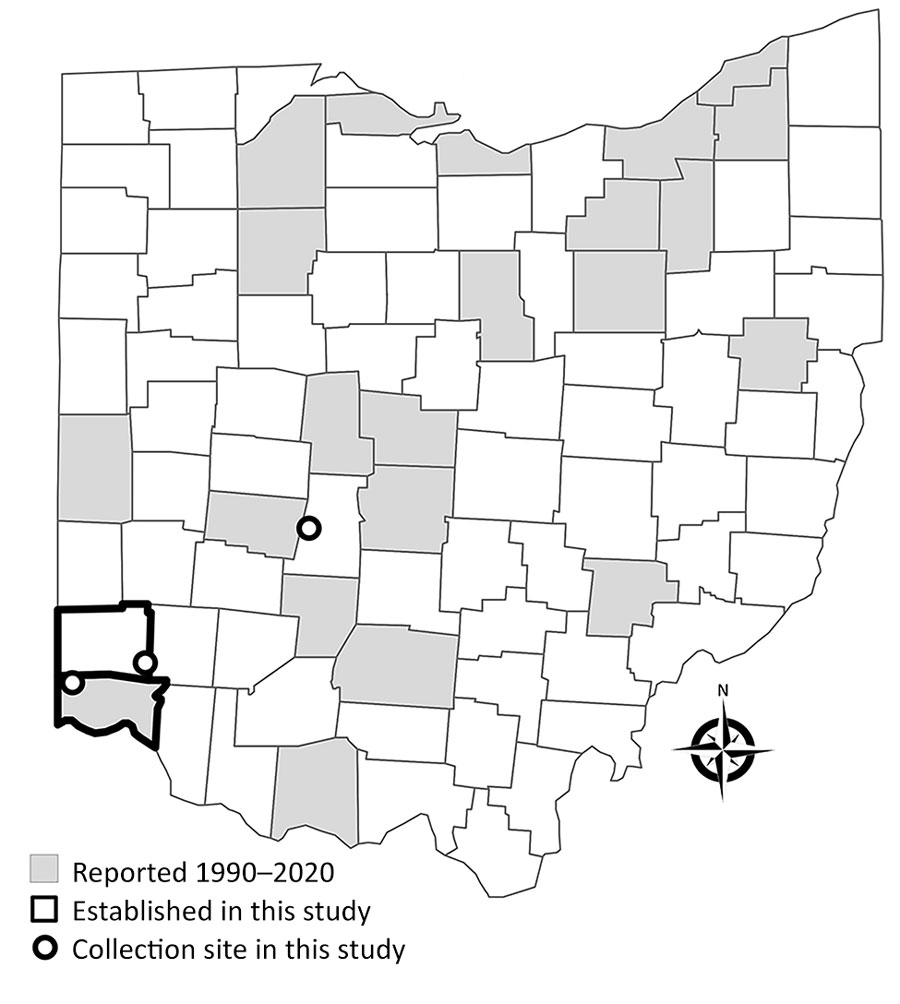
Figure. Reports of Gulf Coast ticks (Amblyomma maculatum) in Ohio, USA. Map highlights counties with previous reports of 1–2 Gulf Coast tick detections from the Ohio Department of Health (1990–2020), the collection sites from this study of active and passive Gulf Coast tick detections (2020–2021), and the counties we determined to have an established population (>6 adults) of Gulf Coast ticks.
Page created: August 07, 2026
Page updated: August 26, 2026
Page reviewed: August 26, 2026
The conclusions, findings, and opinions expressed by authors contributing to this journal do not necessarily reflect the official position of the U.S. Department of Health and Human Services, the Public Health Service, the Centers for Disease Control and Prevention, or the authors' affiliated institutions. Use of trade names is for identification only and does not imply endorsement by any of the groups named above.