Volume 31, Number 12—December 2025
Dispatch
Novel Highly Pathogenic Avian Influenza A(H5N1) Virus, Argentina, 2025
Ralph E.T. Vanstreels, Martha I. Nelson, María C. Artuso, Vanina D. Marchione, Luana E. Piccini, Estefania Benedetti, Alvin Crespo-Bellido, Agostina Pierdomenico, Thorsten Wolff, Marcela M. Uhart, and Agustina Rimondi
Figure 2
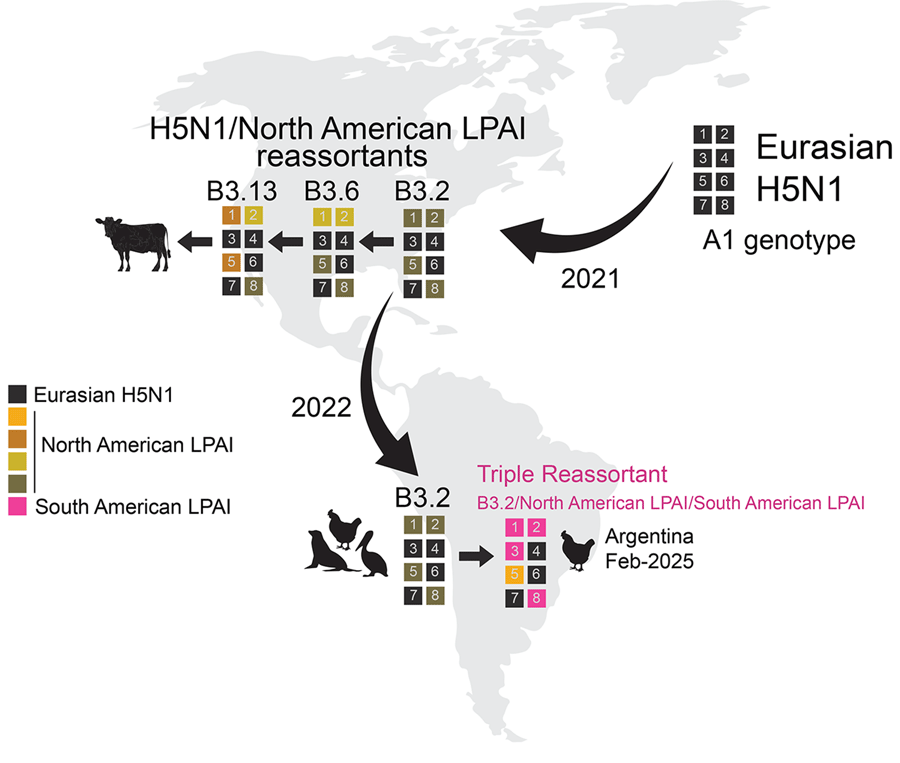
Figure 2. Key reassortment and migration events leading to the novel triple reassortant influenza A(H5N1) viruses in February 2025, Argentina. Each box represents 1 of the 8 segments of the influenza A virus genome, numbered in order of longest to shortest length: 1, polymerase basic protein 2; 2, polymerase basic protein 1; 3, polymerase acidic protein; 4, hemaggultinin; 5, nucleoprotein; 6, neuraminidase; 7, matrix protein; and 8, nonstructural protein. Curved black arrows indicate the direction of major geographic migration events. Straight black arrows indicate sequential reassortment events of interest. LPAI, low pathogenicity avian influenza.
Page created: November 17, 2025
Page updated: January 01, 2026
Page reviewed: January 01, 2026
The conclusions, findings, and opinions expressed by authors contributing to this journal do not necessarily reflect the official position of the U.S. Department of Health and Human Services, the Public Health Service, the Centers for Disease Control and Prevention, or the authors' affiliated institutions. Use of trade names is for identification only and does not imply endorsement by any of the groups named above.