Bat Reovirus as Cause of Acute Respiratory Disease and Encephalitis in Humans, Bangladesh, 2022–2023
Sharmin Sultana
1, Ariful Islam
1, James Ng, Sunil Kumar Dubey, Manjur Hossain Khan, Cheng Guo, Mohammed Ziaur Rahman, Joel M. Montgomery, Syed Moinuddin Satter, Tahmina Shirin, W. Ian Lipkin, Lisa Hensley
2, and Nischay Mishra
2
Author affiliation: Institute of Epidemiology, Disease Control and Research (IEDCR), Dhaka, Bangladesh (S. Sultana, A. Islam, M. Hossain Khan, T. Shirin); Gulbali Research Institute, Charles Sturt University, Wagga Wagga, New South Wales, Australia (A. Islam); Center for Infection and Immunity, Mailman School of Public Health, Columbia University, New York, New York, USA (J. Ng, S. Kumar Dubey, C. Guo, W.I. Lipkin, N. Mishra); icddr,b, Dhaka (M.Z. Rahman, S. Moinuddin Satter); Centers for Disease Control and Prevention, Atlanta, Georgia, USA (J.M. Montgomery); Zoonotic and Emerging Disease Research Unit, National Bio and Agro-Defense Facility, USDA Agricultural Research Service, Manhattan, Kansas, USA (L. Hensley)
Main Article
Figure 2
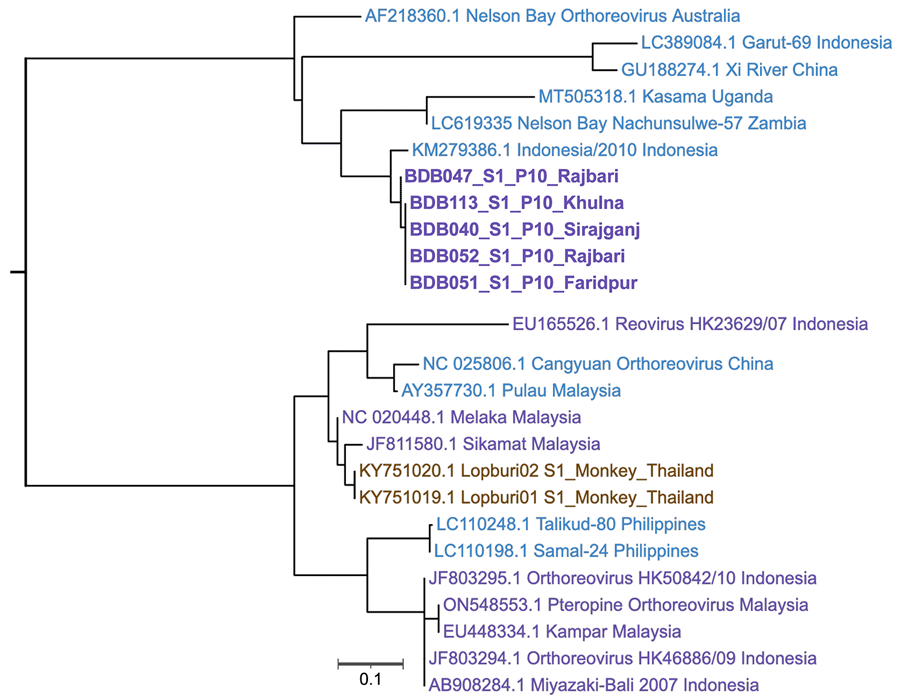
Figure 2. Phylogenic analysis of bat reovirus detected from cases of acute respiratory disease and encephalitis in humans, Bangladesh, 2022–2023. Sequencing of the partial S1 segment showed that Pteropine orthoreovirus from patients in Bangladesh (bold) clustered with 99.3%–100.0% average nucleotide identity (ANI). Bangladesh PRV showed ≈96% ANI with the Indonesia/2010 strain detected from large flying-fox (Pteropus vampyrus) in Indonesia (GenBank accession no. KM279386.1) and ≈85% ANI with the Nachunsulwe-57 strain detected from an Egyptian fruit bat (Rousettus aegyptiacus) in Zambia (accession no. LC619335) in 2018. GenBank accession numbers are indicated for reference sequences. Scale bar indicates nucleotide substitutions per site.
Main Article
Page created: November 24, 2025
Page updated: January 01, 2026
Page reviewed: January 01, 2026
The conclusions, findings, and opinions expressed by authors contributing to this journal do not necessarily reflect the official position of the U.S. Department of Health and Human Services, the Public Health Service, the Centers for Disease Control and Prevention, or the authors' affiliated institutions. Use of trade names is for identification only and does not imply endorsement by any of the groups named above.