Volume 32, Number 10—October 2026
Dispatch
Detection of Divergent Highly Pathogenic Avian Influenza A(H5N1) Clade 2.3.4.4b Virus, São Paulo, Brazil, 2025

 , Luciano M. Thomazelli, Thomas P. Fabrizio, Gustavo O. Fenner, Erick G. Dorlass, Ana K.A. Eisen, Viviane F. Botosso, Marcello S. Nardi, Caroline C. Aires, Sergio M.N. Teixeira, Roberta M. de Azevedo, Mayra H. Frediani, Tatiana Ometto, Mário G.L. Barboza, Edmarcia E. de Souza, Carsten Wrenger, Richard J. Webby, and Edison L. Durigon
Cite This Article
Citation for Media
Abstract
In 2025, we detected highly pathogenic avian influenza H5N1 virus in dead waterfowl at Ibirapuera Park, São Paulo, Brazil. Genomic characterization indicated a reassortant virus that emerged from locally circulating low pathogenicity avian influenza viruses and highly pathogenic North American lineages. Our results highlight cross-species transmission risk and underscore the need for enhanced surveillance.
Avian influenza virus (AIV) surveillance in South America has been limited compared with other regions. Until 2022, only 1 highly pathogenic avian influenza (HPAI) virus outbreak was reported in South America, a 2002 H7N3 event in Chile, which emerged locally (1). Most viruses detected before 2022 were low pathogenicity avian influenza viruses (LPAIVs) that were phylogenetically distant from North American and Eurasian strains. The emergence of influenza A(H5N1) clade 2.3.4.4b virus in Eurasia marked a major evolutionary shift. The introduction of the HPAI H5N1 virus into the Americas in 2021 by migratory birds led to extensive reassortment with locally circulating LPAIVs (2), generating new genotypes that spread across the continent. By late 2022, the H5N1 virus reached South America, causing high mortality rates among seabirds and marine mammals (3,4). In 2023, H5N1 viruses were detected in wild birds and backyard chickens in Brazil (3). By 2025, new reassortant H5N1 variants had been reported in South America, including in Brazil (5).
Beyond the emergence of novel genotypes, the continued expansion of HPAI viruses has been driven by broad host-range expansion and frequent interactions at the human–animal-environment interface. Those ecologic dynamics make mitigating the effects of HPAI viruses on wildlife, ecosystems, domestic animals, food security, and humans difficult (6). We report detection of a divergent HPAI H5N1 strain in 2 white-faced whistling ducks (Dendrocygna viduata) after reports of unusual avian deaths in Ibirapuera Central Park, São Paulo, Brazil.
Figure 1
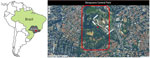
Figure 1. Location of Ibirapuera Central Park where waterfowl were found dead from divergent highly pathogenic avian influenza A(H5N1) clade 2.3.4.4b virus, São Paulo, Brazil, 2025. Map shows location in South America....
Figure 2
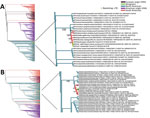
Figure 2. Maximum-likelihood phylogenies of NP and PB2 internal genes from divergent highly pathogenic avian influenza A(H5N1) clade 2.3.4.4b virus, São Paulo, Brazil, 2025. A) Alignment of NP internal gene sequences. B)...
In June 2025, we collected cloacal and tracheal swab samples from 2 dead white-faced whistling ducks (Appendix Figure 1) near the lake in Ibirapuera Park, São Paulo, Brazil (Figure 1). We detected AIV and H5N1 from the swab samples by using reverse transcription real-time PCR. We generated complete genome sequences (GenBank accession nos. PX062323–PX062330) (Appendix Table 1) directly from the original swab samples by using the Ion Torrent S5 Platform (Thermo Fisher Scientific, https://www.thermofisher.com). We classified genotypes by using GenoFlu (https://github.com/USDA-VS/GenoFLU). The hemagglutinin (HA), neuraminidase, polymerase acidic, and matrix protein (MP) segments were classified as Eurasian lineages, whereas the nonstructural protein segment was classified as a North American lineage. The remaining internal genes (polymerase basic 1, polymerase basic 2, and nucleoprotein) were unassigned (Appendix Tables 2, 3). We resolved the origins of the unassigned segments by using BLASTn and maximum likelihood (ML) analysis. The polymerase basic 2 and nucleoprotein sequences shared >94% nucleotide identity and clustered tightly with lineages from Colombia and the Brazilian Pantanal (7,8) (Figure 2). That topologic incongruence demonstrates reassortment with regional LPAIV gene pools.
Figure 3
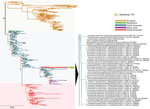
Figure 3. Phylogenetic tree of hemagglutinin gene from divergent highly pathogenic avian influenza A(H5N1) clade 2.3.4.4b virus, São Paulo, Brazil, 2025. Maximum-likelihood phylogenetic tree (left) showing alignment of global hemagglutinin gene sequences....
Our phylogenetic analysis showed that the polymerase acidic and MP segments remain conserved within the Eurasian lineage, clustering with the clade 2.3.4.4b backbone, characteristic of the current panzootic (Appendix Figure 2). However, the nonstructural gene (North America lineage) clustered with AIVs established during the initial introduction of H5N1 viruses into the Americas (2) (Appendix Figure 3). Our genetic analyses of the HA gene sequences showed 97.9% nucleotide identity with the 2023 reference isolate from Brazil (GenBank accession no. OR269887.1) (6), and >98.6% nucleotide identity with recent North American strains (Appendix Table 3), suggesting a divergence from the original lineage established in Brazil. The maximum likelihood phylogenies we generated of the HA and neuraminidase genes also showed the sequence divergence (Figure 3; Appendix Figure 4). The isolates we sequenced form a monophyletic cluster among North American lineages (2022–2025) (9), suggesting a second introduction of the HPAI H5N1 virus in South America (10,11).
Figure 4
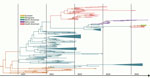
Figure 4. Time-scaled Bayesian maximum clade credibility tree of divergent highly pathogenic avian influenza A(H5N1) clade 2.3.4.4b virus, São Paulo, Brazil, 2025. The tree was inferred by using the Gaussian Markov Random...
We defined the timeline for the second introduction of the HPAI H5N1 virus into South America by using Bayesian temporal analysis. The estimated time to the most recent common ancestor (tMRCA) with North American H5 virus lineages was ≈mid-2023 (mean tMRCA May 2023; 95% highest posterior density March 2023–July 2023) (Figure 4). Our tMRCA estimates provide temporal support for the second H5N1 virus introduction from North America and subsequent circulation until it was detected in Ibirapuera Central Park.
We identified a divergent reassortant HPAI H5N1 virus strain in white-faced whistling ducks from Ibirapuera Central Park, São Paulo, Brazil. As one of the city’s largest green, cultural, and recreational areas, attracting thousands of visitors each day (12), the park is a notable human–animal-environment interface. Following laboratory confirmation of H5N1, park authorities immediately implemented prevention, management, and isolation measures to reduce the risk for transmission.
Our phylogenetic and temporal analyses support a second introduction of HPAI H5N1virus into South America from North America, after reassortment with locally circulating LPAIVs in South America. Our findings suggest that reassortment likely occurred before the viruses dispersed through the interior regions of Brazil by regional migratory birds (5), although the precise movement dynamics of those waterfowl require further investigation. Similar exchanges have been described in other H5N1 genomes from South America (5,11), indicating ongoing genetic exchange between introduced HPAI viruses and regional AIV viruses, contributing to the increasing genomic diversity of H5N1 viruses circulating in South America. Together, those reassortment events position South America as a critical region for AIV surveillance.
Our results highlight that HPAIV can be detected in a major urban park that harbors multiple animal species. The coexistence of resident waterfowl, migratory birds, synanthropic mammals, domestic animals, and abundant human activity creates an opportunity for cross-species transmission events. Our observations underscore the necessity of integrating systematic monitoring of urban wildlife into One Health surveillance frameworks to improve early detection and mitigate AIV risks.
Dr. Jansen is a researcher and coordinator of the Laboratory of Research on Emerging Viruses, Institute of Biomedical Sciences–University of São Paulo. His research focuses on the eco-epidemiology and genomic surveillance of avian influenza viruses and other zoonotic pathogens.
Acknowledgments
The authors thank the Parque Ibirapuera Conservação staff, the São Paulo City Hall logistical support for field surveillance by Centro de Manejo e Conservação de Animais Silvestres, and the Brazilian Ministry of Science, Technology, and Innovation for maintaining the National Network for Virus Surveillance in Wild Animals (PREVIR Network) for logistical and surveillance support.
This work was funded by Ministry of Science, Technology and Innovation, National Council for Scientific and Technological Development (grant nos. 403761/2020-4, 400172/2022-4), Fundação de Amparo a Pesquisa de São Paulo (grants nos. 2023/03041-1, 2023-07746-0, 2024/01882-1, 2025/09636-2), and Coordenação de Aperfeiçoamento de Pessoal de Nível Superior (finance code 001).
All sampling activities were conducted in compliance with Brazilian regulations (SISBIO permit nos. 87511–1/2023, 87511–2/2024, 97861–1/2025), and approved by the Institutional Animal Ethics Committee (CEUA/ICB-USP) (permit no. 864117012 and 1716171225). Carcass sampling was performed on naturally dead birds without any experimental manipulation.
References
- Suarez DL, Senne DA, Banks J, Brown IH, Essen SC, Lee CW, et al. Recombination resulting in virulence shift in avian influenza outbreak, Chile. Emerg Infect Dis. 2004;10:693–9. DOIPubMedGoogle Scholar
- Youk S, Torchetti MK, Lantz K, Lenoch JB, Killian ML, Leyson C, et al. H5N1 highly pathogenic avian influenza clade 2.3.4.4b in wild and domestic birds: introductions into the United States and reassortments, December 2021–April 2022. Virology. 2023;587:
109860 . DOIPubMedGoogle Scholar - Rivetti AV Jr, Reischak D, de Oliveira CHS, Otaka JNP, Domingues CS, Freitas TL, et al. Phylodynamics of avian influenza A(H5N1) viruses from outbreaks in Brazil. Virus Res. 2024;347:
199415 . DOIPubMedGoogle Scholar - Gamarra-Toledo V, Plaza PI, Angulo F, Gutiérrez R, García-Tello O, Saravia-Guevara P, et al. Highly pathogenic avian influenza (HPAI) strongly impacts wild birds in Peru. Biol Conserv. 2023;286:
110272 . DOIGoogle Scholar - Rivetti AV Jr, Reischak D, Carnegie L, Otaka JNP, Domingues CS, Cardoso FG, et al. Genomic diversity and reassortment of highly pathogenic avian influenza A/H5N1 virus (clade 2.3.4.4b) in Brazil: evidence of multiple introductions and intra-epidemic reassortment in 2025. Virology. 2026;615:
110751 . DOIPubMedGoogle Scholar - Koopmans MPG, Barton Behravesh C, Cunningham AA, Adisasmito WB, Almuhairi S, Bilivogui P, et al.; One Health High-Level Expert Panel. The panzootic spread of highly pathogenic avian influenza H5N1 sublineage 2.3.4.4b: a critical appraisal of One Health preparedness and prevention. Lancet Infect Dis. 2024;24:e774–81. DOIPubMedGoogle Scholar
- Karlsson EA, Ciuoderis K, Freiden PJ, Seufzer B, Jones JC, Johnson J, et al. Prevalence and characterization of influenza viruses in diverse species in Los Llanos, Colombia. Emerg Microbes Infect. 2013;2:
e20 . DOIPubMedGoogle Scholar - Magalhães TBS, da Rosa Bueno E, de Assis Pereira N, Lima HAS, de Souza Pereira Gomes S, Mizuuti PJSG, et al. First detection of an H5N2 subtype of influenza A virus detected in Charadrius collaris from the Brazilian Pantanal. Sci Rep. 2026;16:14496. DOIPubMedGoogle Scholar
- Reischak D, Rivetti AV Jr, Otaka JNP, Domingues CS, Freitas TL, Cardoso FG, et al. First report and genetic characterization of the highly pathogenic avian influenza A(H5N1) virus in Cabot’s tern (Thalasseus acuflavidus), Brazil. Vet Anim Sci. 2023;22:
100319 . DOIPubMedGoogle Scholar - Martins-Filho PR, Quintans-Júnior LJ. Brazil’s first H5N1 outbreak in commercial poultry: a sentinel event for cross-border preparedness. J Travel Med. 2025;32:
taaf050 . DOIPubMedGoogle Scholar - Vanstreels RET, Nelson MI, Artuso MC, Marchione VD, Piccini LE, Benedetti E, et al. Novel highly pathogenic avian influenza A(H5N1) virus, Argentina, 2025. Emerg Infect Dis. 2025;31:2279–83. DOIPubMedGoogle Scholar
- Secretaria Municipal do Verde e do Meio Ambiente. Waters of the Sapateiro Stream and Ibirapuera Park [cited 2025 Dec 4]. https://prefeitura.sp.gov.br/web/meio_ambiente/w/%C3%A1guas-do-c%C3%B3rrego-do-sapateiro-e-o-parque-ibirapuera-1
Figures
Cite This ArticleOriginal Publication Date: September 16, 2026
Table of Contents – Volume 32, Number 10—October 2026
| EID Search Options |
|---|
 Advanced Article Search – Search articles by author and/or keyword.
|
 Articles by Country Search – Search articles by the topic country.
|
 Article Type Search – Search articles by article type and issue.
|
Please use the form below to submit correspondence to the authors or contact them at the following address:
Jansen de Araujo, Laboratório de Pesquisa em Vírus Emergentes. Microbiology Department, Institute of Biomedical Science at the University of São Paulo. 1374, Prof. Lineu Prestes Avenue, 05508-000, São Paulo, Brazil
Top