Volume 32, Number 10—October 2026
Research
Human Myiasis Resulting from Reemergence of Cochliomyia hominivorax Screwworm, Mexico, 2025–2026

Cite This Article
Citation for Media
Abstract
After its elimination from Mexico in 2003, myiasis caused by New World screwworm (NWS), Cochliomyia hominivorax, has recently reemerged as a public and animal health concern. We conducted a retrospective study of human New World screwworm myiasis cases reported through Mexico’s national surveillance system during April 13, 2025–March 14, 2026. Of 204 cases in official surveillance summaries, 202 had sufficient information for case-level clinical and epidemiologic analysis. Cases were concentrated in southern Mexico, particularly Chiapas, followed by Yucatán, Oaxaca, and Quintana Roo. Most (71.8%) cases occurred in men; mean patient age was 61.1 years. Lower limbs (55.0%) were the most frequently reported anatomic location, and 76.7% of patients had >1 concurrent condition. Six deaths were reported among patients with NWS myiasis; at the time of reporting, 1 death was attributed directly to NWS myiasis. Our findings support proactive clinical detection and integrated One Health surveillance along the expected northward spread of NWS.
Cochliomyia hominivorax, the New World screwworm (NWS) fly, is an obligate parasite during its larval stage. Adult female flies are attracted to blood, wounds, inflamed tissue, mucous membranes, and natural body orifices, where they deposit eggs that hatch within 12–24 hours. The larvae invade and feed on living tissue for 5–7 days before dropping to the soil to continue development (1–3). Because female NWS flies usually mate only once, mass release of irradiated sterile flies can interrupt reproduction. That sterile insect technique, combined with quarantine and treatment of infested animals, supported eradications of NWS from North America southward to the Darién Gap in Panama (4). After eradication north of the Darién Gap, continued releases of sterile flies were used to maintain a biologic barrier intended to prevent reinvasion from NWS-endemic areas of South America. Environmental conditions, including moderate-to-heavy rainfall and temperatures ≈35°C, can favor NWS fly development (5).
Human infestation by C. hominivorax causes rapidly progressive and potentially severe myiasis. Clinical manifestations are usually classified according to the involved site as cutaneous, cavitary, or intestinal myiasis (6,7). Diagnosis relies on identification of larvae, and treatment includes larval removal, wound or lesion care, management of bacterial complications, analgesia, and, in selected cases, antiparasitic drugs such as ivermectin (8,9).
Mexico was declared free of NWS in 2003; Chiapas was the last state to achieve elimination (10,11). However, animal cases have been reported in Mexico since 2024 and human cases since 2025, raising concern about reemergence of NWS as a public and animal health problem. Because the same obligate parasite affects livestock, wildlife, companion animals, and humans, animal cases can indicate local circulation of the fly and potential risk for human infestation. In this context, a One Health approach entails coordinated surveillance, diagnosis, reporting, animal movement controls, and fly suppression across human and animal health sectors. Areas along the southern coast of Mexico, including Chiapas, Campeche, Tabasco, and Veracruz, have been considered at increased risk (12). A modeling study estimated that the reemerging NWS outbreak was moving northward from Central America at 1.2–1.9 km/day (13). We characterized confirmed human NWS myiasis cases in Mexico to provide information for epidemiologic surveillance, prevention, and control.
We conducted an observational, descriptive, retrospective study. The study population comprised confirmed human NWS myiasis cases reported in Mexico through the National Epidemiologic Surveillance System from epidemiologic week 16 of 2025 through epidemiologic week 10 of 2026, corresponding to April 13, 2025–March 14, 2026. Those dates represent the epidemiologic reporting period and do not necessarily indicate the dates of infestation onset.
To construct the temporal series, we reviewed official epidemiologic bulletins published by the Directorate General of Epidemiology, Ministry of Health, Mexico, which enabled us to identify the number of confirmed cases reported by epidemiologic week (14–16). To characterize clinical and epidemiologic features, we used nonidentifiable information available from the official monthly situation reports on human NWS myiasis in Mexico, published by the Directorate General of Epidemiology, Ministry of Health (17). We also used cumulative state-level counts from those reports to describe geographic spread at selected epidemiologic reporting weeks; those state-level summaries comprised all 204 confirmed cases.
The unit of analysis for case-level clinical and epidemiologic characterization was each confirmed human NWS myiasis case recorded during the study period, defined as a probable case with taxonomic identification of C. hominivorax from a laboratory in the National Network of Public Health Laboratories. We included records with available information on the state and municipality of notification, sex, age, reported anatomic location, concurrent conditions, and discharge or death status. We excluded records with insufficient information for case-level clinical or epidemiologic characterization. Of the 204 confirmed cases included in the official state-level summaries, 2 lacked sufficient case-level information; therefore, we included 202 cases in the clinical and epidemiologic analyses.
We analyzed variables including epidemiologic week of notification, state, municipality, sex, age, reported anatomic location or locations, presence and type of concurrent conditions, number of concurrent conditions, recorded death, and attributed cause of death. The monthly situation reports listed multiple anatomic terms for some patients but did not provide a data dictionary describing how those terms were assigned. When multiple anatomic locations were listed for a patient, we counted each recorded term in the descriptive frequency analysis. We did not interpret multiple listed locations as separate infestations because the reports did not indicate whether they represented distinct infestations, contiguous extension of a single infestation, or different levels of anatomic description. We therefore analyzed reported anatomic locations and concurrent conditions as non–mutually exclusive categories.
We performed descriptive statistical analysis. We summarized categorical variables as absolute frequencies and percentages and age as mean +SD. We did not conduct confirmatory hypothesis testing because of the descriptive design and the absence of a population comparison group. We performed analyses in Microsoft Excel (https://www.microsoft.com) and Stata 17 (StataCorp LLC, https://www.stata.com) software.
This study used nonidentifiable secondary information from public official epidemiologic surveillance sources. The authors did not have access to names, personal identifiers, medical record numbers, addresses, or any information that would permit individual identification. The Local Ethics and Research Committee 703 of the Instituto Mexicano del Seguro Social in Chiapas determined that the study was exempt from formal ethics board review because it was a retrospective secondary analysis of public, nonidentifiable data, involved no intervention, and included no contact with patients. Therefore, informed consent was not required.
Official state-level surveillance summaries included 204 confirmed human NWS myiasis cases; we used those data to describe cumulative geographic spread during the reporting period. Two records lacked sufficient case-level information for clinical and epidemiologic characterization; therefore, the analyses included 202 cases.
Figure 1
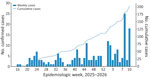
Figure 1. Confirmed human New World screwworm myiasis cases resulting from reemergence of Cochliomyia hominivoraxscrewworm, by epidemiologic week and cumulative, Mexico, April 13, 2025–March 14, 2026. Data were obtained from...
The temporal series derived from the official epidemiologic bulletins included 202 confirmed human NWS myiasis cases. During the 2025 reporting period, 111 cases were recorded, corresponding to a mean of 3 confirmed cases per epidemiologic week. During the first 10 epidemiologic weeks of 2026, a total of 91 confirmed cases were recorded, averaging 9.1 cases per epidemiologic week (Figure 1).
The first confirmed cases were reported in Chiapas during epidemiologic week 16 of 2025. Cases were subsequently identified in Campeche in week 20, in Yucatán and Tabasco in week 33, and in Oaxaca in week 47 of the same year. By epidemiologic week 10 of 2026, a total of 12 of Mexico’s 32 states had reported confirmed human NWS myiasis cases.
Figure 2
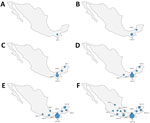
Figure 2. Cumulative geographic spread of confirmed human New World screwworm myiasis cases from reemergence of Cochliomyia hominivoraxscrewworm by state at selected epidemiologic reporting weeks, Mexico, 2025–2026. Panels show cumulative...
We mapped the cumulative geographic spread of confirmed cases by state at selected epidemiologic reporting weeks (Figure 2). In the official state-level summaries, Chiapas accounted for 119 (58.3%) of 204 confirmed cases. The next most affected states were Yucatán with 23 (11.3%) cases, Oaxaca with 16 (7.8%) cases, Quintana Roo with 12 (5.9%) cases, Veracruz with 8 (3.9%) cases, Guerrero and Tabasco with 7 (3.4%) cases each, Campeche with 6 (2.9%) cases, Puebla and San Luis Potosí with 2 (1.0%) cases each, and the states of Mexico and Michoacán with 1 (0.5%) case each. The remaining municipality-level, demographic, clinical, and concurrent-condition analyses were based on the 202 records with sufficient case-level information.
The municipalities with the highest number of cases were Tapachula, Chiapas, with 35 (17.3%) cases; Huixtla, Chiapas, with 14 (6.9%) cases; and Mérida, Yucatán, with 14 (6.9%) cases. Together, those 3 municipalities accounted for 63 cases, representing 31.2% of all cases analyzed.
We summarized the clinical and epidemiologic characteristics of confirmed cases (Table 1). Of the 202 confirmed cases, 145 (71.8%) occurred in male patients and 57 (28.2%) in female patients. Mean age was 61.1 years (SD 19.2, range 12–93 years); for male patients, mean age was 59.2 (SD 19.0) years, and for female patients, 65.9 (SD 18.9) years.
The most frequent anatomic location for myiasis was the lower limbs, listed in 111 (55.0%) cases, followed by the neck in 41 (20.3%) cases, nose in 22 (10.9%) cases, mouth in 21 (10.4%) cases, eyes and head in 16 (7.9%) cases each, upper limbs in 14 (6.9%) cases, trunk in 12 (5.9%) cases, ear in 5 (2.5%) cases, genitalia in 2 (1.0%) cases, and abdominal cavity in 2 (1.0%) cases. More than 1 anatomic location could be recorded for the same patient. The source reports did not provide sufficient information to determine whether multiple locations represented separate infestations, contiguous involvement from a single infestation, or different levels of anatomic description.
A total of 155 (76.7%) cases had >1 concurrent condition. One concurrent condition was identified in 107 (53.0%) cases, 2 in 32 (15.8%) cases, 3 in 9 (4.5%) cases, and >4 in 7 (3.5%) cases. Overall, 48 (23.8%) cases had >2 concurrent conditions. The most frequently reported concurrent conditions were diabetes mellitus in 41 (20.3%) cases, alcoholism in 27 (13.4%) cases, hypertension in 26 (12.9%) cases, neoplasia in 22 (10.9%) cases, and conditions associated with cutaneous ulcers in 15 (7.4%) cases. The source reports did not consistently provide the type, location, or stage of reported neoplasms.
During the reporting period, 6 deaths were recorded among patients with confirmed human NWS myiasis (Table 2). At the time of reporting, 1 death was attributed to NWS myiasis. The recorded causes of death for the other 5 patients were basal cell carcinoma, squamous cell carcinoma, encephalitis, respiratory failure, and septic shock. The reports did not provide the interval between diagnosis of NWS myiasis and death, whether the infestation had resolved before death, or sufficient clinical information to assess infestation severity or its potential contribution to the other deaths. The mean age of patients who died was 79.5 (SD 9.6) years. Four (66.7%) deaths occurred in female patients and 2 (33.3%) in male patients. Four (66.7%) deaths were reported in Chiapas, 1 (16.7%) in Yucatán, and 1 (16.7%) in Campeche. The most frequently reported concurrent conditions among patients who died were neoplasia and hypertension, each present in 3 (50.0%) cases, followed by diabetes mellitus and social abandonment/neglect, each present in 2 (33.3%) cases.
In this national series of confirmed human NWS myiasis cases in Mexico, the main findings were concentration of reported cases in southern Mexico, particularly Chiapas, as well as a higher mean number of weekly confirmed cases during the first 10 epidemiologic weeks of 2026 than during the 2025 reporting period, predominance among adult men, frequent reporting of lower-limb involvement, and a high proportion of patients with concurrent clinical or social conditions. Six deaths were reported among patients with NWS myiasis, and at the time of reporting, 1 death was attributed to NWS myiasis. Those findings provide early information about the clinical and epidemiologic characteristics of human infestation during the reemergence of NWS in Mexico.
The concentration of cases in Chiapas, particularly in municipalities such as Tapachula and Huixtla, is consistent with the initial distribution observed in southern Mexico. That distribution overlaps geographically with areas reporting high numbers of NWS myiasis cases in animals, according to reports from the National Service for Agrifood Health, Safety, and Quality (18). However, that overlap should be interpreted with caution because our study did not assess the individual-level or ecologic relationships between animal and human cases. Even so, the geographic overlap highlights the need to strengthen integrated surveillance among human health, animal health, and animal movement control systems, particularly in border, livestock-producing, and environmentally suitable areas where NWS could become established or disperse (19,20).
The higher mean number of weekly confirmed cases during the first epidemiologic weeks of 2026, compared with the 2025 reporting period, could reflect a combination of territorial spread, increased clinical detection, strengthened reporting, or a true increase in transmission. Because this study was descriptive and based on secondary surveillance information, we could not distinguish among those mechanisms. Nevertheless, the observed temporal pattern underscores the need to maintain active epidemiologic surveillance, improve clinical diagnostic capacity, and ensure timely notification of suspected and confirmed cases.
The predominance of cases among adult men is consistent with findings from other series of human myiasis, in which higher frequencies have been reported among male patients (21,22). That pattern could be related to differences in occupational exposure, outdoor activities, contact with animals, unattended wounds, or delayed healthcare seeking. However, those variables were not available in the data sources we used, and therefore, we could not assess them directly. The older mean age of patients also suggests that adults and older persons with concurrent clinical conditions might represent a particularly vulnerable group.
The lower limbs were the most frequently reported anatomic location, consistent with previous studies reporting frequent involvement of the legs and feet (23–25). Wounds, chronic ulcers, trauma, and other cutaneous lesions in those anatomic regions might increase the risk for infestation, particularly among persons with diabetes mellitus, venous insufficiency, sensory disorders, or other conditions that can delay recognition of skin lesions. However, the surveillance reports did not provide sufficient information for us to determine whether multiple recorded anatomic terms represented separate infestations or contiguous extension of a single infestation. In that context, wound and lesion care, periodic examination of feet and lower limbs, and intentional examination for larvae in patients with exposed lesions remain clinically relevant.
The high proportion of cases with concurrent conditions highlights that NWS myiasis should be considered not only as an acute parasitic infestation but also as a condition favored by clinical and social vulnerability (26–29). In this series, the most frequent concurrent conditions were diabetes mellitus, alcoholism, hypertension, neoplasia, and conditions associated with cutaneous ulcers. Those findings suggest that chronic diseases, persistent skin lesions, sensory disorders, immobility, social abandonment or neglect, and other conditions that impair self care could contribute to the clinical manifestation of infestation. However, because this study was a case series without a comparison group, we could not estimate the magnitude of risk associated with each concurrent condition.
Six deaths were recorded among patients with confirmed human NWS myiasis; however, only 1 was attributed to NWS myiasis at the time of reporting. The official reports did not provide the interval between diagnosis of infestation and death, whether the NWS infestation had resolved before death, or detailed information about the number of larvae, extent of tissue involvement, treatment, secondary infection, or other indicators of infestation severity. Consequently, we could not assess the contribution of NWS myiasis to the other reported deaths. Nevertheless, the occurrence of deaths among older patients with substantial concurrent clinical and social vulnerability underscores the importance of timely detection, larval removal, lesion care, management of secondary bacterial infection, and comprehensive treatment of underlying conditions.
The first limitation of our study is that it was based on epidemiologic surveillance information and, therefore, depends on the quality, timeliness, consistency, and completeness of reporting. Second, underreporting of human NWS myiasis is possible, particularly for cases that were not clinically recognized, taxonomically confirmed, or reported through the national surveillance system. The available information did not permit classification of cases by severity or number of larvae. Third, population denominators were unavailable, so we could not estimate incidence, population-based rates, or individual risk. Fourth, the source reports did not provide a data dictionary for anatomic location terms, so we could not determine whether multiple recorded locations represented separate infestations, contiguous extension of a single infestation, or different levels of anatomic description. Head and neck designations and combinations of adjacent structures, such as the nose, mouth, and eye, were particularly difficult to interpret. Fifth, available clinical information did not permit analysis of occupation, animal contact, wound or lesion type, time from symptom onset, treatment received, duration of infestation, resolution, or subsequent clinical course. The type, location, and stage of neoplasia were not consistently reported. For patients with recorded death, the reports did not provide the interval from NWS infestation to death, whether the infestation had resolved, or sufficient information to determine infestation severity or contribution to death. Finally, because of the descriptive design and absence of a comparison group, our findings cannot establish causal associations between concurrent conditions, animal exposure, environmental conditions, and the occurrence of human NWS myiasis.
The reemergence of NWS in Mexico and the resulting human NWS myiasis cases represent an event of public and animal health importance. The initial concentration of reported human cases in southern Mexico, predominance among adult men, frequent reporting of lower limb involvement, and high proportion of patients with concurrent conditions support strengthened clinical detection, timely reporting, and integrated One Health surveillance. Earlier diagnosis and treatment could help prevent progressive tissue destruction, secondary bacterial infection, and functional impairment.
Because animal and human cases reflect northward spread of the NWS fly and that spread is expected to continue, surveillance, diagnostic preparedness, animal movement controls, and fly-suppression activities should be implemented proactively at the leading edge of expansion, rather than only after human cases are detected. Coordination between human health, animal health, wildlife, and agricultural sectors will be essential to guide prevention and control measures.
Dr. Delgado-Cuellar is a clinician-researcher at Unidad de Medicina Familiar No. 1, Instituto Mexicano del Seguro Social, Chiapas, Mexico. His research interests include the clinical epidemiology of infectious diseases, particularly vectorborne and emerging infections.
Acknowledgments
Derived datasets generated and analyzed for this study are available from the corresponding author upon reasonable request.
Part of the data analyzed in this study came from official epidemiologic bulletins and monthly situation reports on human myiasis caused by Cochliomyia hominivorax in Mexico, published by the Directorate General of Epidemiology of the Ministry of Health. Data extraction, restructuring, and analysis were the sole responsibility of the authors and do not represent an official position, endorsement, or sponsorship by the Ministry of Health. The source institution is not responsible for possible numeric variations resulting from data extraction, restructuring, rounding, or tabulation by the authors.
O.M.D.-C. conceived and designed the study and conducted the investigation. O.M.D.-C., C.M.-G., J.C.-G., F.Z.V.-M., K.R.N.-F., E.S.M.-N., and H.A.R.-L. contributed to conceptualization and manuscript preparation for submission. O.M.D.-C., K.R.N.-F., E.S.M.-N., and H.A.R.-L. contributed to data cleaning and visualization. O.M.D.-C., C.M.-G., J.C.-G., F.Z.V.-M., K.R.N.-F., E.S.M.-N., and H.A.R.-L. contributed to the formal analysis and drafting of the original and final manuscript. All authors contributed to manuscript review and editing and approved the final version.
Artificial intelligence tools were used solely for editorial support to improve clarity, grammar, and style. All conceptual, methodological, analytical, and interpretive decisions were made and verified by the authors. Artificial intelligence was not used for statistical analysis or for autonomous generation of results.
References
- Venegas-Montero DP, Alfaro-Vellanero MJ, Rojas-Araya D, Calderón-Arguedas Ó, Vargas-Castro CM, Baldioceda-Villarreal A, et al. Case report: re-emergence of Cochliomyia hominivorax in Costa Rica: report of a human myiasis case 23 years after elimination. Am J Trop Med Hyg. 2024;111:1020–3. DOIPubMedGoogle Scholar
- Organización Mundial de Sanidad Animal. 3.1.14. Miasis por Cochliomyia hominivorax y miasis por Chrysomya bezziana. In: Manual Terrestre de la OIE 2019. Paris: OMSA (Organización Mundial de Sanidad Animal); 2019. p. 1–11 [cited 2026 Mar 8]. https://www.woah.org/fileadmin/Home/esp/Health_standards/tahm/3.01.14_SCREWW.pdf
- Thomas DB, Chen AC. Age distribution of adult female screwworms (Diptera: Calliphoridae) captured on sentinel animals in the coastal lowlands of Guatemala. J Econ Entomol. 1990;83:1422–9. DOIPubMedGoogle Scholar
- Gutierrez AP, Ponti L, Arias PA. Deconstructing the eradication of New World screwworm in North America: retrospective analysis and climate warming effects. Med Vet Entomol. 2019;33:282–95. DOIPubMedGoogle Scholar
- Rahn JJ, Barger GL. Weather conditions and screwworm activity. 1973 [cited 2026 Jun 19]. https://agris.fao.org/search/en/providers/122535/records/65ddecfa0f3e94b9e5c771c8
- de Barros GP, Bricarello PA. Myiasis by Cochliomyia hominivorax (Coquerel, 1858): a neglected zoonosis in Brazil. Open J Vet Med. 2020;10:80–91. DOIGoogle Scholar
- Akhoundi M, Mathieu A, Hannachi W, Nasrallah J, Quezel G, Blaizot R, et al. Morphological and molecular characterizations of Cochliomyia hominivorax (Diptera: Calliphoridae) larvae responsible for wound myiasis in French Guiana. Diagnostics (Basel). 2023;13:2575. DOIPubMedGoogle Scholar
- Licona LA, Laud PM, Argueta RF. Anorectal myiasis caused by Cochliomyia hominivorax in a septic tank worker. Cureus. 2025;17:
e90842 . DOIPubMedGoogle Scholar - Servicio Nacional de Sanidad, Inocuidad y Calidad Agroalimentaria. Miasis por Gusano Barrenador [cited 2026 Jun 19]. http://www.gob.mx/senasica/documentos/miasis-por-gusano-barrenador?state=published
- Secretaría de Salud. Aviso Epidemiológico por Caso humano confirmado de miasis por Cochliomyia hominivorax. Sistema Nacional de Vigilancia Epidemiológica [cited 2026 Jun 19]. http://www.gob.mx/salud/documentos/aviso-epidemiologico-por-caso-humano-confirmado-de-miasis-por-cochliomyia-hominivorax
- Valdez-Espinoza UM, Fadda LA, Marques R, Osorio-Olvera L, Jiménez-García D, Lira-Noriega A. The reemergence of the New World screwworm and its potential distribution in North America. Sci Rep. 2025;15:23819. DOIPubMedGoogle Scholar
- Zaldivar-Gomez A, Gomez-Vazquez JP, Iniesta-Valencia AJ, Figueroa-Martínez LG, Rico-Chávez O. Estimation the reinvasion of New World screwworm (Cochliomyia hominivorax) in Central America: the role of animal movement in disease dispersal and control measures. Vet Parasitol Reg Stud Reports. 2025;59:
101220 . DOIPubMedGoogle Scholar - Secretaría de Salud. Boletín Epidemiológico Sistema Nacional de Vigilancia Epidemiológica Sistema Único de Información. Edición del 12 de enero de 2026. México: Dirección General de Epidemiología; 2026 [cited 2026 Jun 4]. https://www.gob.mx/salud/documentos/boletinepidemiologico-sistema-nacional-de-vigilancia-epidemiologica-sistema-unico-de-informacion-387843
- Secretaría de Salud. Boletín Epidemiológico Sistema Nacional de Vigilancia Epidemiológica Sistema Único de Información. Semana Epidemiológica 21 (Edición del 2 de junio de 2026). México: Dirección General de Epidemiología; 2026 [cited 2026 Jun 4]. https://www.gob.mx/salud/documentos/boletinepidemiologico-sistema-nacional-de-vigilancia-epidemiologica-sistema-unico-de-informacion-417103
- Secretaría de Salud. Boletín Epidemiológico. Sistema Nacional de Vigilancia Epidemiológica, Sistema Único de Información. Número 10, volumen 43, Semana 10 (Del 8 al 14 de marzo de 2026). México: Dirección General de Epidemiología; 2026 [cited 2026 Jun 4]. https://www.gob.mx/cms/uploads/attachment/file/1068893/Boletin-1026.pdf
- Secretaría de Salud. Gobierno de México. Ciudad de México, México, 2026. Situación actual de miasis (Cochliomyia hominivorax) en el humano: México; 2026 [cited 2026 Jun 1]. https://www.gob.mx/salud/documentos/situacion-actual-de-miasis-cochliomyia-hominivorax-en-el-humano-mexico-2026
- Nacional de Sanidad S, Inocuidad y Calidad A. Informe de casos acumulados de Gusano Barrenador del Ganado en México del 20/11/2024 al 06/06/2026. Edición del 6 de junio de 2026 [Internet]. México: Comisión México-Estados Unidos para la Prevención de la Fiebre Aftosa y otras Enfermedades Exóticas de los Animales (CPA); 2026 [cited 2026 Jun 9]. https://app.powerbi.com/view?r=eyJrIjoiMjkzMzAzMzUtZmRlNi00ZTMzLTk1NDEtNjkzZTEwNzZjZGFlIiwidCI6ImM1OWRjNTZhLTkzZWMtNGIwNy1iNzFkLTQzYzg0NDkyNTcxOCIsImMiOjR9
- Secretaría de Agricultura y Desarrollo Rural. Gobierno de México. 2015. Ganadería bovina y sus derivados [cited 2026 Jun 9]. https://www.gob.mx/agricultura/articulos/ganaderia-bovina-y-sus-derivados
- Comité Estatal de Información Estadística y Geográfica. CEIEG Chiapas. 2021. Datos geográficos del Estado de Chiapas [cited 2026 Jun 9]. https://www.ceieg.chiapas.gob.mx/info-geografica
- Kuria SK, Oyedeji AO. Human myiasis cases originating and reported in Africa for the last two decades (1998–2018): a review. Acta Trop. 2020;210:
105590 . DOIGoogle Scholar - Rivera JIR, Rivera MER, Figueroa JMM, Plaza JPB, Sagbay ZVP, Aspiazu DAT. Caracterización clínica de los pacientes ingresados por miasis en el Hospital del Niño Dr. Francisco de Icaza Bustamante, Guayaquil, Ecuador. Rev Cubana Med Trop. 2020;72:1–11.
- Batista-da-Silva JA, Moya-Borja GE, Queiroz MMC. Factors of susceptibility of human myiasis caused by the New World screw-worm, Cochliomyia hominivorax in São Gonçalo, Rio de Janeiro, Brazil. J Insect Sci. 2011;11:14. DOIPubMedGoogle Scholar
- do Nascimento EMF, de Oliveira JB, Paes MJ, Lobo AP, da Silva ALA, dos Santos Júnior ER, et al. Miíases humanas por Cochliomyia hominivorax (Coquerel, 1858) (Diptera, Calliphoridae) em hospitais públicos na cidade do Recife, Pernambuco, Brasil. Entomol Vectores. 2005;12:37–51. DOIGoogle Scholar
- Hernández-Molina O, Peña-Fernández PG. Miasis por gusano barrenador en Humanos. In: III JC UCCM (Jornada Científica de la Universidad de Ciencias Médicas de Camagüey). 2025 [cited 2026 Jun 19]. https://jcuccm.sld.cu/index.php/jcuccm/2025/paper/view/587/0
- Ye X, Wang Y, Zou Y, Tu J, Tang W, Yu R, et al. Associations of socioeconomic status with infectious diseases mediated by lifestyle, environmental pollution and chronic comorbidities: a comprehensive evaluation based on UK Biobank. Infect Dis Poverty. 2023;12:5. DOIPubMedGoogle Scholar
- Rodrigues FT, Aguiar VM, Lessa CS. Diabetic foot ulcers with myiasis: a potential route for resistance gene dissemination for enterococci? Rev Soc Bras Med Trop. 2018;51:879–879. DOIPubMedGoogle Scholar
- Olea MS, Centeno N, Aybar CAV, Ortega ES, Galante GB, Olea L, et al. First report of myiasis caused by Cochliomyia hominivorax (Diptera: Calliphoridae) in a diabetic foot ulcer patient in Argentina. Korean J Parasitol. 2014;52:89–92. DOIPubMedGoogle Scholar
- Calvopiña M, Jordan-Guarnizo E, Galeas C, Rodriguez-Hidalgo R. Severe oral myiasis in an elderly man with epilepsy caused by the New World screwworm (Cochliomyia hominivorax) in subtropical Ecuador. Am J Trop Med Hyg. 2026;114:1180–3. DOIPubMedGoogle Scholar
Figures
Tables
Cite This ArticleOriginal Publication Date: August 05, 2026
Table of Contents – Volume 32, Number 10—October 2026
| EID Search Options |
|---|
 Advanced Article Search – Search articles by author and/or keyword.
|
 Articles by Country Search – Search articles by the topic country.
|
 Article Type Search – Search articles by article type and issue.
|
Please use the form below to submit correspondence to the authors or contact them at the following address:
Héctor Armando Rincón-León, Coordinación Auxiliar Médica de Investigación, Jefatura de Servicios de Prestaciones Médicas, OOAD Estatal en Chiapas, Instituto Mexicano del Seguro Social, Calle 11 Poniente No 8, Tercer Piso, Colonia Centro, Tapachula, México
Top