Volume 32, Number 7—July 2026
Historical Review
Discovery of Cinchona as Antimalarial, Viceroyalty of Peru, Circa 1630
Jesús Rojas-Jaimes , Stephanie Rodríguez-Gómez, and Guido P. Lombardi
, Stephanie Rodríguez-Gómez, and Guido P. Lombardi
Figure 1
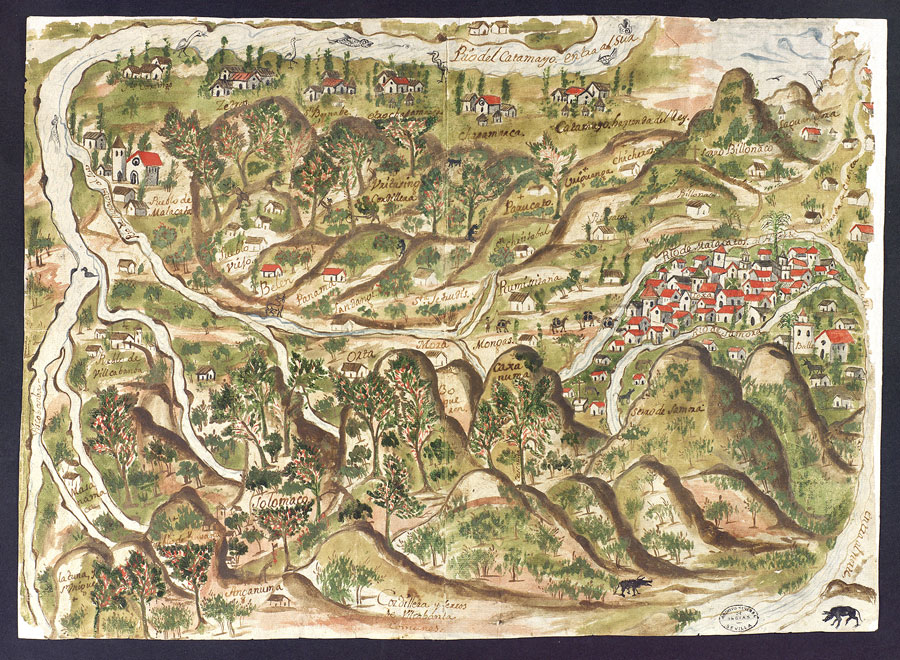
Figure 1. Loja, Peru, and the reserved Vilcabamba mountains where Cinchona trees grow, highlighting trade routes during the Viceroyalty of Peru. Source: General Archive of the Indies, Seville, Spain, 1773. Courtesy of José Carlos Arias.
Page created: June 09, 2026
Page updated: June 26, 2026
Page reviewed: June 26, 2026
The conclusions, findings, and opinions expressed by authors contributing to this journal do not necessarily reflect the official position of the U.S. Department of Health and Human Services, the Public Health Service, the Centers for Disease Control and Prevention, or the authors' affiliated institutions. Use of trade names is for identification only and does not imply endorsement by any of the groups named above.