Disclaimer: Early release articles are not considered as final versions. Any changes will be reflected in the online version in the month the article is officially released.
Volume 32, Number 9—September 2026
Dispatch
Genetically Distinct African Swine Fever Virus Genotype II Variant in Wild Boar, Spain, 2025–2026
 , Marina Marcet-Houben, Montserrat Agüero, Raquel Nieto, Nadia Casado, Alejandro Soler, María José Ruano, Rubén Villalba, Jovita Fernández-Pinero, Alicia Simón, Covadonga Pérez, Concepción Gómez, Cecilia García, Mireia Labrador, Jordi Argilaguet, Liani Coronado, Natàlia Majó, Pilar Aguilera-Sepulveda, Irene Aldea, Toni Gabaldón, María Belén Gómez, and Marisa Arias
Suggested citation for this article
Abstract
African swine fever virus genotype II was detected in wild boar in Spain in 2025 after >30 years of absence. Whole-genome sequencing and molecular follow-up of 8 representative cases identified a stable 9.8-kb deletion affecting the multigene family in the left variable region, defining an ASFV genotype II variant.
Figure 1
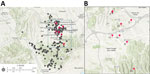
Figure 1. Spatial distribution of African swine fever virus (ASFV)–positive wild boar cases detected in northeastern Spain, 2025–2026. A) Geographic distribution of ASFV-positive wild boar cases detected during November 2025–May 2026 in...
African swine fever (ASF) is a highly contagious disease of domestic pigs and wild suids with major economic consequences. After the emergence of ASF virus (ASFV) genotype II in Georgia in 2007 (1), the virus spread across Europe and Asia and reached the Caribbean, demonstrating its capacity for transcontinental spread. In Europe, ASFV circulation is maintained in wild boar populations (2). On November 26, 2025, ASFV was confirmed in Spain (3). By May 29, 2026, a total of 326 ASFV-positive wild boar had been detected (Figure 1, panel A). Spain rapidly implemented control measures to limit wild boar movement, including carcass search and removal, reinforced passive surveillance, movement restrictions, and installation of fencing. This study describes the genomic characterization and molecular follow-up of 8 representative ASFV-positive wild boar cases detected during November 2025–February 2026, including the index cases (Figure 1, panel B).
Two freshly dead wild boar (Sus scrofa) were found on November 26, 2025, during passive wildlife surveillance near Barcelona, northeastern Spain (3). The animals were located ≈1 km apart in a periurban area with high human connectivity. We analyzed whole blood, serum, spleen, tonsil, and lymph node samples at Unitat Mixta d’Investigació Institut de Recerca i Tecnologia Agroalimentàries, Centre de Recerca en Sanitat Animal (IRTA-CReSA; Bellaterra, Spain), the Spanish National Reference Laboratory for ASF (Algete, Spain), and the European Union Reference Laboratory for ASF (EURL-ASF; Valdeolmos, Spain).
We confirmed that both animals tested ASFV-positive by World Organisation for Animal Health (WOAH) real-time PCR procedure 2; virus isolation in primary porcine alveolar macrophages showed the characteristic hemadsorption pattern. We detected ASFV-specific antibodies in both animals by WOAH indirect immunoperoxidase test; serum titers were 1:2,560.
Figure 2
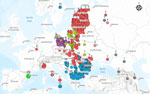
Figure 2. Geographic distribution of African swine fever (ASF) virus genotype II genetic groups in Europe, 2007–2025. We combined analysis of 6 genomic regions to define genetic groups. We assigned groups through...
Genotyping based on partial B646L (p72) sequencing assigned the virus to genotype II, which has circulated in Europe since 2007 (4). To determine whether the Spain ASFV corresponded to any of the 28 genotype II genetic groups the EURL-ASF identified in Europe (Figure 2), we analyzed viruses from both index wild boar using a harmonized 6-locus framework (5). Comparison with 1,192 homologous genotype II sequences available in the EURL-ASF sequence database (Appendix 1 Table 1) showed that 5 of 6 analyzed loci matched the Georgia 2007 genotype II variant 1 profile, whereas a previously undescribed G→A substitution within the MGF505-9R/10R intergenic region supported classification of the Spain isolate as a new genetic group, 29 (Figure 2).
We performed whole-genome sequencing to obtain higher-resolution genomic characterization of the Spain ASFV. We processed ASFV-positive blood samples using target-enriched libraries prepared with KAPA HyperCap workflow (Roche Sequencing Solutions, https://diagnostics.roche.com) and sequenced on an Illumina iSeq 100 platform (https://www.illumina.com), generating 2 × 150 bp paired-end reads. We mapped reads to the ASFV Georgia 2007/1 reference genome (GenBank accession no. FR682468.2). Both index wild boar cases yielded nearly identical genomes of 180,757 nt; mean coverage exceeded 200 times. We designated the consensus genome sequence SP25WB2611 (GenBank accession no. PZ023911).
Sequence analysis revealed a ≈9.8-kb deletion within the left variable region (LVR), spanning positions 10,264–20,087 of the reference genome. The deletion removed 21 coding sequences, predominantly members of multigene family (MGF) 110, together with MGF360-4L, MGF360-6L, and MGF100-1R (Appendix 2 Figure). Outside the deleted region, the genome retained >99.9% homology with Georgia 2007/1 with 30 differences: 18 single-nucleotide polymorphisms (SNPs) and 12 insertions or deletions.
Figure 3
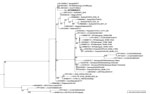
Figure 3. Maximum-likelihood phylogenetic tree based on complete genome sequences of ASFV genotype II from study of the variant in wild boar, Spain, 2025–2026. The analysis included 40 publicly available genomes retrieved...
To investigate the phylogenetic relationship of the Spanish ASFV, we retrieved 40 genotype II genomes sharing >99.94% nucleotide identity with the Spain isolate from GenBank. Maximum-likelihood analysis placed SP25WB2611 within the major genotype II lineage derived from Georgia 2007/1 (Figure 3). The Spain isolate clustered near historical Caucasus genotype II viruses, including Armenia 2007 and the Russian Federation 2008 Stavropol isolate, on the basis of SNP similarity outside the large LVR deletion.
To support molecular follow-up of the outbreak, we selected 6 additional ASFV-positive wild boar cases detected during November 2025–February 2026 for whole-genome sequencing (Figure 1, panel B; Appendix 1 Table 2). Those included the oldest ASFV-positive case identified during field investigation (SP25WBCASE5), considered the probable index case of the outbreak (case 0), which had likely been dead for ≈1.5–4 months before detection. All genomes clustered within the same clade and showed the characteristic ≈9.8-kb LVR deletion and nearly identical profiles compared with SP25WB2611. The only relevant difference was a synonymous SNP in case 11 relative to the Georgia 2007/1 reference genome (C→T at position 164,421). We also observed minor variations within polynucleotide tracts. We described genomic variants and epidemiologic data (Appendix 1 Tables 2, 3). We submitted the 6 consensus genome sequences to GenBank (accession nos. PZ619929–34).
Genomic characterization of ASFV detected in wild boar in northeastern Spain identified a distinct genotype II variant defined by a unique multigene profile and a large LVR deletion. Outside the deleted region, although the virus remained highly similar to the Georgia 2007/1 lineage, we found 30 nt differences, together with the novel MGF signature defining genetic group 29. In whole-genome phylogenetic analysis, the study isolate clustered near early Caucasus genotype II viruses. However, that clustering should be interpreted cautiously because the large LVR deletion contributed little to the phylogenetic topology. Furthermore, genotype II ASFVs show limited genomic divergence because of their slow evolutionary rate (≈1–1.5 × 10⁻⁵ substitutions/site/year; ≈2 substitutions/genome/year) (6). Consequently, relatively few SNP differences might influence phylogenetic grouping among closely related genotype II viruses. The clustering we observed does not necessarily indicate a direct epidemiologic relationship with early Caucasus isolates.
Analysis of 6 additional ASFV-positive wild boar cases confirmed the stability of the large LVR deletion and the high genomic similarity among the Spain isolates; we detected 1 synonymous SNP within the E423R coding region in case 11. Of importance, case 0 already carried the same deletion, suggesting that it was present before introduction into Spain. Although the precise origin of the variant remains unresolved, our data support a long-distance, human-mediated introduction; the isolated detection in a periurban setting with high human connectivity, along with the absence of epidemiologic continuity with affected regions, support that interpretation. Contaminated pork products remain a recognized pathway for ASFV introduction (7–9).
The genomic features of the Spain ASFVs result primarily from structural changes within the LVR, particularly the deletion affecting MGF110 and MGF360 genes involved in host–virus interactions and innate immune responses (10,11). Comparable LVR deletions have been reported in ASFV field variants from Estonia and Italy with different virulence outcomes (12,13), during adaptation of genotype II viruses to continuous cell cultures (14), and after heat treatment (15). In the Spain variant, the biological consequences of such changes remain uncertain. Serologic findings during outbreak follow-up at the NRL identified ASFV-specific antibodies in 44 (32.1%) of 137 PCR-positive wild boar specimens, confirming the initial findings in the index cases. Those data suggest a more prolonged course of infection than typically observed with highly virulent genotype II ASFV strains, in which animals often die within the first week after infection, before developing detectable humoral responses. Whether the prolonged course of infection we observed in this outbreak is associated with the large LVR deletion requires confirmation through in vivo studies. Our study highlights the importance of continued epidemiologic and genomic follow-up of ASFV outbreaks to better understand the evolution, circulation, and emergence of genetically distinct genotype II variants over time.
Dr. Gallardo is a senior research scientist at the Centro de Investigación en Sanidad Animal (CISA-INIA/CSIC), Madrid, Spain, and technical coordinator of both the European Union Reference Laboratory for ASF and the Food and Agriculture Organization Reference Centre for ASF. Her primary ASF work is in molecular epidemiology, diagnostics, and vaccine research. She has served as a WOAH-designated ASF expert.
Acknowledgments
We thank the Animal Facility Unit of IRTA-CReSA for excellent technical support.
This work was supported by the European Union Reference Laboratory for African swine fever (grant no. 101198164, EURL-ASF 2025–2027) and the Spanish Ministry of Science and Innovation (MICIU/AEI/10.13039/501100011033), grant PID2022-136312OB-I00.
The authors used ChatGPT (OpenAI, https://openai.com) for language editing and structural refinement of the manuscript. The authors take full responsibility for the content of this publication.
Author contributions: C.G., M.A., R.V., and M.Ag. conceived the study. C.G., M.A., J.F.-P., R.V., and M.Ag. designed the methodology. C.G., M.A., R.V., and M.Ag. conducted the investigation. N.C., R.N., J.A., L.C., N.M., A.S.L., A.S., C.P., C.C., M.B.G., and M.J.R. performed virus isolation and diagnostic procedures. M.M.-H., M.L., N.C., A.S., C.P., P.A., and C.Gar. carried out sequencing analyses. C.G., T.G., M.M.-H., and I.A. performed the bioinformatic analyses. C.G. and M.A. curated the data. C.G. prepared the original draft. C.G., M.A., R.V., and M.Ag. reviewed and edited the manuscript. C.G. and M.A. acquired funding. All authors read and approved the final manuscript.
References
- Rowlands RJ, Michaud V, Heath L, Hutchings G, Oura C, Vosloo W, et al. African swine fever virus isolate, Georgia, 2007. Emerg Infect Dis. 2008;14:1870–4. DOIPubMedGoogle Scholar
- Sukmanadi M, Khairullah AR, Mustofa I, Wiyono A, Wardhani BWK, Saepulloh M, et al. African swine fever: A highly fatal disease that is spreading globally. Open Vet J. 2025;15:3399–418. DOIPubMedGoogle Scholar
- World Organisation for Animal Health. African swine fever (ASF) in Spain: immediate notification report. 2025 [cited 2026 Mar 9]. https://wahis.woah.org
- Mazloum A, van Schalkwyk A, Chernyshev R, Igolkin A, Heath L, Sprygin A. A guide to molecular characterization of genotype II African swine fever virus: essential and alternative genome markers. Microorganisms. 2023;11:642. DOIPubMedGoogle Scholar
- Giammarioli M, Torresi C, Biccheri R, Cammà C, Marcacci M, Dondo A, et al. Genetic characterization of African swine fever Italian clusters in the 2022–2023 epidemic wave by a multi-gene approach. Viruses. 2024;16:1185. DOIPubMedGoogle Scholar
- Rossi G, Leitch ECM, Graham J, Biccheri R, Iscaro C, Torresi C, et al. A phylogenetic contribution to understanding the panzootic spread of African swine fever: from the global to the local scale. Virus Evol. 2025;12:
veaf103 . DOIPubMedGoogle Scholar - Lentz HHK, Bergmann H, Conraths FJ, Schulz J, Sauter-Louis C. The diffusion metrics of African swine fever in wild boar. Sci Rep. 2023;13:15110. DOIPubMedGoogle Scholar
- Mazur-Panasiuk N, Żmudzki J, Woźniakowski G. African swine fever virus—persistence in different environmental conditions and the possibility of indirect transmission. J Vet Res. 2019;63:303–10. DOIPubMedGoogle Scholar
- Schulz K, Calvelage S, Rogoll L, Conraths FJ, Staubach C, Albrecht K, et al. African swine fever outbreaks in German pig holdings - experiences, epidemiological considerations and genome sequences. Sci Rep. 2026;16:4350. DOIPubMedGoogle Scholar
- Huang R, Luo R, Lan J, Lu Z, Qiu HJ, Wang T, et al. The multigene family genes-encoded proteins of African swine fever virus: roles in evolution, cell tropism, immune evasion, and pathogenesis. Viruses. 2025;17:865. DOIPubMedGoogle Scholar
- Zhu Z, Chen H, Liu L, Cao Y, Jiang T, Zou Y, et al. Classification and characterization of multigene family proteins of African swine fever viruses. Brief Bioinform. 2021;22:
bbaa380 . DOIPubMedGoogle Scholar - Zani L, Forth JH, Forth L, Nurmoja I, Leidenberger S, Henke J, et al. Deletion at the 5′-end of Estonian ASFV strains associated with an attenuated phenotype. Sci Rep. 2018;8:6510. DOIPubMedGoogle Scholar
- Torresi C, Biccheri R, Cammà C, Gallardo C, Marcacci M, Zoppi S, et al. Genome-wide approach identifies natural large-fragment deletion in ASFV strains circulating in Italy during 2023. Pathogens. 2025;14:51. DOIPubMedGoogle Scholar
- Krug PW, Holinka LG, O’Donnell V, Reese B, Sanford B, Fernandez-Sainz I, et al. The progressive adaptation of a georgian isolate of African swine fever virus to vero cells leads to a gradual attenuation of virulence in swine corresponding to major modifications of the viral genome. J Virol. 2015;89:2324–32. DOIPubMedGoogle Scholar
- Bourry O, Hutet E, Le Dimna M, Lucas P, Blanchard Y, Chastagner A, et al. Oronasal or intramuscular immunization with a thermo-attenuated ASFV strain provides full clinical protection against Georgia 2007/1 challenge. Viruses. 2022;14:2777. DOIPubMedGoogle Scholar
Figures
Suggested citation for this article: Gallardo C, Marcet-Houben M, Agüero M, Nieto R, Casado N, Soler A, et al. Genetically distinct African swine fever virus genotype II variant in wild boar, Spain, 2025–2026. Emerg Infect Dis. 2026 Sep [date cited]. https://doi.org/10.3201/eid3209.260360
Original Publication Date: August 19, 2026
Table of Contents – Volume 32, Number 9—September 2026
| EID Search Options |
|---|
 Advanced Article Search – Search articles by author and/or keyword.
|
 Articles by Country Search – Search articles by the topic country.
|
 Article Type Search – Search articles by article type and issue.
|
Please use the form below to submit correspondence to the authors or contact them at the following address:
Carmina Gallardo, European Union Reference Laboratory for African Swine Fever, Centro de Investigación en Sanidad Animal (CISA-INIA-CSIC), Ctra. De Algete el Casar s/n, 28130 Valdeolmos, Madrid, Spain
Top