Volume 32, Number 9—September 2026
Research
Posttuberculosis Consequences on Tuberculosis Prevention Effectiveness and Cost-effectiveness among New Immigrants, Canada


Cite This Article
Citation for Media
Abstract
Cost-effectiveness analyses of tuberculosis (TB) preventive treatment rarely consider long-term TB consequences. We examined how long-term TB consequences influence the effectiveness and cost-effectiveness of TB prevention among persons who immigrate to Canada. By using a Markov microsimulation model of 400,000 persons immigrating to Canada in 2025, we compared current postarrival TB infection screening levels (0.5%) with a screening level of 68% among new immigrants. Modelling scenarios included acute TB consequences and long-term TB-related death, illness, and healthcare costs (25-year horizon, 1.5% discount rate). Including long-term TB-related consequences increased the estimated TB-related quality-adjusted life years (QALYs) lost by 2.1-fold (95% uncertainty range 1.7–2.5-fold). When long-term TB-related consequences were included, estimated QALYs gained from expanded screening increased 2.4-fold (95% uncertainty range 1.6–4.4-fold), reducing the cost per QALY from $235,088 to $100,742 CAD. Ignoring long-term TB consequences substantially underestimates the effectiveness and cost-effectiveness of preventive interventions; such consequences should be incorporated into future evaluations.
Tuberculosis (TB) is the world’s leading cause of death from a single infectious agent, killing an estimated 1.23 million persons worldwide in 2024 (1). Shifts in global migration patterns have changed the epidemiologic landscape for TB in low-incidence regions, and migrant populations bear disproportionately high TB effects (2). In migrant populations, most TB disease occurs from the progression of TB infection acquired before immigration (3). Therefore, providing TB preventive treatment (TPT) to persons who recently immigrated should be considered among other TB elimination strategies (4). However, results of cost-effectiveness analyses evaluating systematic screening and treatment for TB infection among persons who recently immigrated to low-incidence settings have been mixed (5,6), and the implementation of such programs is rare (7). Also, there is substantial variability in how existing studies consider the risks and consequences of TB disease and TPT (8). Nearly all studies only consider the acute consequences (disease and death) of TB during the treatment period, omitting the long-term illness and death associated with post-TB consequences (9). However, emerging research has highlighted that healthcare utilization spikes in the years after TB treatment (10), and TB survivors are at substantially higher risk for illness and death compared with those who never had TB (11,12).
Failure to account for the long-term consequences of TB disease might underestimate the quality-adjusted life years (QALYs) gained and cost-effectiveness of TB infection screening and TPT. A global analysis of disability-adjusted life years associated with TB suggests post-TB consequences account for half of the total TB-related health issues (9). Similarly, an analysis of a hypothetical preventive intervention in high-incidence, low-middle-income settings found considering post-TB consequences substantially reduced estimated incremental cost-effectiveness ratios (ICERs) (13). However, those analyses were only illustrative and focused primarily on low-middle-income settings. Understanding how post-TB consequences might inform public health decisions in a low-incidence, high-income setting would be useful.
We conducted a modeling analysis to evaluate how post-TB consequences might affect effectiveness and cost-effectiveness of TB prevention among persons who recently immigrated to Canada. We model how incorporating post-TB health consequences affects QALYs lost because of TB and the cost-effectiveness of TB prevention programs under different assumptions.
Setting and Model Overview
Canada is a low TB incidence country, reporting 2,508 persons with TB disease in 2024, corresponding to an incidence of 6.1/100,000 population (14). Overall, 83% of all persons with TB in Canada were born outside the country; most of those persons are now permanent residents and citizens of Canada (15). Currently, the Canada immigration medical exam focuses on detection of TB disease before entry into Canada. No provincial or territorial programs provide systematic screening and treatment for TB infection for all recently immigrated persons (16), and only 0.5% of persons with clinical risk factors for TB receive screening (17).
Because of that context, we developed a microsimulation model to evaluate the costs, effectiveness, and cost-effectiveness of a systematic postarrival TB infection screening program in persons who recently and permanently migrated to Canada. We adapted a Markov microsimulation model by using TreeAge Pro Healthcare 2025 (TreeAge Software, LLC, https://www.treeage.com) (A. Uppal et al., unpub. data). Canada immigration targets for 2025 were 395,000 persons (18). We rounded that target to 400,000 persons and simulated a hypothetical cohort structured according to the age and country of origin of new permanent residents of Canada in 2024 (19). We used a previous modeling study to estimate the prevalence of TB infection among persons who recently immigrated to Canada, according to age and TB incidence in country of origin (Appendix Table 1). We estimated the risk for progression to TB disease by using the Public Health Agency of Canada data detailing time to development of TB disease after immigration (Appendix) (15).
The model compares the existing level of TB infection screening and treatment among persons who recently immigrated to Canada (status quo) with a scaled-up TB infection screening and treatment program (intervention). In the intervention strategy, all new permanent residents whose country of origin has an annual TB incidence of >50/100,000 persons would be asked to participate in TB infection screening after arrival in Canada. If the person tested positive for TB infection, they would be given TPT. We assumed 68% of persons would comply with the request on the basis of adherence evidence from other postarrival follow-up activities among immigrants (20). In both status quo and intervention strategies, the tuberculin skin test is used for screening, and 4 months of daily rifampin is the TPT regimen (21). A simplified model structure, including health states, is provided (Appendix Figure 1).
The primary outcomes were QALYs, TB episodes, TB deaths, and TB-related costs accrued over the 25-year time horizon for both strategies. We took a TB services perspective for this analysis. All outcomes were discounted at a rate of 1.5% per annum, in line with recommendations from Canada (22).
Model Parameters
Whenever possible, we used systematic reviews and, if unavailable, high quality randomized trials and data from Canada to source all model parameters and set their distributions for probabilistic analysis (Table 1; Appendix Table 2). Most costs associated with TB came from a pan-Canada costing study (23). All cost parameters are expressed in 2023 Canadian dollars; we used consumer price indices to inflate costs to this year.
We parameterized QALYs lost during acute TB consequences by using an estimated annualized loss of 0.057 (excluding death) (24) and age-specific risk for death during acute TB by using surveillance data from Canada (15). We categorized post-TB consequences as increased risk for death after successful TB treatment, persistent illness because of long-term disability, and excess healthcare costs after TB (11). We assumed the risk for death after TB treatment was 69% (95% CI 50%–91%) higher than among age-matched persons without a history of TB disease (25) and that the increased risk persisted for life. We parameterized background risk of death from TB according to lifetables from Canada (26). In addition, we permanently reduced all TB survivors’ health utility by 1.8% (95% CI 0%–4.4%) (28). Finally, we estimated TB survivors would have excess healthcare costs of $3,383 (95% CI $1,934–$5,231) over 5 years after successful TB treatment (10), evenly distributed across each of the 5 years. We modeled each of those 3 post-TB consequences separately and together.
Analysis
Our Markov microsimulation model sampled from the associated distribution of each parameter 2,000 times to generate 2,000 parameter sets. For each parameter set, we simulated 400,000 persons and then estimated mean outcomes and 95% uncertainty ranges by using the 2.5th and 97.5th percentiles.
We projected outcomes for 5 scenarios. Each scenario included acute TB consequences: no post-TB consequences, post-TB death only, post-TB illness only, excess post-TB healthcare costs only, and all 3 post-TB consequences.
To estimate the effect of post-TB consequences on the estimated QALYs lost because of TB, we quantified QALYs lost because of TB under the status quo for each post-TB scenario. Next, we calculated incremental costs, QALYs, TB episodes, and TB deaths for the intervention strategy compared with the status quo for each scenario. We calculated the incremental cost per QALY gained and estimated the proportion of simulations where ICERs fell below several willingness-to-pay thresholds (WTP) per QALY, including $50,000, $100,000, and $150,000.
To further understand the relative importance of post-TB consequences to outcomes of cost-effectiveness, we performed a partial rank correlation coefficient (PRCC) analysis examining the different model parameters. For that analysis, the outcome was the incremental net monetary benefit (iNMB) of the intervention compared with the status quo for the scenario where all 3 post-TB consequences are considered calculated by using a WTP threshold of $100,000 per QALY. We calculated the iNMB by multiplying the incremental QALYs by the WTP and subtracting the incremental intervention costs.
To assess sensitivity of results to post-TB consequence parameters, we selected the 200 simulations with the lowest (0–10th percentile) and highest (90th–100th percentile) values for each parameter (increased disease, death, and healthcare costs). For each of those simulation sets, we estimated incremental outcomes, the ICER, and the proportion with ICERs below a WTP of $100,000 per QALY.
We performed 5 sets of scenario analyses. First, we increased our estimates of the QALYs lost because of the acute consequences of TB to 0.11 (parameterized with a minimum value of 0.03 and maximum of 0.2) (27). Second, in place of a tuberculin skin test, we modeled the use of an interferon-γ release assay, which had identical sensitivity but improved specificity (28), 100% test completion, and higher cost ($59) (23). We parameterized specificity by using a β distribution (α = 90 and β = 4) and the cost with a gamma distribution (shape = 60 and scale = 0.98). Third, we changed the annual discount rate to 0% and 3% (22). Fourth, we made our post-TB death parameter more conservative (9% increase, 95% uncertainty range [UR] 2%–17%), which we approximated on the basis of excess death expected from reduced lung function after TB (9). Fifth, we evaluated the effect of a lower rate of TB progression (0.75 [95% UR 0.6–0.9]/1,000 person years) on outcomes (29).
Under the status quo and considering only acute TB consequences, we projected 927 (95% UR 764–1,123) persons to develop TB and 30 (95% UR 24–36) to die from TB; we projected 312 (95% UR 241–386) QALYs lost. We projected TB-related health system expenditures to total $25.3 million (95% UR $7.6–$61.9 million) over the 25-year time horizon (Table 2; Appendix Table 3). Inclusion of post-TB death increased the estimated number of QALYs lost because of TB 1.6-fold (95% UR 1.4–1.7-fold), representing a 60% increase compared with acute TB consequences only. Similarly, inclusion of post-TB illness increased the estimated number of QALYs lost because of TB by 1.5-fold (95% UR 1.2–2.0-fold). Although including excess healthcare costs post-TB did not affect QALYs lost, it increased estimated TB-related health system expenditures to $27.6 million (95% UR $9.7–$64.5 million). When all post-TB consequences were included, TB was projected to result in 657 (95% UR 479–876) QALYs lost, a 2.1-fold (95% UR 1.7–2.5-fold) increase compared with estimates excluding post-TB consequences (Table 2; Appendix Table 3). This result suggests post-TB consequences accounted for 52% (95% UR 41%–60%) of QALYs lost because of TB.
Across all scenarios, a postarrival TB infection screening intervention was estimated to result in QALY gains, increased costs, and reduced TB episodes and deaths (Table 3). Compared with a scenario including only acute TB consequences, including post-TB death resulted in a slightly greater increase in estimated incremental QALYs gained by the intervention than including post-TB illness. When all 3 post-TB consequences were incorporated, estimated QALY gains increased by 2.4-fold (95% UR 1.6–4.4-fold), estimated TB deaths averted increased by 2.2-fold (95% UR 1.6–3.0-fold), and incremental costs were projected to be 4% (95% UR 1%–13%) lower compared with the exclusion of post-TB consequences.
When only acute consequences of TB were included, the estimated ICER of a postarrival TB infection screening intervention was $235,088 per QALY gained, compared with the status quo. When all 3 post-TB consequences were included, the ICER was reduced to $100,742. In that scenario, 53% of simulations had an ICER below a WTP threshold of $100,000, compared with only 8% when only acute consequences were included (Table 3; Appendix Figure 2).
Figure
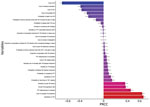
Figure. PRCC for incremental net monetary benefit as drivers of cost-effectiveness of tuberculosis prevention among immigrants, Canada. Incremental net monetary benefit refers to the difference in net monetary benefit between the...
When all post-TB consequences are included, the PRCC analysis showed that post-TB illness and death were positively correlated with iNMB, although excess post-TB healthcare costs were not (Figure). TB infection test specificity, cost of TB disease treatment, TPT effectiveness, annual TB progression rates, and health disutility from post-TB illness were the 5 parameters most positively correlated with iNMB. Post-TB death was the 11th most positively correlated parameter with iNMB. Similarly, we found estimates of effectiveness and cost-effectiveness of postarrival TB infection screening were most sensitive to the disutility associated with post-TB illness and minimally sensitive to post-TB death and excess post-TB healthcare costs (Appendix Table 4).
Estimates of the relative contribution of post-TB consequences to QALYs lost because of TB disease were inversely correlated to the acute consequences of TB (Appendix Table 5), but overall ICERs were more favorable when post-TB consequences were included (Appendix Table 6). Substitution of an interferon-γ release assay for the tuberculin skin test did not substantially affect estimated ICERs (Appendix Table 7) because specificity gains were offset by increased costs. Relative increases in QALYs gained after incorporating post-TB consequences and PRCC estimates were largely unchanged across discount rates (Appendix Tables 8, 9, Figures 3, 4). Unsurprisingly, ICERs were more favorable with no discounting and more unfavorable with 3% discounting. When all post-TB consequences were included, the estimated ICER was $71,714 per QALY gained, and 76% of simulations were <$100,000 per QALY gained with no discounting, whereas the corresponding outcomes with 3% discounting were $137,407 and 27%.
A more conservative parameterization of post-TB death substantially reduced the effect on QALYs lost because of TB and QALYs gained by a screening program. With a more conservative parameterization (9% vs. 69%), including post-TB death only increased the number of QALYs lost because of TB by 5% (95% UR 2%–9%). As a result, overall post-TB consequences accounted for a smaller proportion of QALYs lost because of TB than our base analysis at 44% (95% UR 23%–64%). In addition, the more conservative post-TB death risk reduced its influence on QALYs gained through the screening program and on the ICER (Appendix Tables 10, 11). Reducing the TB progression rate did not affect long-term TB consequence effect on QALYs gained through a screening program, but it did reduce the estimated cost-effectiveness (Appendix Tables 12, 13).
We found excluding post-TB consequences of illness, death, and excess healthcare costs can lead to substantially undervaluing TB prevention strategies in a low-incidence, high-income setting like Canada. Post-TB consequences account for a large fraction of QALYs lost because of TB. Including post-TB consequences in our analysis of a post-arrival TB infection screening and preventive treatment intervention among persons immigrating to Canada more than doubled the estimated QALYs gained and reduced the estimated ICER by >50%.
One of the most studied use cases for TB infection screening and preventive treatment in low-incidence countries is among persons who recently immigrated (4,30,31). Yet, the literature on that topic is largely divided when it comes to cost-effectiveness (8). Most of the literature evaluating cost-effectiveness has not incorporated post-TB consequences. A recent systematic review (8) found only 3 (32–34) of 14 included studies evaluating postarrival TB infection screening in immigrants considered post-TB consequences. None of those 3 studies considered increased healthcare cost, and only 1 study (34) considered elevated risk for death after TB. Although all 3 studies considered persistent illness after TB, its inclusion was highly variable across studies, which is unsurprising because of the paucity of prospective cohort data estimating health utility decrements associated with post-TB illness. Improving our understanding of the long-term effect of TB on health utility should be a priority, considering our finding that the cost-effectiveness estimates for TB prevention were sensitive to post-TB illness parameterization.
A global analysis of the health burden of incident TB estimated that 47% (95% UR 37%–57%) of TB-related disability-adjusted life years were attributed to post-TB illness and death (9). In our study, post-TB consequences accounted for 52% (95% UR 41%–60%) of TB-related QALYs lost. Our higher estimate might reflect a lower number of deaths and lower health disutility during the acute phase of TB in Canada but higher estimated post-TB death. When we used a conservative estimate of post-TB death, like the previous global study, our estimated contribution was only 44% (95% UR 23%–64%).
By neglecting the contribution of post-TB consequences on health disutility, most literature to date has likely undervalued the potential benefits of TB prevention strategies. Because ICERs for TB prevention among recent immigrants are typically above common WTP thresholds (30,31), reductions in the ICER might have meaningful policy implications. Also, ensuring that cost-effectiveness is accurately and comprehensively measured is necessary for policymakers seeking to prioritize scarce healthcare funds.
The first major strength of our study is that we parameterized post-TB consequences in our analysis by using high-quality data from Canada or from other published literature, with appropriate consideration of uncertainty. Second, we leveraged a common use case for our analysis, with our model structured to capture necessary elements of the care cascade and TB natural history. Finally, we also evaluated several implications of ignoring post-TB consequences relevant to both researchers and decision-makers.
The first limitation of our study is that we did not model secondary TB transmission beyond the cost of routine contact investigations. Including future TB cases resulting from secondary transmission would likely improve the estimated cost-effectiveness of the intervention. Second, we assumed that the observed increases in death, disease, and healthcare costs after TB were attributable to TB only and therefore preventable through TPT. Although we carefully adjusted the analyses of our underlying parameterization of those estimates, it is not possible to determine if TB was the only cause of those outcomes (35), and there might have been residual confounding factors. Third, we parameterized the elevated risk for illness and death post-TB to be lifelong. Our estimate of post-TB death risk was derived from a population-based study of permanent residents of British Columbia with a mean follow-up of 13 years. The elevated death risk persisted throughout the study period, suggesting it might be long-term. However, data on post-TB illness are less certain. Post-TB respiratory disease is heterogeneous (35), and some data suggest that the increase in post-TB respiratory disease might dissipate over time (36). However, post-TB illness is not limited to the respiratory system, and nonrespiratory disease might be substantial (37,38). Those 2 considerations might lead to inaccurately assessing the effect of post-TB illness. Finally, we only considered health system costs related to TB. We did not include costs incurred by patients and caregivers during or after treatment. No comprehensive data on those costs are available in Canada (39). It is unclear how including patient-incurred costs would affect cost-effectiveness because patients incur costs during both TB disease and TPT (40,41).
In summary, neglecting post-TB consequences underestimated the effectiveness of a postarrival infection screening and treatment intervention among persons who recently immigrated to Canada by more than 2-fold. Including all post-TB consequences reduced the estimated ICERs from $235,088 to $100,742 per QALY gained. Our findings suggest the long-term health and economic burden of TB substantially affects how TB prevention is valued. Those findings should motivate TB preventive efforts and prompt the continued collection of relevant cohort data to fill critical knowledge gaps. We encourage the consistent inclusion of post-TB consequences in analyses of TB prevention to guide policy in low-incidence settings moving forward.
Mr. Ainiwaer is a master’s degree student in public health at McGill University. His work examines the long-term impacts of infectious disease on health and economic outcomes, with the aim of supporting more informed and equitable public health decisions.
Acknowledgments
We thank Nicolas Menzies for providing us with Canada-specific estimates of post-TB morbidity and mortality from their previous analysis.
All data informing the model are included in the manuscript. Access to model files (TreeAge) and code is available upon request to the corresponding author.
This work was funded by the National Sanitarium Association and the Canadian Institutes of Health Research (grant no. PJT-190227). J.R.C. receives salary support from the McGill University Health Centre Foundation and the McGill University Department of Medicine and holds a Chercheur-boursier award from the Fonds de recherche du Québec—Santé (grant no. 330287; https://doi.org/10.69777/330287).
References
- World Health Organization. Global Tuberculosis Report, 2025 [cited 2025 Nov 28] https://www.who.int/teams/global-programme-on-tuberculosis-and-lung-health/tb-reports/global-tuberculosis-report-2025
- Pareek M, Greenaway C, Noori T, Munoz J, Zenner D. The impact of migration on tuberculosis epidemiology and control in high-income countries: a review. BMC Med. 2016;14:48. DOIPubMedGoogle Scholar
- Shea KM, Kammerer JS, Winston CA, Navin TR, Horsburgh CR Jr. Estimated rate of reactivation of latent tuberculosis infection in the United States, overall and by population subgroup. Am J Epidemiol. 2014;179:216–25. DOIPubMedGoogle Scholar
- Wahedi K, Zenner D, Flores S, Bozorgmehr K. Mandatory, voluntary, repetitive, or one-off post-migration follow-up for tuberculosis prevention and control: a systematic review. PLoS Med. 2023;20:
e1004030 . DOIPubMedGoogle Scholar - Gogichadze N, Sagrera A, Vicente JÁ, Millet JP, López-Seguí F, Vilaplana C. Cost-effectiveness of active tuberculosis screening among high-risk populations in low tuberculosis incidence countries: a systematic review, 2008 to 2023. Euro Surveill. 2024;29:
2300614 . DOIPubMedGoogle Scholar - Pinheiro M, Valente C, Cruz M, Nascimento Moreira D, Aguiar A, Duarte R. European guidelines for the management of tuberculosis screening procedures in migrants: a systematic review. Pulmonology. 2025;31:
2482855 . DOIPubMedGoogle Scholar - Pareek M, Baussano I, Abubakar I, Dye C, Lalvani A. Evaluation of immigrant tuberculosis screening in industrialized countries. Emerg Infect Dis. 2012;18:1422–9. DOIPubMedGoogle Scholar
- Robayo SD, Tansey CM, Romanowski K, Campbell JR. Risks and consequences of TB and its prevention in cost-utility analyses among immigrants: a systematic review. IJTLD Open. 2025;2:555–62. DOIPubMedGoogle Scholar
- Menzies NA, Quaife M, Allwood BW, Byrne AL, Coussens AK, Harries AD, et al. Lifetime burden of disease due to incident tuberculosis: a global reappraisal including post-tuberculosis sequelae. Lancet Glob Health. 2021;9:e1679–87. DOIPubMedGoogle Scholar
- Romanowski K, Law MR, Karim ME, Campbell JR, Hossain MB, Gilbert M, et al. Healthcare utilization after respiratory tuberculosis: a controlled interrupted time series analysis. Clin Infect Dis. 2023;77:883–91. DOIPubMedGoogle Scholar
- Romanowski K, Baumann B, Basham CA, Ahmad Khan F, Fox GJ, Johnston JC. Long-term all-cause mortality in people treated for tuberculosis: a systematic review and meta-analysis. Lancet Infect Dis. 2019;19:1129–37. DOIPubMedGoogle Scholar
- Taylor J, Bastos ML, Lachapelle-Chisholm S, Mayo NE, Johnston J, Menzies D. Residual respiratory disability after successful treatment of pulmonary tuberculosis: a systematic review and meta-analysis. EClinicalMedicine. 2023;59:
101979 . DOIPubMedGoogle Scholar - Tomeny EM, Tran PB, Kazibwe J, Rosu L, Nikolaidis GF, Nightingale R, et al. A broader lens on tuberculosis cost-effectiveness analysis: how patient-incurred costs and post-tuberculosis outcomes reshape estimates in a multi-country study. PLOS Glob Public Health. 2025;5:
e0005062 . DOIPubMedGoogle Scholar - Public Health Agency of Canada. Tuberculosis disease surveillance. 2025 [cited 2026 Feb 9]. https://health-infobase.canada.ca/tuberculosis
- Public Health Agency of Canada. Tuberculosis in Canada: 2012–2021 expanded report. Ottawa (ON): The Agency; 2024.
- Immigration Refugees and Citizenship Canada. Medical examination for permanent residence applicants. 2025 [cited 2025 Nov 28]. https://www.canada.ca/en/immigration-refugees-citizenship/services/application/medical-police/medical-exams/requirements-permanent-residents
- Heffernan C, Jamro A, Egedahl ML, Long R. Evaluating Canada’s initiative of enhanced screening for tuberculosis infection in migrants: implementation lessons from Alberta. Can Commun Dis Rep. 2025;51:381–8. DOIPubMedGoogle Scholar
- Immigration Refugees Citizenship Canada. Immigration, refugees and citizenship Canada 2025–26 departmental plan, 2025 [cited 2025 Nov 28]. https://www.canada.ca/en/immigration-refugees-citizenship/corporate/publications-manuals/departmental-plans/2025-26-departmental-plan/departmental-plan-2025-2026-full.html
- Immigration Refugees and Citizenship Canada. Permanent residents—monthly IRCC updates. Open Government Portal. 2025 [cited 2025 Nov 28]. https://open.canada.ca/data/en/dataset/f7e5498e-0ad8-4417-85c9-9b8aff9b9eda
- Campbell JR, Johnston JC, Cook VJ, Sadatsafavi M, Elwood RK, Marra F. Cost-effectiveness of latent tuberculosis infection screening before immigration to low-incidence countries. Emerg Infect Dis. 2019;25:661–71. DOIPubMedGoogle Scholar
- Alvarez G, Pease C, Menzies D. Chapter 6: tuberculosis preventive treatment in adults. In: Canadian tuberculosis standards, 8th edition. Can J Respir Crit Care Sleep Med. 2022;6:77–86. DOIGoogle Scholar
- Canadian Agency for Drugs and Technologies in Health. Guidelines for the economic evaluation of health technologies, 2017 [cited 2025 Nov 28]. https://www.cda-amc.ca/guidelines-economic-evaluation-health-technologies-canada-4th-edition
- Campbell JR, Nsengiyumva P, Chiang LY, Jamieson F, Khadawardi H, Mah HK, et al. Costs of tuberculosis at 3 treatment centers, Canada, 2010–2016. Emerg Infect Dis. 2022;28:1814–23. DOIPubMedGoogle Scholar
- Bauer M, Ahmed S, Benedetti A, Greenaway C, Lalli M, Leavens A, et al. Health-related quality of life and tuberculosis: a longitudinal cohort study. Health Qual Life Outcomes. 2015;13:65. DOIPubMedGoogle Scholar
- Basham CA, Karim ME, Cook VJ, Patrick DM, Johnston JC. Post-tuberculosis mortality risk among immigrants to British Columbia, Canada, 1985–2015: a time-dependent Cox regression analysis of linked immigration, public health, and vital statistics data. Can J Public Health. 2021;112:132–41. DOIPubMedGoogle Scholar
- Statistics Canada. Life tables, Canada, provinces and territories, 2026 [cited 2026 Feb 9]. https://www150.statcan.gc.ca/n1/en/catalogue/84-537-X
- Menzies NA, Marks SM, Hsieh YL, Swartwood NA, Beeler Asay GR, Skarbinski J, et al. Contribution of posttuberculosis sequelae to life-years lost from tuberculosis disease in the United States, 2015-2019. Am J Respir Crit Care Med. 2025;211:1059–68. DOIPubMedGoogle Scholar
- Campbell JR, Pease C, Daley P, Pai M, Menzies D. Chapter 4: diagnosis of tuberculosis infection. In: Canadian tuberculosis standards, 8th edition. Can J Respir Crit Care Sleep Med. 2022;6(S1):49–65. DOIGoogle Scholar
- Ekramnia M, Li Y, Haddad MB, Marks SM, Kammerer JS, Swartwood NA, et al. Estimated rates of progression to tuberculosis disease for persons infected with Mycobacterium tuberculosis in the United States. Epidemiology. 2024;35:164–73. DOIPubMedGoogle Scholar
- Greenaway C, Pareek M, Abou Chakra CN, Walji M, Makarenko I, Alabdulkarim B, et al. The effectiveness and cost-effectiveness of screening for latent tuberculosis among migrants in the EU/EEA: a systematic review. Euro Surveill. 2018;23:17–00543. DOIPubMedGoogle Scholar
- Petersen E, Al-Abri S, Al-Jardani A, Memish ZA, Aklillu E, Ntoumi F, et al. Screening for latent tuberculosis in migrants—status quo and future challenges. Int J Infect Dis. 2024;141:
107002 . DOIPubMedGoogle Scholar - Goodell AJ, Shete PB, Vreman R, McCabe D, Porco TC, Barry PM, et al. Outlook for tuberculosis elimination in California: an individual-based stochastic model. PLoS One. 2019;14:
e0214532 . DOIPubMedGoogle Scholar - Ilaiwy G, Dowdy DW. Cost effectiveness of three months of rifapentine and isoniazid for latent tuberculosis in Syrian refugees. J Clin Tuberc Other Mycobact Dis. 2021;24:
100262 . DOIPubMedGoogle Scholar - Hsieh YL, Horsburgh CR Jr, Cohen T, Miller JW, Salomon JA, Menzies NA. Cost-effectiveness of screening with transcriptional signatures for incipient TB among U.S. migrants. PLoS Med. 2025;22:
e1004603 . DOIPubMedGoogle Scholar - Meghji J, Auld SC, Bisson GP, Khosa C, Masekela R, Navuluri N, et al. Post-tuberculosis lung disease: towards prevention, diagnosis, and care. Lancet Respir Med. 2025;13:460–72. DOIPubMedGoogle Scholar
- Nightingale R, Chinoko B, Lesosky M, Rylance SJ, Mnesa B, Banda NPK, et al. Respiratory symptoms and lung function in patients treated for pulmonary tuberculosis in Malawi: a prospective cohort study. Thorax. 2022;77:1131–9. DOIPubMedGoogle Scholar
- Akalu TY, Clements ACA, Liyew AM, Gilmour B, Murray MB, Alene KA. Risk factors associated with post-tuberculosis sequelae: a systematic review and meta-analysis. EClinicalMedicine. 2024;77:
102898 . DOIPubMedGoogle Scholar - Auld SC, Bisson GP. Post-tuberculosis sequelae and the burden of “long TB”: continuing TB care after treatment completion. Am J Respir Crit Care Med. 2025;211:912–3. DOIPubMedGoogle Scholar
- Portnoy A, Yamanaka T, Nguhiu P, Nishikiori N, Garcia Baena I, Floyd K, et al. Costs incurred by people receiving tuberculosis treatment in low-income and middle-income countries: a meta-regression analysis. Lancet Glob Health. 2023;11:e1640–7. DOIPubMedGoogle Scholar
- Vesga JF, Mohamed MS, Shandal M, Jabbour E, Lomtadze N, Kubjane M, et al. The effectiveness, cost-effectiveness, budget impact, and return on investment of scaling up tuberculosis screening and preventive treatment in Brazil, Georgia, Kenya, and South Africa: a modelling study. Lancet Glob Health. 2025;13:e1857–68. DOIPubMedGoogle Scholar
- Shepardson D, Marks SM, Chesson H, Kerrigan A, Holland DP, Scott N, et al. Cost-effectiveness of a 12-dose regimen for treating latent tuberculous infection in the United States. Int J Tuberc Lung Dis. 2013;17:1531–7. DOIPubMedGoogle Scholar
Figure
Tables
Cite This ArticleOriginal Publication Date: August 17, 2026
Table of Contents – Volume 32, Number 9—September 2026
| EID Search Options |
|---|
 Advanced Article Search – Search articles by author and/or keyword.
|
 Articles by Country Search – Search articles by the topic country.
|
 Article Type Search – Search articles by article type and issue.
|
Please use the form below to submit correspondence to the authors or contact them at the following address:
Jonathon R. Campbell, McGill University, Office 3D.55, 5252 Boulevard de Maisonneuve O, Montreal, QC H4A 3S5, Canada
Top