Volume 31, Number 12—December 2025
Research Letter
Metatranscriptomic Identification of Trubanaman Virus Sequences in Patient with Encephalitis, Australia
 , John Woodford, Elango Subramonia Pillai, Andrea Henden, Kym Lowry, Mary E. Petrone, Patrick N.A. Harris, and Edward C. Holmes
Figure
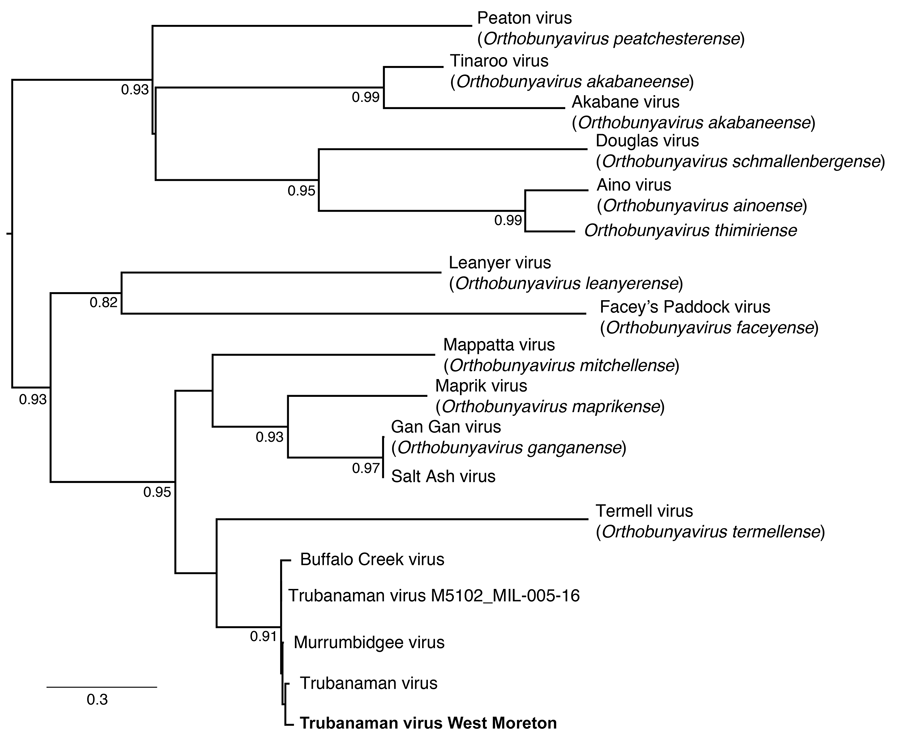
Figure. Phylogenetic tree of orthobunyavirus M segment sequences from this study and previously collected mosquito samples in study of metatranscriptomic identification of Trubanaman virus in patient with encephalitis, Australia. Bold font indicates the human sequence from this study; other sequences are from mosquito orthobunyaviruses previously identified in Australia. Sequences were aligned using MAFFT (https://mafft.cbrc.jp/alignment/server/index.html). The phylogeny was estimated using the maximum-likelihood approach in PhyML (http://atgc.lirmm.fr/phyml), by using the general time reversible model of nucleotide substitution and gamma-distributed rate variation among sites. Bootstrap support values are displayed at nodes. Scale bar indicates nucleotide substitutions per site.