Volume 32, Number 1—January 2026
Research
Reduced Emergency Department Visits and Hospitalizations in Infants after Universal Respiratory Syncytial Virus Immunization, Italy, 2024–25

 , Simona Scarioni1, Enrico Pigozzi, Manuel Maffeo, Mauro Maistrello, Giorgio Bagarella, Francesco Scovenna, Federica Morani, Marlen Romano, Gianvincenzo Zuccotti, Massimo Agosti, Catia Borriello, Elena Pariani, Guido Bertolaso, Luigi Vezzosi, Fausto Baldanti, Mario Melazzini, Elena Azzolini, Gabriele del Castillo2, Danilo Cereda2, and Regional Immunization Council3
Cite This Article
Citation for Media
Abstract
During the 2024–25 winter season, a universal immunization campaign with nirsevimab was implemented in a region of Italy to prevent respiratory syncytial virus (RSV) infection among infants <12 months of age. We assessed its effects using regional syndromic surveillance data on emergency department visits (EDVs) and hospitalizations for lower respiratory tract infections and RSV infections. We estimated expected burden using an interrupted time series analysis, based on historical trends, and observed values with predictions. Children 1–5 years of age, not eligible for immunization, served as a comparison group. Among infants, EDVs for acute lower respiratory tract infections decreased by 42.7% and hospitalizations decreased by 46.5%, whereas EDVs for RSV infection decreased by 49.3% and hospitalizations decreased by 55.0%. No reductions were observed in children 1–5 years of age, confirming ongoing RSV circulation. Our findings support the effectiveness of universal nirsevimab immunization in reducing severe RSV-related outcomes among infants.
Respiratory syncytial virus (RSV) is the most common cause of acute lower respiratory tract infections (LRTI) in children and can potentially result in bronchiolitis, which often requires hospitalization. Young children, especially during their first 6 months of life, are at high risk for illness and death caused by RSV, particularly during a first infection (1).
Nirsevimab (Beyfortus; AstraZeneca, https://www.astrazeneca.com; Sanofi Pasteur, https://www.sanofi.com), a long-acting monoclonal antibody (mAb) against RSV, has an extended half-life of ≈71 days (2) and has been used in recent years to prevent severe RSV infections and outcomes in children <1 year of age. Recent clinical trials have demonstrated its efficacy in preventing RSV-associated acute LRTI, with an observed efficacy of 75% (3). In addition, a 62% reduction in hospitalization because of RSV-associated LRTI has been reported (3), which increased to 78.4% among preterm infants (4). A pragmatic trial conducted under near real-world conditions showed 83.2% overall effectiveness of nirsevimab and 75.7% effectiveness in reducing severe RSV-associated LRTI requiring supplemental oxygen (5). Other studies using real-world data have reported similar results, especially for RSV-related hospitalizations and severe RSV disease (6–8). A systematic review and meta-analysis has further validated that mAb administration in infants reduces the burden of RSV-related hospital and ICU admissions (9).
Initial experiences with routine nirsevimab immunization in infants have been reported in several hospitals across Europe (10–12), and new population-level studies are emerging, all indicating a marked positive effect, especially in very young infants (12). This positive effect is further supported by evidence from settings where both maternal and infant immunization programs are implemented, suggesting potential additive benefits in reducing the burden of RSV-related illness (13).
During October 2024–March 2025, a large-scale immunization campaign using nirsevimab was launched in Lombardy, Italy, a region of northern Italy with nearly 10 million inhabitants, for infants <12 months of age. We conducted a study to estimate the effects of the campaign on the incidence of emergency department visits (EDVs) and hospital admissions associated with acute LRTI and RSV infection. Because studies conducted so far did not account for season-to-season variability (6–9), which could result in inaccurate estimates of the effects of RSV immunization, we performed an interrupted time series analysis that incorporated this element to estimate changes in trends before and after the program was implemented.
This project, conducted using routinely collected health data, was deemed by the Directorate General for Health of the Lombardy Region to be public health surveillance (Regional Government Resolution DGR n. XII/3010 of September 9, 2024, concerning the assessment of universal RSV immunization), not research, and was conducted according to applicable regional (Regional Law n. 33/2009, Art. 5 bis) and national law and policy (Italian Legislative Decree n. 196/2003, as amended by Legislative Decree n. 101/2018, Art. 2-sexies). Data processing complied with national and European data protection regulations (General Data Protection Regulation 2016/679).
Study Design and Population
The study used an interrupted time series design combined with a negative binomial regression model. The analysis covered the period of August 27, 2018 (ISO week 35–2018), through May 11, 2025 (ISO week 19–2025).
The primary study population for evaluating an intermediate intervention outcome consisted of infants <12 months of age residing in the Lombardy region of Italy. All analyses were based on the secondary use of anonymized datasets routinely collected by the Lombardy Region’s Directorate General for Health as part of its public health mandate.
Data
The regional Emergency Department Syndromic Surveillance system is a new instrument developed by the Prevention Unit of the Lombardy Region’s Directorate General for Health (14). Emergency department (ED) records were classified as EDVs if the patient was evaluated in the ED and not admitted; records were classified as hospitalizations if the patient was admitted. Each ED record was classified using codes from the International Classification of Diseases, 9th Revision, Clinical Modification (ICD-9-CM), providing a concise and precise description of the primary diagnosis of the visit. To analyze the performance of the immunization campaign, additional codes for acute LRTI and RSV infection were monitored (Appendix Table 1).
We obtained data on the number of births from the regional demographic registry, which collects and updates vital statistics, including births, deaths, and resident population data. We obtained data on the number of nirsevimab administrations from the regional data flow system, which systematically records individual vaccination events across healthcare settings. Using data on monthly birth cohorts and individual-level vaccination records, we linked each nirsevimab administration to the corresponding child to calculate immunization coverage for birth cohorts during January 2024–March 2025.
RSV Immunization Campaign
The 2024–25 immunization campaign against RSV infection in the Lombardy region targeted all infants born during January 1, 2024–March 31, 2025. A multicenter approach was used to ensure broad coverage; immunizations were provided through vaccination centers, general pediatricians, hospital pediatric departments, and hospital maternity units.
Beginning October 10, 2024, infants born during January–October 2024 were eligible to receive a single dose of nirsevimab (50 mg or 100 mg according to weight) at vaccination centers or from general pediatricians. Starting November 1, 2024, nirsevimab became available for direct administration at hospital maternity units. Infants who were not immunized at birth were subsequently contacted through vaccination centers or general pediatricians to receive the RSV immunization. Maternal vaccination for RSV was not available in this region or in Italy during the 2024–25 season.
Statistical Analysis
We aggregated EDVs and hospital admissions into weekly counts and displayed them graphically by ISO week. We defined epidemic seasons as beginning in ISO week 35 of 1 year and ending in ISO week 19 of the following year, capturing the full duration of RSV activity. We stratified descriptive calculations by age group: <1 year and 1–5 years.
To evaluate the effects of the immunization campaign, we conducted interrupted time-series analyses using generalized linear models. The primary impact indicators analyzed in this study included EDVs and hospitalizations for acute LRTI and RSV infection. The intervention period ran from October 10, 2024 (ISO week 41–2024) through March 31, 2025 (ISO week 14–2025).
We trained Poisson and negative binomial regression models using historical data and used them to predict outcomes for the 2024–25 season. Because the seasonal patterns of pre-COVID seasons differ substantially from those after the first waves of COVID-19 in the region, we used data from ISO week 35–2021 to ISO week 41–2024 to train the model. Weekly counts of EDVs and hospitalizations for acute LRTI and RSV infection were used as outcome variables (Appendix). We used the model to generate counterfactual estimates (i.e., the expected number of EDVs and hospitalizations for acute LRTI and RSV infection in the absence of an RSV immunization campaign). We then compared observed cases with those estimates, which were displayed with 95% uncertainty intervals (95% UIs).
To determine whether differences between observed and expected values among infants were caused by a general reduction in RSV circulation rather than the immunization campaign, we compared EDVs and hospitalizations for acute LRTIs and RSV infection in children 1–5 years of age. Those children were not eligible for nirsevimab and served as the comparison group.
We conducted a sensitivity analysis (Appendix) to further corroborate results when excluding diagnoses that could potentially lead to misclassification of EDVs or hospitalizations. We performed all analyses using Python 3.13.0 (https://www.python.org/downloads/release/python-3130) with the pandas, numpy, matplotlib, statsmodels, and patsy packages. We cleaned and managed historical data before December 31, 2024, by using SAS 9.4 (SAS Institute Inc., https://www.sas.com).
A total of 64,903 doses of nirsevimab were administered by the end of the immunization campaign on March 31, 2025, consisting of 34,913 doses at 100 mg and 29,990 doses at 50 mg. Those doses were given to 61,732 infants out of 77,983 births registered during January 1, 2024–March 31, 2025, resulting in an overall immunization coverage rate of 79.2% (Appendix Table 3).
Figure 1
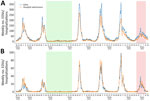
Figure 1. EDVs and hospitalizations among children <12 months of age in study of reduced EDVs and hospitalizations in infants after universal respiratory syncytial virus immunization, Italy, 2024–25. Numbers are shown for...
Figure 2

Figure 2. EDVs and hospitalizations in children 1–5 years of age in study of reduced EDVs and hospitalizations in infants after universal respiratory syncytial virus immunization, Italy, 2024–25. Numbers are shown for...
We observed pronounced seasonal trends across both age groups in all winter seasons, except for 2020–21, when public health and social measures were widely implemented in the Lombardy Region in response to the initial waves of the COVID-19 pandemic (Figures 1, 2). Epidemic waves after this period exhibited substantially higher peaks than did pre-COVID seasons (i.e., 2018–19 and 2019–20); patterns of EDVs and hospital admissions were increasingly delayed, and most cases occurred among infants <12 months of age (Figure 1).
In the postpandemic seasons (2021–22, 2022–23, and 2023–24), peaks in EDVs for acute LRTIs and RSV infection among children <12 months of age were typically observed from ISO week 46 (2021–22 season) to ISO week 1 (2022–23 season); an average of 359 (range 354–364) visits for acute LRTIs and 78 (range 68–98) visits for RSV infections occurred (Table 1; Appendix Table 4). Seasonal peaks in both EDVs and hospital admissions for acute LRTI in that age group were lower in prepandemic seasons but though still higher than in 2024–25. For RSV infection, however, the 2024–25 season peak was similar to prepandemic levels; 38 EDVs (vs. 30–32 prepandemic) and 27 hospital admissions (vs. 32–36 prepandemic) were recorded (Appendix Table 4).
In the same ISO weeks in which EDVs for acute LRTI peaked across seasons among infants <12 months of age, a peak was also recorded among children 1–5 years of age (i.e., between ISO weeks 46 and 51); an average of 32 (range 24–37) EDVs for acute LRTI was recorded (Table 1). Unlike the pattern observed in children <12 months of age, the 2024–25 seasonal peak among children 1–5 years of age reached similar numbers of EDVs and hospital admissions for acute LRTI to the numbers seen in post-COVID seasons (Table 1; Figure 2).
Figure 3
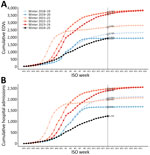
Figure 3. Comparison of cumulative EDVs (A) and hospitalizations (B) for lower respiratory tract infections among children <12 months of age from winter season 2018–19 to 2024–25 in study of reduced EDVs...
When comparing the cumulative number of EDVs and hospital admissions for acute LRTI across different winter seasons among children <12 months of age, the lowest counts were recorded in the 2024–25 season: 1,918 EDVs and 1,240 hospitalizations. The cumulative number of EDVs for acute LRTI was markedly higher in postpandemic seasons than in prepandemic seasons (Figure 3). Similar patterns were observed for RSV infection (Appendix Figure 1).
During the 2021–22 winter season, EDVs and hospitalizations for acute LRTIs increased among infants <12 months of age, resulting in 2,685 EDVs and 1,982 hospital admissions (Figure 3). Those numbers rose further in the 2022–23 and 2023–24 seasons, reaching 3,700 EDVs in 2022–23 and 3,572 EDVs in 2023–24.
In the 2024–25 season, only 1,918 EDVs for acute LRTI were recorded among children <12 months of age (Table 2; Appendix Figure 3, panel A), marking the lowest number of EDVs for the condition across all winter seasons studied, including both prepandemic and postpandemic periods. Compared with 3,700 EDVs in the 2022–23 season and 3,572 EDVs in the 2023–24 season, that difference represents a decline of >50%. Even more pronounced reductions were observed in hospital admissions for acute LRTI, which fell to 1,240 during the 2024–25 season, compared with 2,396 in the 2023–24 season (a 48% reduction) and 2,478 in the 2022–23 season (a 50% reduction) (Figure 3, panel B). Although the peak of EDVs and hospital admissions for RSV infection in the 2024–25 season was similar to that observed in prepandemic seasons (Appendix Table 4), cumulative counts in the postpandemic seasons (from 2021–2024) were substantially higher (Appendix Figure 1). Compared with the 2022–23 season, the 2024–25 season showed a 59% reduction in EDVs (from 644 to 265) and a 61% reduction in hospital admissions (from 704 to 273) among children <12 months of age.
Interrupted Time Series Analysis
Figure 4
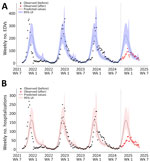
Figure 4. Interrupted time series analysis of EDVs (A) and hospitalizations (B) for lower respiratory tract infections among infants <12 months of age in study of reduced EDVs and hospitalizations in infants...
Figure 5

Figure 5. Interrupted time series analysis of EDVs (A) and hospitalizations (B) for lower respiratory tract infections among children 1–5 years of age in study of reduced EDVs and hospitalizations in infants...
Regression modeling suggested that EDVs and hospitalizations for acute LRTI and RSV infection plummeted among children <12 months of age during the 2024–25 season (Table 2; Figure 4; Appendix Figure 2). We observed comparable declines for LRTI and RSV infections among the same age group, both in EDVs (−42.7% for LRTIs and −49.3% for RSV infection) and hospital admissions (−46.5% for LRTIs and −55.0% for RSV infection). By contrast, children 1–5 years of age, who were not the target population of the immunization campaign, showed an opposite trend (Figure 5; Appendix Figure 3). Although those children had lower absolute numbers of both EDVs and hospitalization than infants <12 months of age, their indicator activity increased during the 2024–25 season. Specifically, predicted EDVs for RSV infection were 68 (95% UI 55–80), whereas observed visits were 116, a 70.6% (95% UI 26.5–114.7) increase. Those values exceeded those observed in previous post-COVID seasons (2021–22 to 2023–24), confirming persistent RSV circulation among children 1–5 years of age. Similarly, predicted hospital admissions for RSV infection were 46 (95% UI 36–55), compared with 75 observed admissions, a 63.0% (95% UI 13.0– 113.0) increase.
Sensitivity Analysis
Diagnoses of ICD-9-CM code 07.96 (i.e., RSV infection) accounted for 0.2% of EDVs and hospitalizations for acute LRTIs among children <12 months of age and accounted for 2.0% of EDVs and 0.8% of hospital admissions among children 1–5 years of age (Appendix Table 5, Figures 4, 5). Excluding that diagnosis code from the acute LRTI definition produced only minor differences in the estimated impact of universal RSV immunization, underscoring the robustness of the analysis (Appendix Table 6).
We present the results of an evaluation of the effectiveness of a large-scale nirsevimab immunization campaign for infants <12 months of age. The campaign aimed to reduce EDVs and hospital admissions for acute LRTI and RSV infection in the Lombardy region of northern Italy.
We observed a significant overall decline in EDVs and hospitalizations for acute LRTI and RSV infection among infants <12 months of age; we observed comparable percentage reductions in both EDVs and hospitalizations relative to both historical trends and model-predicted values. Starting November 2024, most infants were immunized at birth, ensuring timely protection. This campaign likely contributed to the observed impact, as opposed to outpatient-based strategies that rely on postdischarge follow-up. However, this decline is unlikely attributable to reduced or interrupted RSV circulation during the 2024–25 season, given that the trends observed in the 1–5–year age group remained consistent with or exceeded historical and predicted levels. The observed reduction in RSV-related outcomes in infants was not mirrored in children 1–5 years of age, suggesting that the intervention likely prevented disease among infants, not that levels of RSV circulation in the population were reduced.
A recent analysis modeled different immunization and vaccination scenarios in the Lombardy region using data collected before the RSV campaign was implemented to inform regional public health policies (15). That analysis estimated a considerable reduction in the number of hospitalizations caused by RSV: a 44% decrease with an estimated immunization coverage rate of 70% and a 60% decrease with an estimated immunization coverage rate of 95%. Those findings are consistent with the results of our analysis, which found that EDVs associated with RSV hospitalization decreased by 55% in the 2024–25 season. The previous study further predicted that the intervention would have had limited effects on reducing overall RSV circulation, because infants contribute relatively little to RSV community transmission (15). Our study corroborated that finding; an opposing trend was observed in children 1–5 years of age, supporting the use of this age group as a comparison population for deriving counterfactual estimates.
The effect of the RSV immunization campaign observed in our study is further supported by effectiveness estimates derived from a density case–control study (16), which were subsequently applied to the eligible infant population in Spain to estimate the national impact (17). That extrapolation suggests that, for every 1,000 infants immunized with the mAb, 14.7 cases of RSV-associated acute LRTIs are prevented. Likewise, we observed that, for every 1,000 mAb doses administered, 22.0 EDVs (1,429/64,903) and 16.6 hospital admissions (1,076/64,903) for acute LRTI were prevented.
Similar findings have been reported in Luxembourg (10), where an estimated coverage of 84% was achieved in maternity wards across the country’s 4 hospitals (≈1,524 births), leading to a 69% reduction in hospitalizations among infants <6 months of age with laboratory-confirmed RSV infection. A notable increase in the mean age of RSV-associated hospitalizations was observed in that study for 2024–25 compared with 2022–23; the mean age shifted from 7.8 months in 2022–23 to 14.4 months in 2024–25. That shift in age distribution might partly explain the differences observed in our study, where EDVs and hospitalizations were considered in infants <12 months of age, in addition to potential variations in immunization coverage.
As expected, no surge in EDVs or hospitalizations for acute LRTI or RSV infection was observed during the rigorous implementation of public health and social measures in the initial phase of the pandemic in 2020 and 2021. Compared with previous epidemics, the postpandemic periods recorded the highest number of EDVs and hospital admissions. That phenomenon might be attributed to waning immunity against RSV as a result of the stringent public health and social measures implemented to curb the surge of COVID-19 cases. Those measures ultimately reduced the circulation of several respiratory viruses, including RSV (18,19).
Our analysis has several limitations arising from the reliance on administrative anonymized datasets rather than laboratory RSV test results. First, testing intensity for RSV might have varied over the study period, particularly with increased diagnostic efforts in recent years (Appendix Table 5). Those differences might have led to greater detection of mild or non-LRTI RSV, affecting comparability across seasons. To mitigate that possibility, we adopted a broader case definition for acute LRTI that relied less on microbiological confirmation. Sensitivity analyses further suggested that non-LRTI RSV infections had only a marginal effect on the model estimates. Second, the datasets we used were not originally designed to identify individual cases. We made efforts to remove duplicates from EDVs and hospitalization data using a set of criteria, but that process was further complicated by the impossibility of ascertaining patients’ exposure to the intervention under assessment. Therefore, an unimmunized infant might have visited different hospitals on different days, resulting in multiple counts without the possibility of deduplication. Third, because the case definition used for acute LRTI includes ICD-9-CM code 079.6, some episodes might include upper respiratory tract infections, leading to potential overestimation of RSV-related acute LRTI episodes. However, on the basis of the sensitivity analysis we conducted, that factor did not affect impact estimates when we removed diagnoses coded 079.6 from the case definition of acute LRTIs. Fourth, although most studies have focused on infants <6 months of age, we were unable to replicate that cutoff because of the nature of the ED data and the fact that the target population of the universal immunization campaign included all infants born during 2024–March 2025. Although the datasets used in our analysis encompass both date of birth and age group, only age group is a mandatory variable, because it is either directly recorded during the EDV or derived from date of birth. For children, the available age categories distinguish only between those <12 months of age and those 1–5 years of age. Consequently, our analysis was constrained to the infants <12 months of age, rather than infants <6 months of age. Fifth, the 2024–25 RSV season might not have been fully captured within the analysis period, potentially leading to underestimation of RSV-related outcomes for that season. That factor should be considered when comparing with earlier seasons that were fully observed. Last, because of the nature of the dataset used, persons residing outside the region who might have sought care at 1 of the ≈100 hospitals could not be excluded. That limitation is likely to have a minimal impact at the regional level, but it could be more relevant in areas near the borders of other regions in Italy or near Switzerland, where cross-border healthcare use could occur in both directions.
This study explored the effects of nirsevimab administration in a large territory with a population of ≈10 million persons and ≈64,500 births in 2024 (20) (63,053 of whom lived in the region), focusing on the number of EDVs and hospital admissions both for acute LRTIs and RSV infection among infants <12 months of age. We compared results with historical trends as well as to a comparison group to elucidate the effect of the immunization campaign. We found that use of nirsevimab for passive immunization of newborns and children <12 months of age, achieving an immunization coverage rate of ≈79% across the Lombardy region of Italy, resulted in a substantial reduction in EDVs and hospital admissions for acute LRTI and RSV infection. Further studies will be conducted upon the conclusion of the RSV epidemic to estimate the cost-effectiveness of the immunization campaign implemented. Our results, combined with those future analyses, will help inform policy decisions for future immunization programs.
Dr. Villa is a medical resident in public health at the University of Milan and an MSc candidate in epidemiology at the London School of Hygiene & Tropical Medicine. At the Regional Health Directorate of Lombardy Region, he works on various surveillance activities, including respiratory virus monitoring in the community and emergency departments, syndromic surveillance, antimicrobial resistance, and wastewater surveillance. Dr. Scarioni is a medical resident in public health at the University of Milan and a medical officer at the Regional Health Directorate of Lombardy Region. In her position, she works on vaccines and immunization, coordinating data-related activities in those areas.
Additional members of the Regional Immunization Council: Matteo Capobussi, Lorenzo Moja, Doriana Bertazzo, Andrea D’Adda, Monica De Angelis, Maria Grazia Manfredi, Chiara Marchisio, Alberto Moscariello, Sergio Abrignani, Paolo Bonfanti, Marino Faccini, Umberto Gelatti, Vania Giacomet, Andrea Gori, Carlo La Vecchia, Antonella Laiolo, Antonio Piro, Ian Schroeder, Giuliano Rizzardini, Pierachille Santus, and Carlo Signorelli.
Acknowledgments
AI tools were employed exclusively for copyediting purposes in this manuscript. No new content was generated by the AI system. All authors reviewed and approved the final manuscript. We affirm that the use of AI did not compromise the authenticity or integrity of the work.
Study conception and oversight were conducted by S.V., G.d.C., and D.C.; acquisition of data was performed by S.V., S.S., M. Maistrello, and G.B.; data analysis was performed by S.V., M. Maistrello, and G.B.; interpretation of data was performed by S.V., S.S., M. Maistrello, G.B., M. Maffeo, G.d.C., and D.C.; S.V. drafted the work; and M. Maffeo, G.d.C., D.C., S.S., C.B., E.P., and E.A. reviewed the work critically. All authors have read, reviewed, and approved the version of the manuscript to be published.
References
- Blau DM, Baillie VL, Els T, Mahtab S, Mutevedzi P, Keita AM, et al.; CHAMPS Consortium. CHAMPS Consortium. Deaths attributed to respiratory syncytial virus in young children in high-mortality rate settings: report from Child Health and Mortality Prevention Surveillance (CHAMPS). Clin Infect Dis. 2021;73(Suppl_3):S218–28.PubMedGoogle Scholar
- European Medicines Agency. Beyfortus (nirsevimab) [cited 2025 May 23]. https://www.ema.europa.eu/en/medicines/human/EPAR/beyfortus
- Hammitt LL, Dagan R, Yuan Y, Baca Cots M, Bosheva M, Madhi SA, et al.; MELODY Study Group. Nirsevimab for prevention of RSV in healthy late-preterm and term infants. N Engl J Med. 2022;386:837–46.PubMedGoogle Scholar
- Griffin MP, Yuan Y, Takas T, Domachowske JB, Madhi SA, Manzoni P, et al.; Nirsevimab Study Group. Single-dose nirsevimab for prevention of RSV in preterm infants. N Engl J Med. 2020;383:415–25.PubMedGoogle Scholar
- Drysdale SB, Cathie K, Flamein F, Knuf M, Collins AM, Hill HC, et al.; HARMONIE Study Group. Nirsevimab for prevention of hospitalizations due to RSV in infants. N Engl J Med. 2023;389:2425–35.PubMedGoogle Scholar
- Moline HL, Tannis A, Toepfer AP, Williams JV, Boom JA, Englund JA, et al.; New Vaccine Surveillance Network Product Effectiveness Collaborators. Early estimate of nirsevimab effectiveness for prevention of respiratory syncytial virus-associated hospitalization among infants entering their first respiratory syncytial virus season—New Vaccine Surveillance Network, October 2023–February 2024. MMWR Morb Mortal Wkly Rep. 2024;73:209–14.PubMedGoogle Scholar
- Xu H, Aparicio C, Wats A, Araujo BL, Pitzer VE, Warren JL, et al. Estimated effectiveness of nirsevimab against respiratory syncytial virus. JAMA Netw Open. 2025;8:
e250380 .PubMedGoogle Scholar - Ares-Gómez S, Mallah N, Santiago-Pérez MI, Pardo-Seco J, Pérez-Martínez O, Otero-Barrós MT, et al.; NIRSE-GAL study group. Effectiveness and impact of universal prophylaxis with nirsevimab in infants against hospitalisation for respiratory syncytial virus in Galicia, Spain: initial results of a population-based longitudinal study. Lancet Infect Dis. 2024;24:817–28.PubMedGoogle Scholar
- Sumsuzzman DM, Wang Z, Langley JM, Moghadas SM. Real-world effectiveness of nirsevimab against respiratory syncytial virus disease in infants: a systematic review and meta-analysis. Lancet Child Adolesc Health. 2025;9:393–403.PubMedGoogle Scholar
- Ernst C, Bejko D, Gaasch L, Hannelas E, Kahn I, Pierron C, et al. Impact of nirsevimab prophylaxis on paediatric respiratory syncytial virus (RSV)-related hospitalisations during the initial 2023/24 season in Luxembourg. Euro Surveill. 2024;29:
2400033 .PubMedGoogle Scholar - López-Lacort M, Muñoz-Quiles C, Mira-Iglesias A, López-Labrador FX, Mengual-Chuliá B, Fernández-García C, et al. Early estimates of nirsevimab immunoprophylaxis effectiveness against hospital admission for respiratory syncytial virus lower respiratory tract infections in infants, Spain, October 2023 to January 2024. Euro Surveill. 2024;29:
2400046 .PubMedGoogle Scholar - Perramon-Malavez A, Buonsenso D, Morello R, Coma E, Foster S, Leonard P, et al. Real-world impact of nirsevimab immunisation against respiratory disease on emergency department attendances and admissions among infants: a multinational retrospective analysis. Lancet Reg Health Eur. 2025;55:
101334 .PubMedGoogle Scholar - Patton ME, Moline HL, Whitaker M, Tannis A, Pham H, Toepfer AP, et al. Interim evaluation of respiratory syncytial virus hospitalization rates among infants and young children after introduction of respiratory syncytial virus prevention products—United States, October 2024–February 2025. MMWR Morb Mortal Wkly Rep. 2025;74:273–81.PubMedGoogle Scholar
- Villa S, Maffeo M, Maistrello M, Bagarella G, Porrello VN, Morani F, et al. Increased pneumonia-related emergency department visits, northern Italy. Emerg Infect Dis. 2025;31:1057–9.PubMedGoogle Scholar
- Menegale F, Vezzosi L, Tirani M, Scarioni S, Odelli S, Morani F, et al. Impact of routine prophylaxis with monoclonal antibodies and maternal immunisation to prevent respiratory syncytial virus hospitalisations, Lombardy region, Italy, 2024/25 season. Euro Surveill. 2025;30:
2400637 .PubMedGoogle Scholar - Núñez O, Olmedo C, Moreno-Perez D, Lorusso N, Fernández Martínez S, Pastor Villalba PE, et al.; Nirsevimab Effectiveness Study Collaborators. Effectiveness of catch-up and at-birth nirsevimab immunisation against RSV hospital admission in the first year of life: a population-based case-control study, Spain, 2023/24 season. Euro Surveill. 2025;30:
2400596 .PubMedGoogle Scholar - Pastor-Barriuso R, Núñez O, Monge S; Nirsevimab Effectiveness Study Collaborators. Infants needed to immunise with nirsevimab to prevent one RSV hospitalisation, Spain, 2023/24 season. Euro Surveill. 2025;30:
2500040 .PubMedGoogle Scholar - Abu-Raya B, Viñeta Paramo M, Reicherz F, Lavoie PM. Why has the epidemiology of RSV changed during the COVID-19 pandemic? EClinicalMedicine. 2023;61:
102089 .PubMedGoogle Scholar - Ang HJ, Menegale F, Preziosi G, Pariani E, Migliari M, Pellegrinelli L, et al. Reconstructing the impact of COVID-19 on the immunity gap and transmission of respiratory syncytial virus in Lombardy, Italy. EBioMedicine. 2023;95:
104745 .PubMedGoogle Scholar - Istituto Nazionale di Statistica. Indicatori demografici–Anno 2024 [cited 2025 May 30]. https://www.istat.it/comunicato-stampa/indicatori-demografici-anno-2024
Figures
Tables
Cite This ArticleOriginal Publication Date: January 21, 2026
1These authors contributed equally to this article and share first authorship.
2These authors contributed equally to this article and share last authorship.
3Members of the Regional Immunization Council are listed at the end of this article.
Table of Contents – Volume 32, Number 1—January 2026
| EID Search Options |
|---|
 Advanced Article Search – Search articles by author and/or keyword.
|
 Articles by Country Search – Search articles by the topic country.
|
 Article Type Search – Search articles by article type and issue.
|
Please use the form below to submit correspondence to the authors or contact them at the following address:
Simone Villa, U.O. Prevenzione, DG Welfare, Regione Lombardia, Piazza Città di Lombardia, 1, 20124, Milan, Italy
Top