Volume 32, Number 5—May 2026
Dispatch
Clinical, Molecular, and Zoonotic Perspectives on Human Cases of Cryptosporidium sp. OTUi

Cite This Article
Citation for Media
Abstract
We report a case of Cryptosporidium sp. OTUi identified in a tourist from Denmark who recently traveled to Indonesia. Previous detections include a traveler from Australia returning from Bali, a bat from the Philippines, and a patient from Australia. On the basis of those findings, we believe zoonotic transmission is plausible.
Surveillance for human cryptosporidiosis cases has been conducted in Denmark since 2023. Clinical microbiology departments can submit original fecal material from positive cases to Statens Serum Institut (SSI; Copenhagen, Denmark) for confirmation and molecular characterization (1). We followed that established process for a case of Cryptosporidium sp. OTUi identified in a person who had recently traveled to Indonesia.
During travel to Bali, Indonesia, a woman from Denmark experienced gastrointestinal symptoms including vomiting and diarrhea. She sought medical care after her return home because symptoms persisted. Multiplex PCR (QIAstat-Dx Gastrointestinal Panel; QIAGEN, https://www.qiagen.com) performed on a fecal sample from the patient at a regional clinical microbiology department identified Cryptosporidium spp., Shiga toxin–producing Escherichia coli, and norovirus group I and group II.
The woman was interviewed for surveillance purposes and reported having experienced symptoms for ≈14 days. Vomiting developed early, followed by diarrhea. She spent 2 weeks in Bali, primarily in Ubud, with a short stay in Canggu. Exposures included swimming pools and seawater. She reported no cave visits and no direct animal contact, except possible contact with a dog. She observed bats, particularly in Canggu. Similar symptoms developed in 2 travel companions shortly after her illness onset, but their diagnostic status was unknown.
As part of routine Cryptosporidium typing at SSI, we performed nested PCR targeting the 60-kDa glycoprotein (gp60) gene by using a previously described protocol (2). The sequence obtained (GenBank accession no. PX525565; subtype A17) shared >99% identity with another isolate (accession no. KJ506837; subtype A15G1), a relatively short sequence deposited in GenBank as Cryptosporidium sp. OTUi subtype AVK-2014. The sequence originated from a woman from Australia who had diarrhea in 2014 after returning from Bali (3). Both sequences belong to the same unnamed subtype family, defined as a group of phylogenetically related gp60 sequences. A third sequence (GenBank accession no. PX092402; subtype A12G1), identified in 2024 in a woman from Australia with unknown travel history, also belonged to the same subtype family (4). Each of the 3 sequences represents a distinct subtype, as evidenced by differences in the TCA and TCG configuration within the repetitive region.
Figure 1

Figure 1. Phylogenetic trees inferred by using Bayesian analysis on the basis of partial nucleotide sequences of the gp60 gene of Cryptosporidiumsp. OTUi (GenBank accession no. PX525565) obtained...
Because of the limited length of available human gp60 sequences for comparison, we constructed 2 phylogenetic trees of Cryptosporidium sp. gp60 subtype families by using sequence alignments of different lengths (Figure 1, panels A, B). For the longer alignment (Figure 1, panel A), the ACA and TCA repeat region was removed, but it was kept in the analysis of the shorter fragment (Figure 1, panel B). Our analysis reveals that all 3 human-derived Cryptosporidium spp. OTUi sequences cluster together (Figure 1, panel B), and that their closest gp60 relatives belong to the Cryptosporidium spp. bat genotype VI subtype family. Because gp60 is a highly polymorphic locus used for subtyping and is known to exhibit recombination in some species, the phylogenetic patterns inferred from this marker reflect subtype family relationships but might not reflect species-level relationships.
Figure 2
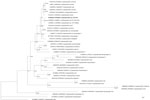
Figure 2. Phylogenetic tree inferred by partitioned Bayesian analysis on the basis of concatenated ssu and actin gene sequences of Cryptosporidium spp., including Cryptosporidiumsp. OTUi identified...
We performed amplification and sequencing of the small subunit rRNA (ssu) and actin genes according to established methods (5,6). The ssu sequence obtained from the case in Denmark (GenBank accession no. PX498108) shared >99% identity with OTUi AVK-2014 (accession no. KJ506854) (660/661 bp), the ssu sequence derived from the tourist from Australia returning from Bali in 2014; PHBat1 (accession no. LC844807) (674/675 bp), derived from bat feces collected in the Philippines in 2019 (7); and the 2024 sample obtained from the woman from Australia (accession no. PV981443) (679/680 bp). The actin sequence from the case in Denmark (GenBank accession no. PX525564) shared >99% similarity with the actin sequence from PHBat1 (accession no. LC844808) (952/954 bp). The phylogenetic tree inferred from Bayesian analyses of concatenated ssu and actin sequences (Figure 2) reveals clustering of the 3 OTUi sequences in their own well-supported branch, which is nested within a broader group of branches comprising multiple Cryptosporidium spp. and genotypes.
The simultaneous detection of Shiga toxin–producing E. coli and norovirus group I and group II is not readily explained by bats as a potential source, because neither pathogen is typically associated with bats (8,9). Norovirus likely accounted for the acute vomiting period, whereas the prolonged diarrhea is consistent with cryptosporidiosis. Because of the concurrent detection of 3 enteric pathogens and the temporal clustering of gastrointestinal illness (of unknown cause) among the patient’s 2 travel companions, a more plausible explanation is shared exposure to food or water contaminated with fecal material from multiple human or animal sources, rather than transmission from a single reservoir. Contamination of food or water with bat feces is a plausible transmission pathway, particularly where bats roost near agricultural areas and water sources. Similar mechanisms have been proposed for Nipah virus transmission through contaminated food products (10,11). Ubud and Canggu represent semiurban environments, and human activity overlaps with wildlife habitats, potentially enabling exposure. Also, produce sold within those villages can have originated from more bat-friendly areas. Thus, contamination of water or food with bat feces seems a plausible source of this human Cryptosporidium sp. OTUi infection; however, alternative human or animal sources should also be considered.
Bats are typically infected with bat-specific Cryptosporidium spp. genotypes, of which >20 have been identified on the basis of ssu gene sequencing. The risk of zoonotic transmission from bats is generally considered low because most described bat genotypes are phylogenetically distinct from Cryptosporidium spp. commonly found in humans, and they have been detected exclusively in Chiroptera. In addition, only a few instances of human-pathogenic species (C. parvum, C. hominis, and C. tyzzeri) have been detected in bats, without evidence of active infection, suggesting that bats might serve only as mechanical carriers (12).
Only 1 gp60 sequence related to bat genotypes is currently available in GenBank, specifically Cryptosporidium spp. bat genotype VI (accession no. LC089987). This scarcity of sequence data might be attributable to primer specificity, because the gp60 gene exhibits extensive genetic polymorphism or because gp60 is a single-copy gene, which can affect analytical sensitivity. The primers used in this study amplify a fragment of the gp60 gene from C. parvum, C. hominis, and other phylogenetically related species, including Cryptosporidium spp. bat genotype VI and Cryptosporidium sp. OTUi, but might not amplify other bat genotypes.
The high sequence identity across loci among geographically and temporally distinct human and bat isolates suggests a shared epidemiologic origin. Phylogenetic proximity to Cryptosporidium spp. bat genotype VI on the basis of the gp60 gene further supports a zoonotic link. The association of 2 human cases with travel to Bali suggests this Cryptosporidium spp. genotype might be endemic in Bali and potentially maintained by a zoonotic reservoir. The 2019 bat sample originated from a forest roundleaf bat in the Philippines, a nonmigratory species native to the Philippines but not to Bali (7). Nevertheless, related bat species inhabit Bali, and connections between bat populations might occur through limited migration or through other hosts, enabling spillover to humans. Subsequent shedding of Cryptosporidium sp. OTUi by infected humans could enable transmission through fecal contamination of food or water, amplifying the risk to others.
This investigation highlights the value of molecular surveillance and multilocus typing for detecting emerging Cryptosporidium genotypes and for elucidating potential infection sources. Clustering of Cryptosporidium sp. OTUi among travelers returning from Bali, combined with its phylogenetic relationship to a bat-associated genotype, supports regional endemicity and supports the hypothesis of bats being a reservoir for human cryptosporidiosis. Improved genomic characterization of bat-associated Cryptosporidium infection and enhanced environmental surveillance are needed to better understand transmission dynamics and assess the public health significance of this parasite.
Dr. Larsen is a medical doctor currently working at Statens Serum Institut, the national public health institute of Denmark. Her interests are focused on surveillance and outbreak investigation, particularly of Cryptosporidium.
Acknowledgments
This study was conducted as part of a task mandated to Statens Serum Institut under national legislation, and approval from ethics committees was not required. The Danish Data Protection Agency serves as the national supervisory authority for scientific research. As of May 25, 2018, when the European General Data Protection Regulation came into force, approval from the Data Protection Agency is no longer required for such studies. However, the Statens Serum Institut is required to maintain records of data processing activities. This study was covered by Statens Serum Institut records of processing activities (protocol no. 25/03248).
Sequences generated from the patient from Denmark are available in GenBank (accession nos. PX525565, PX498108, and PX525564).
References
- Larsen TG, Ethelberg S, Nielsen HL, Hartmeyer GN, Nielsen L, Zangenberg M, et al. From rare to recognized: enhanced detection uncovers Cryptosporidium endemicity and species diversity in Denmark. Emerg Microbes Infect. 2025;14:
2529893 . DOIPubMedGoogle Scholar - Alves M, Xiao L, Sulaiman I, Lal AA, Matos O, Antunes F. Subgenotype analysis of Cryptosporidium isolates from humans, cattle, and zoo ruminants in Portugal. J Clin Microbiol. 2003;41:2744–7. DOIPubMedGoogle Scholar
- Koehler AV, Whipp M, Hogg G, Haydon SR, Stevens MA, Jex AR, et al. First genetic analysis of Cryptosporidium from humans from Tasmania, and identification of a new genotype from a traveller to Bali. Electrophoresis. 2014;35:2600–7. DOIPubMedGoogle Scholar
- Babineau M, Koehler AV, Sait ML, Mercoulia K, Dougall S, McAllister J, et al. Large-scale molecular epidemiological survey of Giardia and Cryptosporidium in Victoria, Australia (2020-2024), reveals novel subtypes and outbreak-associated lineages. J Clin Microbiol. 2026;0:
e0155825 . DOIPubMedGoogle Scholar - Stensvold CR, Larsen TG, Grüttner J, Nielsen L, Engberg J, Lebbad M. Rodent-adapted Cryptosporidium infection in humans: seven new cases and review of the literature. One Health. 2024;18:
100682 . DOIPubMedGoogle Scholar - Lebbad M, Winiecka-Krusnell J, Stensvold CR, Beser J. High diversity of Cryptosporidium species and subtypes identified in cryptosporidiosis acquired in Sweden and abroad. Pathogens. 2021;10:523. DOIPubMedGoogle Scholar
- Xu L, Fukuda Y, Murakoshi F, Alviola P, Masangkay J, Recuenco FC, et al. Molecular characterization and zoonotic risk assessment of Cryptosporidium spp. in Philippine bats. Food Waterborne Parasitol. 2024;38:
e00249 . DOIPubMedGoogle Scholar - Yang L, Wang Q, Xu L, Tu C, Huang X, He B. Detection and characterization of a novel norovirus in bats, China. Virol Sin. 2018;33:100–3. DOIPubMedGoogle Scholar
- Nowak K, Fahr J, Weber N, Lübke-Becker A, Semmler T, Weiss S, et al. Highly diverse and antimicrobial susceptible Escherichia coli display a naïve bacterial population in fruit bats from the Republic of Congo. PLoS One. 2017;12:
e0178146 . DOIPubMedGoogle Scholar - Luby SP, Rahman M, Hossain MJ, Blum LS, Husain MM, Gurley E, et al. Foodborne transmission of Nipah virus, Bangladesh. Emerg Infect Dis. 2006;12:1888–94. DOIPubMedGoogle Scholar
- Khan MS, Hossain J, Gurley ES, Nahar N, Sultana R, Luby SP. Use of infrared camera to understand bats’ access to date palm sap: implications for preventing Nipah virus transmission. EcoHealth. 2010;7:517–25. DOIPubMedGoogle Scholar
- Barbosa AD, Egan S, Feng Y, Xiao L, Ryan U. How significant are bats as potential carriers of zoonotic Cryptosporidium and Giardia? Curr Res Parasitol Vector Borne Dis. 2023;4:
100155 . DOIPubMedGoogle Scholar - Huelsenbeck JP, Ronquist F. MRBAYES: Bayesian inference of phylogenetic trees. Bioinformatics. 2001;17:754–5. DOIPubMedGoogle Scholar
Figures
Cite This ArticleOriginal Publication Date: April 28, 2026
Table of Contents – Volume 32, Number 5—May 2026
| EID Search Options |
|---|
 Advanced Article Search – Search articles by author and/or keyword.
|
 Articles by Country Search – Search articles by the topic country.
|
 Article Type Search – Search articles by article type and issue.
|
Please use the form below to submit correspondence to the authors or contact them at the following address:
Christen Rune Stensvold, Statens Serum Institut, Artillerivej 5, DK-2300 Copenhagen S, Denmark
Top