Volume 32, Number 7—July 2026
Research Letter
Molecular Confirmation of Autochthonous Taenia saginata Infection, Timor-Leste, 2019


Cite This Article
Citation for Media
Abstract
We report a case of autochthonous Taenia saginata infection in Timor-Leste. Screening of 1,121 schoolchildren revealed a 0.4% prevalence of human taeniasis. Genetic analysis of the mitochondrial cox1 gene identified group A lineage. Our findings fill a considerable geographic data gap and highlight the need for integrated One Health control strategies.
Human taeniasis is a foodborne neglected tropical disease caused by 3 species of tapeworms: Taenia solium, Taenia saginata, and Taenia asiatica. Although the parasites are endemic across Africa and the Americas, Asia is unique for the sympatric distribution of all 3 species, particularly in rural areas where traditional livestock rearing persists (1). Among these species, the T. saginata beef tapeworm is the most common zoonotic tapeworm globally; infection occurs through the consumption of raw or undercooked beef containing cysticerci (2). The epidemiologic landscape in Southeast Asia is complex because of the genetic relationship between T. saginata and T. asiatica tapeworms (3). Recent molecular analyses have revealed that the 2 are sister species that are not completely reproductively isolated; consequently, many adult worms circulating in the region, including those in Indonesia, are hybrid-derived descendants (4).
Timor-Leste, a Southeast Asia nation sharing the island of Timor with Indonesia, has long represented a considerable geographic data gap. A 2020 systematic review covering 1990–2017 found no retrievable data for the country (2), leaving its endemic status unconfirmed, despite cultural practices favoring beef consumption and a population of ≈225,000 cattle (5).
In early 2019, as part of a national monitoring program for soil-transmitted helminthiasis, we collected fecal samples from 1,121 schoolchildren across 6 schools in Timor-Leste. Initial screening using the Kato-Katz thick-smear technique identified 4 children as Taenia spp. egg–positive, representing an overall prevalence of 0.4%, which is consistent with regional pediatric data from countries such as Myanmar (6). After the identification of eggs, we administered a single oral dose of praziquantel (10 mg/kg) to affected children, followed by a purge with a mild laxative solution (Colonlyte powder; Dream Pharma [now Alvogen Korea], https://www.alvogenkorea.com) so that we could recover intact tapeworm segments. We successfully recovered intact proglottids from an asymptomatic 11-year-old girl residing in the capital, Dili. Of note, the patient had no history of international travel, confirming that the infection was autochthonous.
Figure 1
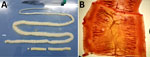
Figure 1. Proglottids of Taenia saginata beef tapeworm collected from an 11-year-old girl in Dili, Timor-Leste, informing an investigation focused on molecular confirmation of autochthonous T. saginatainfection, Timor-Leste,...
Figure 2
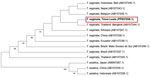
Figure 2. Phylogenetic analysis of the cox1 gene from a child with taeniasis in a study revealing molecular confirmation of autochthonous Taenia saginata infection, Timor-Leste, 2019. Phylogenetic tree of ...
The recovered tapeworm segments were flat and creamy-white and measured 12–15 mm in length (Figure 1). Acetocarmine staining revealed 18–20 lateral uterine branches and a lack of rostellar hooks on the scolex, which served to morphologically exclude the T. solium pork tapeworm. To achieve definitive species identification, we extracted genomic DNA using the DNeasy Blood & Tissue Kit (QIAGEN, https://www.qiagen.com) and targeted a fragment of the mitochondrial cox1 gene for PCR amplification using T1F and T1R primers as described previously (7). Sequencing of the amplicons showed a 99.58% identity with T. saginata (GenBank AB984348.1) and a marked genetic divergence from T. solium. Phylogenetic analysis using the neighbor-joining method placed the Timor-Leste isolate firmly within the group A clade, distinct from T. asiatica and T. solium lineages (Figure 2; Appendix). The high bootstrap support (>90%) for those nodes reinforces the isolate’s genetic alignment with regional T. saginata populations rather than the hybrid-derived descendants of T. asiatica and T. saginata tapeworms found in nearby North Sumatra (Figure 2).
Combined with the emergence of a concurrent T. solium infection that was molecularly confirmed in a 10-year-old child in Dili during the same surveillance period (7), our results confirm the co-endemicity of T. saginata and T. solium tapeworms in Timor-Leste. Although the T. saginata isolate is linked to regional Southeast Asian genotypes (group A), the T. solium case showed homology with Madagascar lineages, suggesting different historical introduction routes for the 2 species (7). The detection of the parasites in schoolchildren suggests transmission risks within the home environment and the early cultural integration of beef consumption (1,8).
The reliance on Kato-Katz smears in regional surveillance remains a hurdle, because this analysis cannot differentiate between Taenia species. Furthermore, the documented presence of hybrid-derived descendants in neighboring Indonesia (4) suggests that future surveillance should incorporate nuclear markers to complement mitochondrial genotyping. Such a dual-marker approach is essential to detect potential interspecific hybridization or introgression that may be masked by mitochondrial analysis alone. Nevertheless, the confirmation of endemicity for both T. saginata and T. solium tapeworms warrants enhanced integrated surveillance to accurately identify co-circulating Taenia species. The concurrent detection of T. solium tapeworm in this pediatric cohort underscores the need for species-discriminating molecular diagnostics and cross-border cooperation to prevent neurocysticercosis, the public health consequences of which far exceed those of T. saginata taeniasis (9).
Dr. Jin is a doctoral student at the Department of Tropical Medicine and Parasitology, Seoul National University College of Medicine. Her research focuses on public health and neglected tropical diseases, with an emphasis on the development of point-of-care diagnostics.
Acknowledgment
This work was supported by the Korea International Cooperation Agency’s “Project of Integrated Control and Elimination of Neglected Tropical Diseases in Timor-Leste,” and the Education and Research Encouragement Fund of Seoul National University Hospital.
References
- Ito A, Li T, Wandra T, Dekumyoy P, Yanagida T, Okamoto M, et al. Taeniasis and cysticercosis in Asia: a review with emphasis on molecular approaches and local lifestyles. Acta Trop. 2019;198:
105075 . DOIPubMedGoogle Scholar - Eichenberger RM, Thomas LF, Gabriël S, Bobić B, Devleesschauwer B, Robertson LJ, et al. Epidemiology of Taenia saginata taeniosis/cysticercosis: a systematic review of the distribution in East, Southeast and South Asia. Parasit Vectors. 2020;13:234. DOIPubMedGoogle Scholar
- Jeon HK, Eom KS. Taenia asiatica and Taenia saginata: genetic divergence estimated from their mitochondrial genomes. Exp Parasitol. 2006;113:58–61. DOIPubMedGoogle Scholar
- Zein U, Siregar S, Janis I, Pane AH, Purba JM, Sardjono TW, et al. Identification of a previously unidentified endemic region for taeniasis in North Sumatra, Indonesia. Acta Trop. 2019;189:114–6. DOIPubMedGoogle Scholar
- Ministry of Agriculture and Fisheries. Timor-Leste Agriculture Census 2019 National Report. 2023 [cited 2025 Dec 25]. https://inetl-ip.gov.tl/2023/03/16/2241/
- Won EJ, Jung B-K, Song H, Kim M-S, Kim H-S, Lee KH, et al. Molecular diagnosis of Taenia saginata tapeworm infection in 2 schoolchildren, Myanmar. Emerg Infect Dis. 2018;24:1156–8. DOIPubMedGoogle Scholar
- Jin H, Hong S-T, Monteiro MAA, da Silva E, da Silva Viegas O, Dos Santos Lopes F, et al. Molecular confirmation of Taenia solium taeniasis in child, Timor-Leste. Emerg Infect Dis. 2024;30:1964–7. DOIPubMedGoogle Scholar
- Wandra T, Ito A, Swastika K, Dharmawan NS, Sako Y, Okamoto M. Taeniases and cysticercosis in Indonesia: past and present situations. Parasitology. 2013;140:1608–16. DOIPubMedGoogle Scholar
- Food and Agriculture Organization of the United Nations. Transforming the livestock sector through the Sustainable Development Goals. Rome, 2018. Licence: CC BY-NC-SA 3.0 IGO [cited 2025 Dec 25]. https://openknowledge.fao.org/server/api/core/bitstreams/d67a99fb-66ca-42a0-b5ac-3f907b35f09f/content
Figures
Cite This ArticleOriginal Publication Date: June 23, 2026
Table of Contents – Volume 32, Number 7—July 2026
| EID Search Options |
|---|
 Advanced Article Search – Search articles by author and/or keyword.
|
 Articles by Country Search – Search articles by the topic country.
|
 Article Type Search – Search articles by article type and issue.
|
Please use the form below to submit correspondence to the authors or contact them at the following address:
Sung Hye Kim, Hanyang University College of Medicine, 222 Wangshipni-ro, Seongdong-gu, Seoul, South Korea
Top