Volume 32, Number 6—June 2026
Research
Role of Households with Children in Community Spread of Multidrug-Resistant Enterobacterales, St. Louis, Missouri, USA
Barrett Breeze1, Ahmed Babiker1, Sreenivas Konda, Alaina L. Robinson, Stefan J. Green, Catherine C. Babbs, Federico Cunha, Katherine Y. Shen, India Shepherd Hammond, Stephanie A. Fritz, and Latania K. Logan
Figure
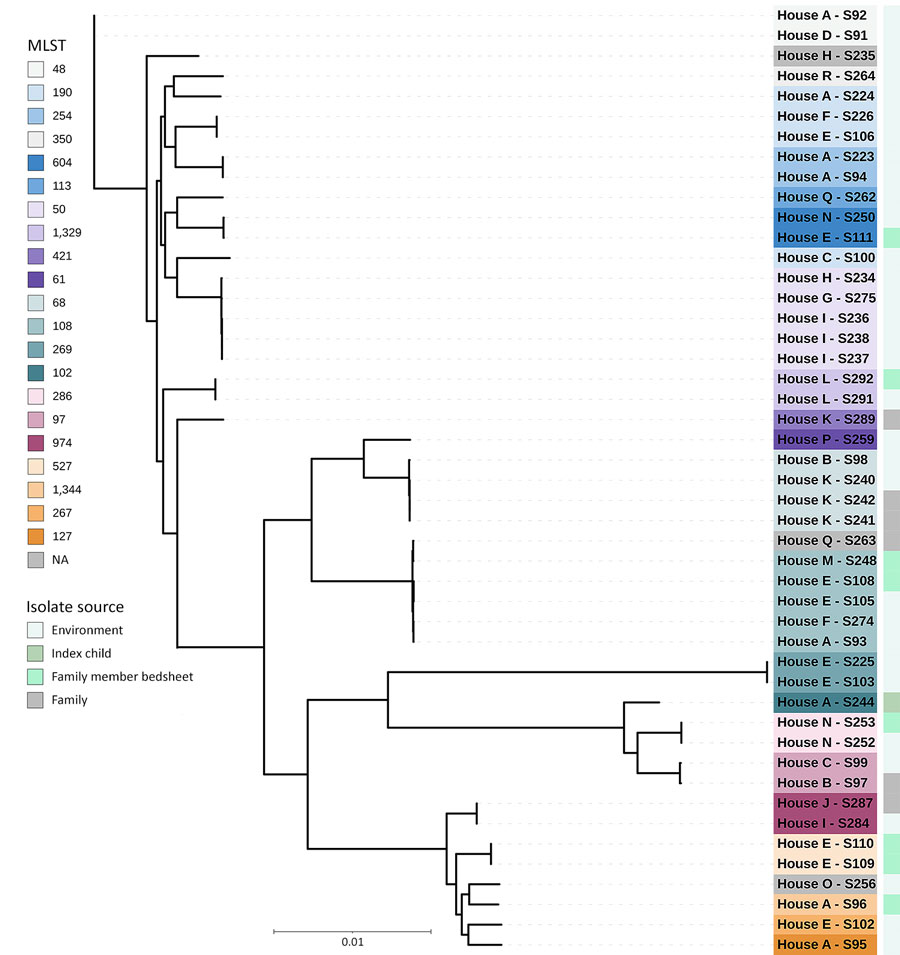
Figure. Phylogenetic tree based on core gene alignment for isolated Enterobacter hormaechei species (n = 47) in study of the role of households with children in community spread of multidrug-resistant Enterobacteriaceae, St. Louis, Missouri, USA. Scale bar represents nucleotide substitutions per site. MLST, multilocus sequence type; NA, not available.
1These first authors contributed equally to this article.
Page created: April 29, 2026
Page updated: June 01, 2026
Page reviewed: June 01, 2026
The conclusions, findings, and opinions expressed by authors contributing to this journal do not necessarily reflect the official position of the U.S. Department of Health and Human Services, the Public Health Service, the Centers for Disease Control and Prevention, or the authors' affiliated institutions. Use of trade names is for identification only and does not imply endorsement by any of the groups named above.