Podcasts
New Podcasts
Liquid Bread and Invisible Worlds-Beer, Fungi, and the Origins of Microbial Control
Campylobacteriosis Outbreak Linked to Municipal Water, Nebraska, USA, 2021
National Surveillance of Human Ehrlichiosis Caused by Ehrlichia ewingii, United States, 2013-2021
Homelessness and Bartonella quintana Infections
Past Podcasts
Volume 7-2001 and Volume 5-1999 are links to podcasts recorded in 2015 about articles that appeared in EID during those years. Volume 12-2006 is a link to a podcast recorded in 2018.
Volume 32—2026
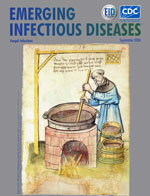
Volume 32, Number 9—September 2026
Liquid Bread and Invisible Worlds-Beer, Fungi, and the Origins of Microbial Control
 Listen Now or Download MP3 Length: 41:47
Dr. Nic Hoffmann, a medical historian, and Dr. Shawn Lockhart, a senior advisor for mycology with the Mycotic Diseases Branch at CDC, discuss the history of beer and fermentation, the hidden world of fungi, and the evolving role of fungi in human health and disease.
Download Transcript [PDF - 188KB - 10 pages]
View full-text article: Liquid Bread and Invisible Worlds—Beer, Fungi, and the Origins of Microbial Control
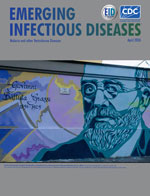
Volume 32, Number 4—April 2026
Pediatric Meningoencephalitis Cluster Caused by Snowshoe Hare Virus, Whistler, British Columbia, Canada, 2024
Listen Now or Download MP3 Length: 32:23
Dr. Faisal Ali and Dr. Jennifer Tam from the British Columbia Children's Hospital and University of British Columbia in Vancouver, Canada, Dr. Rohit Vijh from the Vancouver Coastal Health Public Health Surveillance Unit, and Dr. Anya Smith from the BC Centre for Disease Control discuss a cluster of meningoencephalitis cases caused by snowshoe hare virus and describe the public health investigation and mosquito surveillance pilot project that followed.
Download Transcript [PDF - 238KB - 9 pages]
View full-text article: Pediatric Meningoencephalitis Cluster Caused by Snowshoe Hare Virus, Whistler, British Columbia, Canada, 2024

Volume 32, Number 3—March 2026
Genetically Similar High-Risk Strains of Carbapenemase-Producing Enterobacterales in Humans and Companion Animals, United States
Listen Now or Download MP3 Length: 41:03
Dr. Richard Stanton, a molecular epidemiologist at CDC's Division of Healthcare Quality Promotion, and Dr. Allison James, a veterinarian and microbiologist at CDC's Division of Foodborne, Waterborne, and Environmental Diseases, discuss their study on genetically similar high-risk strains of carbapenemase-producing Enterobacterales found in humans and companion animals in the United States.
Download Transcript [PDF - 192KB - 11 pages]
View full-text article: Genetically Similar High-Risk Strains of Carbapenemase-Producing Enterobacterales in Humans and Companion Animals, United States
The conclusions, findings, and opinions expressed by authors contributing to this journal do not necessarily reflect the official position of the U.S. Department of Health and Human Services, the Public Health Service, the Centers for Disease Control and Prevention, or the authors' affiliated institutions. Use of trade names is for identification only and does not imply endorsement by any of the groups named above.