Volume 31, Number 12—December 2025
Research
Guinea Pig Model for Lassa Virus Infection of Reproductive Tract and Considerations for Sexual and Vertical Transmission

Figure 2
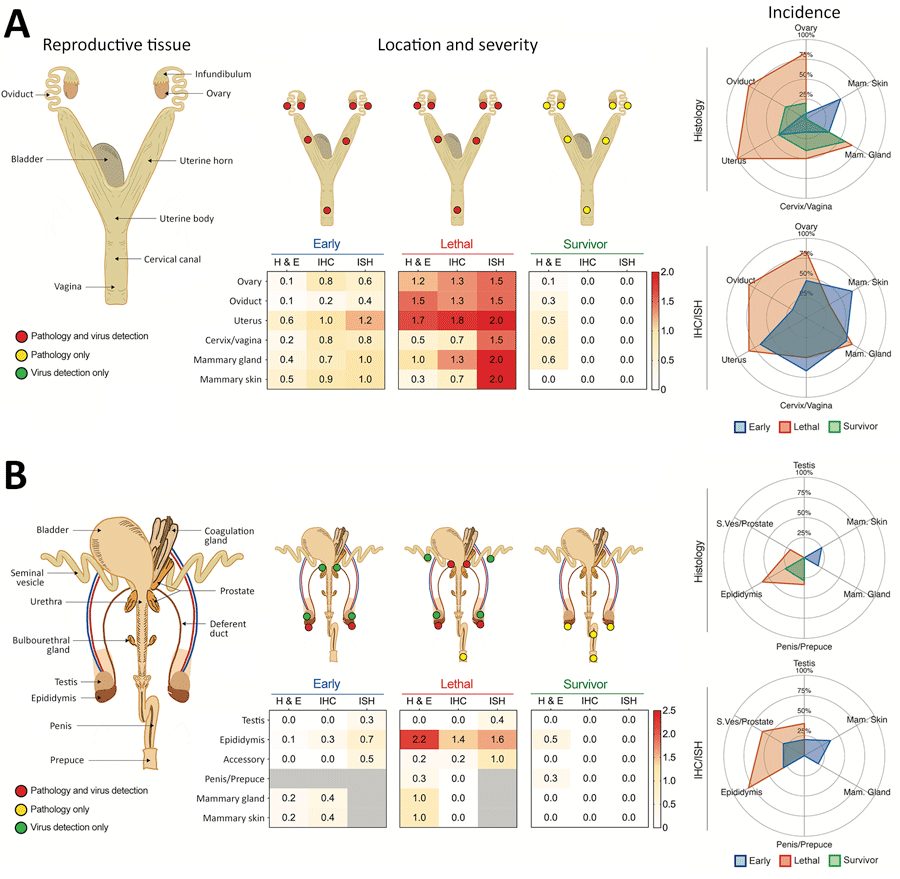
Figure 2. Localization and severity of histopathologic changes and Lassa virus (LASV) detection in reproductive tissues of strain 13/N guinea pigs experimentally infected with LASV strain Josiah or NJ2015 in study of guinea pig model for LASV infection of reproductive tract and considerations for sexual and vertical transmission. Female (A) and male (B) guinea pig reproductive tract anatomy, histopathology, and virus detection (antigen by IHC or viral RNA by ISH) after subcutaneous infection with LASV strain Josiah or NJ-2015 (target dose, 104 focus-forming units). Anatomic localization, severity, and incidence are depicted and delineated by stage of infection: early (<16 dpi), lethal (meeting endpoint criteria at 14–28 dpi), and survivor (41 or 42 dpi). Histopathologic changes (H&E) and viral detection by (IHC or ISH) were scored semiquantitatively for each tissue as absent (0), minimal (1), mild (2), moderate (3), or severe (4). Not all analyses were performed for all animals (Appendix Tables 1–3, https://wwwnc.cdc.gov/EID/article/31/12/25-0396-App1.pdf). H&E, IHC, and ISH scores represent mean severity values for each tissue across all animals tested. An asterisk (*) indicates that only 1 animal was evaluated in the group; gray boxes indicate tissues that were not available or not evaluated. Relative incidence of histopathologic change or virus detection in early, lethal, and survivor cohorts with sufficient group sizes (n >3) is shown in radar plots; only a single male animal in the lethal cohort was excluded, as it was the sole animal evaluated and test results were positive in both mammary gland and skin. H&E, hematoxylin and eosin; IHC, immunohistochemistry; ISH, in situ hybridization.
1Current affiliation: StageBio, Frederick, Maryland, USA.