Expedited Articles
Articles from Emerging Infectious Diseases

Volume 32, Number 10—October 2026
 Podcasts
Perspective
Reassortment of Highly Pathogenic Avian Influenza as a Driver for Zoonotic Spillover, Asia [PDF - 854 KB - 6 pages]
Highly pathogenic avian influenza H5Nx viruses remain a major zoonotic threat, yet global attention has focused largely on clade 2.3.4.4b, potentially overlooking major changes within long-endemic H5N1 lineages in Asia. Recent reports from South and Southeast Asia describe the emergence of reassortant clade 2.3.2.1 viruses alongside renewed human infections after apparent prolonged epidemiologic stability. Collectively, those events suggest a regional pattern rather than isolated anomalies. In this article, we argue that reassortment, rather than point mutation alone, might be an underrecognized driver of zoonotic risk in endemic H5N1 lineages and is reshaping those lineages. We examine why such events might be underrecognized in settings with entrenched poultry influenza, identify limitations of current surveillance systems, and call for integrated, real-time approaches linking genomic detection with phenotypic assessment across animal and human health sectors to enable timely risk assessment and coordinated public health action.
| EID | Byrne A, Carnegie L, Lewis NS, Barr IG, Karlsson EA, Wille M. Reassortment of Highly Pathogenic Avian Influenza as a Driver for Zoonotic Spillover, Asia. Emerg Infect Dis. 2026;32(10):1537-1542. https://doi.org/10.3201/eid3210.260067 |
|---|---|
| AMA | Byrne A, Carnegie L, Lewis NS, et al. Reassortment of Highly Pathogenic Avian Influenza as a Driver for Zoonotic Spillover, Asia. Emerging Infectious Diseases. 2026;32(10):1537-1542. doi:10.3201/eid3210.260067. |
| APA | Byrne, A., Carnegie, L., Lewis, N. S., Barr, I. G., Karlsson, E. A., & Wille, M. (2026). Reassortment of Highly Pathogenic Avian Influenza as a Driver for Zoonotic Spillover, Asia. Emerging Infectious Diseases, 32(10), 1537-1542. https://doi.org/10.3201/eid3210.260067. |
Synopses
Early Action Review of Detection, Notification, and Response Timeliness during Cross-Border Bundibugyo Virus Disease Outbreak, Uganda, 2026 [PDF - 394 KB - 8 pages]
Bundibugyo virus disease (BVD), an Ebola virus species with no licensed vaccine or therapeutic, reemerged in May 2026 as a cross-border outbreak in Uganda and the Democratic Republic of the Congo. During a 2-day workshop, July 8–9, 2026, we conducted an early action review of the outbreak response using the 7-1-7 framework (7 days to detect, 1 day to notify, 7 days to complete early response actions) to assess timeliness and identify bottlenecks and enablers across 9 response pillars. Uganda declared its outbreak on May 15, 2026; by July 8, the country had recorded 20 confirmed cases (15 imported, 5 locally transmitted) and a case-fatality rate of 15%. Uganda met all 3 targets: detection in 6 days, notification in <1 day, and response completion in 2 days. Low clinical suspicion, cross-border data-sharing gaps, fragmented digital systems, and delayed community engagement were common bottlenecks; strong leadership and coordination structures were most cited enablers.
| EID | Kayiwa J, Bbuye M, Atuhaire R, Nyakato D, Tut M, Nozad B, et al. Early Action Review of Detection, Notification, and Response Timeliness during Cross-Border Bundibugyo Virus Disease Outbreak, Uganda, 2026. Emerg Infect Dis. 2026;32(10):1543-1550. https://doi.org/10.3201/eid3210.261411 |
|---|---|
| AMA | Kayiwa J, Bbuye M, Atuhaire R, et al. Early Action Review of Detection, Notification, and Response Timeliness during Cross-Border Bundibugyo Virus Disease Outbreak, Uganda, 2026. Emerging Infectious Diseases. 2026;32(10):1543-1550. doi:10.3201/eid3210.261411. |
| APA | Kayiwa, J., Bbuye, M., Atuhaire, R., Nyakato, D., Tut, M., Nozad, B....Olaro, C. (2026). Early Action Review of Detection, Notification, and Response Timeliness during Cross-Border Bundibugyo Virus Disease Outbreak, Uganda, 2026. Emerging Infectious Diseases, 32(10), 1543-1550. https://doi.org/10.3201/eid3210.261411. |
Crimean-Congo hemorrhagic fever (CCHF) during pregnancy is associated with severe maternal and fetal complications, but evidence remains limited to heterogeneous case reports. We synthesized patient-level data from published and unpublished cases identified through systematic database searches and direct collaboration with centers in CCHF-endemic areas. We harmonized patient-level clinical, laboratory, obstetric, treatment, and outcome data for 55 pregnancies. The maternal mortality rate was 28.8% (15/52), and fetal loss occurred in 57.4% (31/54) of cases. Maternal mortality rates increased with advancing gestation, reaching 31.3% in the third trimester, but fetal loss was highest (85.7%) in the first trimester. Ribavirin treatment during the third trimester was associated with lower observed maternal mortality rates (odds ratio 0.33, 95% CI 0.13–0.84; p = 0.031). Our findings highlight gestational age–specific risks of CCHF and support the need for standardized management protocols and strengthened CCHF surveillance during pregnancy in endemic regions.
| EID | Donk B, Güllü D, Cırık A, Alay H, Karakeçili F, Özden K, et al. Meta-analysis of Maternal and Fetal Outcomes of Crimean-Congo Hemorrhagic Fever during Pregnancy. Emerg Infect Dis. 2026;32(10):1551-1560. https://doi.org/10.3201/eid3210.260383 |
|---|---|
| AMA | Donk B, Güllü D, Cırık A, et al. Meta-analysis of Maternal and Fetal Outcomes of Crimean-Congo Hemorrhagic Fever during Pregnancy. Emerging Infectious Diseases. 2026;32(10):1551-1560. doi:10.3201/eid3210.260383. |
| APA | Donk, B., Güllü, D., Cırık, A., Alay, H., Karakeçili, F., Özden, K....Ergönül, Ö. (2026). Meta-analysis of Maternal and Fetal Outcomes of Crimean-Congo Hemorrhagic Fever during Pregnancy. Emerging Infectious Diseases, 32(10), 1551-1560. https://doi.org/10.3201/eid3210.260383. |
Detection of Anaplasma capra in Patients with Suspected Crimean-Congo Hemorrhagic Fever, Turkey, 2022 [PDF - 2.13 MB - 10 pages]
Anaplasma capra is a recently discovered bacterial tickborne pathogen that was first identified in goats in 2012 and later in humans in China in 2015. We detected and genetically characterized A. capra in adult patients with suspected Crimean-Congo hemorrhagic fever (CCHF) in Turkey during the 2022 outbreak. We screened all patients for A. capra by using nested PCR targeting the gltA and groEL genes. We confirmed CCHF by molecular and serological tests. Of 263 patients, 6 (2.28%) were positive for A. capra. Sequence analysis revealed 84.16%–100% gltA gene similarity and 90.24%–100% groEL gene similarity with GenBank entries. Phylogenetic analysis confirmed all A. capra gene sequences belonged to genotype 1. Our results demonstrate clinical evidence of genotype 1 A. capra infection in humans. Our findings highlight the need for clinicians to consider A. capra in the differential diagnosis of CCHF-like symptoms, especially in endemic areas.
| EID | Altay K, Elaldi N, Erol U, Koksal B, Sahin O, Pektas A, et al. Detection of Anaplasma capra in Patients with Suspected Crimean-Congo Hemorrhagic Fever, Turkey, 2022. Emerg Infect Dis. 2026;32(10):1561-1570. https://doi.org/10.3201/eid3210.251049 |
|---|---|
| AMA | Altay K, Elaldi N, Erol U, et al. Detection of Anaplasma capra in Patients with Suspected Crimean-Congo Hemorrhagic Fever, Turkey, 2022. Emerging Infectious Diseases. 2026;32(10):1561-1570. doi:10.3201/eid3210.251049. |
| APA | Altay, K., Elaldi, N., Erol, U., Koksal, B., Sahin, O., Pektas, A....Bakir, M. (2026). Detection of Anaplasma capra in Patients with Suspected Crimean-Congo Hemorrhagic Fever, Turkey, 2022. Emerging Infectious Diseases, 32(10), 1561-1570. https://doi.org/10.3201/eid3210.251049. |
Systematic Review and Meta-analysis of Group B Streptococcus Rectovaginal Colonization Rates and Serotype Distribution among Pregnant Women, Asia-Pacific Region, 2014–2025 [PDF - 1.89 MB - 10 pages]
We conducted a systematic review and meta-analysis of group B Streptococcus (GBS) rectovaginal colonization prevalence, serotype distribution, and antimicrobial drug resistance (AMR) rates among pregnant women in the Asia-Pacific region. We included articles published in the MEDLINE, Embase, and PubMed databases during January 2014–October 2025. Overall, 1,623 studies were identified; 98 of those were included in the meta-analysis. Of 978,150 pregnant women, 172,973 were colonized with GBS; pooled estimated prevalence was 18.0% (95% CI 12%–23%). Studies from Southeast Asia were limited. GBS serotype distributions were reported in 24 studies; serotype III was the most common (range 5.0%–100.0%). Thirty studies included AMR rates; low (0%–2.0%) AMR rates were found for β-lactams. GBS colonization is common among pregnant women in the Asia-Pacific region. Continued surveillance of GBS prevalence will be needed, particularly in Pacific and Southeast Asian countries, to guide effective GBS prevention and treatment programs.
| EID | Toh Z, Ha Do L, Ong D, von Mollendorf C, Russell FM. Systematic Review and Meta-analysis of Group B Streptococcus Rectovaginal Colonization Rates and Serotype Distribution among Pregnant Women, Asia-Pacific Region, 2014–2025. Emerg Infect Dis. 2026;32(10):1571-1580. https://doi.org/10.3201/eid3210.260687 |
|---|---|
| AMA | Toh Z, Ha Do L, Ong D, et al. Systematic Review and Meta-analysis of Group B Streptococcus Rectovaginal Colonization Rates and Serotype Distribution among Pregnant Women, Asia-Pacific Region, 2014–2025. Emerging Infectious Diseases. 2026;32(10):1571-1580. doi:10.3201/eid3210.260687. |
| APA | Toh, Z., Ha Do, L., Ong, D., von Mollendorf, C., & Russell, F. M. (2026). Systematic Review and Meta-analysis of Group B Streptococcus Rectovaginal Colonization Rates and Serotype Distribution among Pregnant Women, Asia-Pacific Region, 2014–2025. Emerging Infectious Diseases, 32(10), 1571-1580. https://doi.org/10.3201/eid3210.260687. |
Research
Human Myiasis Resulting from Reemergence of Cochliomyia hominivorax Screwworm, Mexico, 2025–2026 [PDF - 1.28 MB - 9 pages]
After its elimination from Mexico in 2003, myiasis caused by New World screwworm (NWS), Cochliomyia hominivorax, has recently reemerged as a public and animal health concern. We conducted a retrospective study of human New World screwworm myiasis cases reported through Mexico’s national surveillance system during April 13, 2025–March 14, 2026. Of 204 cases in official surveillance summaries, 202 had sufficient information for case-level clinical and epidemiologic analysis. Cases were concentrated in southern Mexico, particularly Chiapas, followed by Yucatán, Oaxaca, and Quintana Roo. Most (71.8%) cases occurred in men; mean patient age was 61.1 years. Lower limbs (55.0%) were the most frequently reported anatomic location, and 76.7% of patients had >1 concurrent condition. Six deaths were reported among patients with NWS myiasis; at the time of reporting, 1 death was attributed directly to NWS myiasis. Our findings support proactive clinical detection and integrated One Health surveillance along the expected northward spread of NWS.
| EID | Delgado-Cuellar O, Mosso-González C, Castañeda-Gómez J, Vera-Maloof F, Navarro-Fuentes K, Mejía-Navarro E, et al. Human Myiasis Resulting from Reemergence of Cochliomyia hominivorax Screwworm, Mexico, 2025–2026. Emerg Infect Dis. 2026;32(10):1581-1589. https://doi.org/10.3201/eid3210.261235 |
|---|---|
| AMA | Delgado-Cuellar O, Mosso-González C, Castañeda-Gómez J, et al. Human Myiasis Resulting from Reemergence of Cochliomyia hominivorax Screwworm, Mexico, 2025–2026. Emerging Infectious Diseases. 2026;32(10):1581-1589. doi:10.3201/eid3210.261235. |
| APA | Delgado-Cuellar, O., Mosso-González, C., Castañeda-Gómez, J., Vera-Maloof, F., Navarro-Fuentes, K., Mejía-Navarro, E....Rincón-León, H. (2026). Human Myiasis Resulting from Reemergence of Cochliomyia hominivorax Screwworm, Mexico, 2025–2026. Emerging Infectious Diseases, 32(10), 1581-1589. https://doi.org/10.3201/eid3210.261235. |
Meta-analysis of Asymptomatic Monkeypox Virus Prevalence in Nonendemic Regions, 2022–2024 [PDF - 1.43 MB - 9 pages]
In this meta-analysis, we performed a literature search for articles relating to asymptomatic monkeypox virus (MPXV) detections published worldwide during May 12, 2022–September 13, 2024. The primary outcome was to determine the pooled prevalence of asymptomatic MPXV detections. We conducted a random-effects analysis that yielded a final pooled prevalence of 1.0% (95% prediction interval 0.1%–11.2%). Results did not substantially differ by geographic region or study design. Although those findings are reassuring, we did not evaluate infectivity or transmission potential among asymptomatic persons. MPXV continues to circulate globally; the viral dynamics that enable its persistence remain poorly understood and merit further study.
| EID | MacCuish KJ, Snyder R, Johnson KA, Chojolan E, Keinde A, Jacobson K, et al. Meta-analysis of Asymptomatic Monkeypox Virus Prevalence in Nonendemic Regions, 2022–2024. Emerg Infect Dis. 2026;32(10):1590-1598. https://doi.org/10.3201/eid3210.260305 |
|---|---|
| AMA | MacCuish KJ, Snyder R, Johnson KA, et al. Meta-analysis of Asymptomatic Monkeypox Virus Prevalence in Nonendemic Regions, 2022–2024. Emerging Infectious Diseases. 2026;32(10):1590-1598. doi:10.3201/eid3210.260305. |
| APA | MacCuish, K. J., Snyder, R., Johnson, K. A., Chojolan, E., Keinde, A., Jacobson, K....Saadeh, K. (2026). Meta-analysis of Asymptomatic Monkeypox Virus Prevalence in Nonendemic Regions, 2022–2024. Emerging Infectious Diseases, 32(10), 1590-1598. https://doi.org/10.3201/eid3210.260305. |
Multiple Introductions and Cross-Sector Transmission of Salmonella enterica Serovar Infantis Carrying blaCTX-M-65 Gene, South Korea, 2022–2024 [PDF - 3.72 MB - 10 pages]
Salmonella enterica subspecies enterica serovar Infantis carrying the blaCTX-M-65 gene has been increasingly detected globally, including in South Korea, since 2022. We analyzed 65 blaCTX-M-65–positive Salmonella Infantis isolates from humans, poultry, and wastewater collected during 2022–2024 by using whole-genome sequencing and phylogenomic analysis. All isolates were multidrug resistant, commonly to aminoglycosides, β-lactams, quinolones, tetracyclines, amphenicols, and folate pathway inhibitors. Phylogenetic analysis revealed high genetic similarity among isolates from humans, poultry, and wastewater, which were intermingled within monophyletic clades with high bootstrap support, indicating close genomic relatedness across sectors. Bayesian phylogeographic reconstruction suggested multiple potential introductions during 2018–2022, including 1 lineage related to isolates from the United States (clade I) and others related to isolates from the United Kingdom (clade II). Those findings highlight the emergence and genomic diversity of blaCTX-M-65–positive Salmonella Infantis in South Korea and support the value of continued genomic surveillance across sectors.
| EID | Shin E, La T, Yoo J, Oh S, Kim J, Kim J, et al. Multiple Introductions and Cross-Sector Transmission of Salmonella enterica Serovar Infantis Carrying blaCTX-M-65 Gene, South Korea, 2022–2024. Emerg Infect Dis. 2026;32(10):1599-1608. https://doi.org/10.3201/eid3210.251758 |
|---|---|
| AMA | Shin E, La T, Yoo J, et al. Multiple Introductions and Cross-Sector Transmission of Salmonella enterica Serovar Infantis Carrying blaCTX-M-65 Gene, South Korea, 2022–2024. Emerging Infectious Diseases. 2026;32(10):1599-1608. doi:10.3201/eid3210.251758. |
| APA | Shin, E., La, T., Yoo, J., Oh, S., Kim, J., Kim, J....Hyeon, J. (2026). Multiple Introductions and Cross-Sector Transmission of Salmonella enterica Serovar Infantis Carrying blaCTX-M-65 Gene, South Korea, 2022–2024. Emerging Infectious Diseases, 32(10), 1599-1608. https://doi.org/10.3201/eid3210.251758. |
Molecular Epidemiology and Evolution of Swine Influenza A Viruses, Vietnam, 2020–2024 [PDF - 7.38 MB - 12 pages]
Swine influenza A viruses (IAV-S) caused the 2009 H1N1 pandemic and pose a future zoonotic and pandemic threat. Vietnam represents a critical hotspot for IAV-S emergence within East and Southeast Asia, with dense swine and human populations and intensive livestock trade. We conducted genomic surveillance of IAV-S in Vietnam during 2020–2024, extending previous surveillance from 2013–2019. We identified multiple co-circulating H1 and H3 clades, including pandemic H1N1, Eurasian avian-like, and European lineages, by conducting phylogenetic analysis of 56 IAV-S isolates (21 H1N1, 31 H1N2, and 4 H3N2). Three H1 clades persisted exclusively in Vietnam, circulating up to 12 years. Phylogeographic analysis revealed multiple independent introduction events from North America, Europe, China, Thailand, and Cambodia. We detected extensive reassortment that frequently involved pandemic H1N1 virus internal genes. We identified several lineage-specific mutations associated with mammalian adaptation. Our findings underscore the ongoing IAV-S evolution and need for sustained surveillance in Vietnam.
| EID | Bui N, Song ZY, Cheng S, Dao D, Chang L, Liu G, et al. Molecular Epidemiology and Evolution of Swine Influenza A Viruses, Vietnam, 2020–2024. Emerg Infect Dis. 2026;32(10):1609-1620. https://doi.org/10.3201/eid3210.260593 |
|---|---|
| AMA | Bui N, Song ZY, Cheng S, et al. Molecular Epidemiology and Evolution of Swine Influenza A Viruses, Vietnam, 2020–2024. Emerging Infectious Diseases. 2026;32(10):1609-1620. doi:10.3201/eid3210.260593. |
| APA | Bui, N., Song, Z. Y., Cheng, S., Dao, D., Chang, L., Liu, G....Peiris, M. (2026). Molecular Epidemiology and Evolution of Swine Influenza A Viruses, Vietnam, 2020–2024. Emerging Infectious Diseases, 32(10), 1609-1620. https://doi.org/10.3201/eid3210.260593. |
Genomic Epidemiology of Salmonella enterica Serovar Hadar Strain Linked to Poultry-Associated Salmonellosis Outbreaks, United States [PDF - 418 KB - 8 pages]
Nontyphoidal Salmonella enterica serovar Hadar causes poultry-associated salmonellosis outbreaks in the United States. One persisting strain of Salmonella Hadar caused 5 multistate outbreaks resulting in ≈2,000 human cases during 2020–2023. The Centers for Disease Control and Prevention designated the strain as reoccurring, emerging, or persisting (REP), related within 26 core-genome allele differences. That REP strain has caused human illnesses by consumption of commercial poultry food products or contact with backyard poultry. To investigate the REP strain’s evolution and identify possible markers for source attribution, we performed phylogenetics and molecular clock analysis on 404 genomes subsampled from routine surveillance and outbreaks. The most recent common ancestor likely emerged in early 2018. We identified 2 clades: clade 1, associated with backyard poultry and other food sources, and clade 2, predominantly linked to commercial poultry products. We found 2 clade-specific single-nucleotide polymorphism markers; in silico screening of additional isolates supported their use for source attribution.
| EID | Xiaoli L, Griswold T, Stapleton G, Katz LS, Ellison Z, Tagg KA, et al. Genomic Epidemiology of Salmonella enterica Serovar Hadar Strain Linked to Poultry-Associated Salmonellosis Outbreaks, United States. Emerg Infect Dis. 2026;32(10):1621-1628. https://doi.org/10.3201/eid3210.260501 |
|---|---|
| AMA | Xiaoli L, Griswold T, Stapleton G, et al. Genomic Epidemiology of Salmonella enterica Serovar Hadar Strain Linked to Poultry-Associated Salmonellosis Outbreaks, United States. Emerging Infectious Diseases. 2026;32(10):1621-1628. doi:10.3201/eid3210.260501. |
| APA | Xiaoli, L., Griswold, T., Stapleton, G., Katz, L. S., Ellison, Z., Tagg, K. A....Chen, J. C. (2026). Genomic Epidemiology of Salmonella enterica Serovar Hadar Strain Linked to Poultry-Associated Salmonellosis Outbreaks, United States. Emerging Infectious Diseases, 32(10), 1621-1628. https://doi.org/10.3201/eid3210.260501. |
Persistent Bartonella quintana Infection in Macaques at Primate Research Institute, Japan [PDF - 1.10 MB - 7 pages]
Bartonella quintana, the causative agent of trench fever, is a louseborne bacterial pathogen. During 2016−2017, we investigated B. quintana infection in macaques housed at 2 primate research institutes in Japan. We isolated B. quintana from 3 wild-caught Japanese macaques, which had been introduced into 1 institute in 2009. The macaques had received periodic ivermectin treatment every 1–2 years to control blood-feeding arthropods. Whole-genome comparisons revealed that the 3 isolates exhibit higher homology to a Japanese macaque–derived strain than to rhesus macaque–derived or human-derived strains. In addition, in all 3 isolates, the bepA locus was absent; we classified the trwL locus as structural variant C, consistent with known Japanese macaque–derived strains. Our findings suggest that B. quintana bacteremia in the macaques might have persisted for 7–8 years in captivity, and that the bacterium was not accidentally transmitted to them from humans by reverse zoonosis.
| EID | Nomura Y, Fukudome Y, Homma A, Sankai T, Okamoto M, Kabeya H, et al. Persistent Bartonella quintana Infection in Macaques at Primate Research Institute, Japan. Emerg Infect Dis. 2026;32(10):1629-1635. https://doi.org/10.3201/eid3210.260771 |
|---|---|
| AMA | Nomura Y, Fukudome Y, Homma A, et al. Persistent Bartonella quintana Infection in Macaques at Primate Research Institute, Japan. Emerging Infectious Diseases. 2026;32(10):1629-1635. doi:10.3201/eid3210.260771. |
| APA | Nomura, Y., Fukudome, Y., Homma, A., Sankai, T., Okamoto, M., Kabeya, H....Sato, S. (2026). Persistent Bartonella quintana Infection in Macaques at Primate Research Institute, Japan. Emerging Infectious Diseases, 32(10), 1629-1635. https://doi.org/10.3201/eid3210.260771. |
Detection of Influenza D Virus using Reverse Transcription Loop-Mediated Isothermal Amplification [PDF - 1.71 MB - 9 pages]
The Orthomyxoviridae family includes influenza D virus (IDV), an emerging pathogen primarily affecting cattle and swine; there is evidence of cross-species transmission and potential zoonotic risk. Although active human infections have yet to be confirmed, high seroprevalence in cattle-exposed populations highlights the need for continued surveillance. We developed and validated a rapid, field-deployable reverse transcription loop-mediated isothermal amplification assay for IDV detection; specificity was 99.2% and sensitivity ranged from 95.6% (cycle quantification <30) to 81.8% (cycle quantification <40). This method offers a cost-effective, accessible alternative to quantitative reverse transcription PCR, enabling improved monitoring of IDV and reinforcing preparedness for emerging influenza threats.
| EID | dos Santos C, Li J, van Diemen PM, McMahon A, Mollett BC, Ramsay AM, et al. Detection of Influenza D Virus using Reverse Transcription Loop-Mediated Isothermal Amplification. Emerg Infect Dis. 2026;32(10):1636-1644. https://doi.org/10.3201/eid3210.260499 |
|---|---|
| AMA | dos Santos C, Li J, van Diemen PM, et al. Detection of Influenza D Virus using Reverse Transcription Loop-Mediated Isothermal Amplification. Emerging Infectious Diseases. 2026;32(10):1636-1644. doi:10.3201/eid3210.260499. |
| APA | dos Santos, C., Li, J., van Diemen, P. M., McMahon, A., Mollett, B. C., Ramsay, A. M....Robb, N. C. (2026). Detection of Influenza D Virus using Reverse Transcription Loop-Mediated Isothermal Amplification. Emerging Infectious Diseases, 32(10), 1636-1644. https://doi.org/10.3201/eid3210.260499. |
Multisectoral Emergence of Multidrug-Resistant Campylobacter coli Sequence Type 10042 Lineage, Europe, 2018–2025 [PDF - 3.67 MB - 12 pages]
Campylobacter spp. remain the leading bacterial cause of foodborne gastroenteritis in Western countries. We report sustained, previously unrecognized circulation of a multidrug-resistant Campylobacter coli sequence type 10042 lineage across Europe during 2018–2025. Whole-genome sequencing of 217 isolates from 9 countries spanning human, animal, food, and environmental sources identified cross-border clusters, including a large lineage linking primarily Portugal and Luxembourg, as well as Germany, Ireland, Spain, and the United Kingdom. Genomic data indicates ongoing clonal expansion with increasing diversification over time. Isolates exhibited a conserved multidrug-resistant phenotype, including resistance to fluoroquinolones, tetracyclines, and β-lactams; reduced susceptibility to carbapenems was observed. Resistance was associated with GyrA Thr86Ile, tet(O/32/O)/tet(O) genes, and blaOXA-61 promoter variants; variation in porA was linked to variable amoxicillin/clavulanic acid and ertapenem susceptibility. Those findings demonstrate that C. coli infections can involve sustained international transmission rather than sporadic cases and highlight the need for coordinated, cross-sector genomic surveillance to detect emerging antimicrobial-resistant lineages.
| EID | Azevedo M, Nunes A, Lemos M, Costa P, Amaro A, Clemente L, et al. Multisectoral Emergence of Multidrug-Resistant Campylobacter coli Sequence Type 10042 Lineage, Europe, 2018–2025. Emerg Infect Dis. 2026;32(10):1645-1656. https://doi.org/10.3201/eid3210.260512 |
|---|---|
| AMA | Azevedo M, Nunes A, Lemos M, et al. Multisectoral Emergence of Multidrug-Resistant Campylobacter coli Sequence Type 10042 Lineage, Europe, 2018–2025. Emerging Infectious Diseases. 2026;32(10):1645-1656. doi:10.3201/eid3210.260512. |
| APA | Azevedo, M., Nunes, A., Lemos, M., Costa, P., Amaro, A., Clemente, L....Oleastro, M. (2026). Multisectoral Emergence of Multidrug-Resistant Campylobacter coli Sequence Type 10042 Lineage, Europe, 2018–2025. Emerging Infectious Diseases, 32(10), 1645-1656. https://doi.org/10.3201/eid3210.260512. |
Experimental Highly Pathogenic Avian Influenza A(H5N1) Clade 2.3.4.4b Virus Infection in Alpacas, 2026 [PDF - 2.19 MB - 10 pages]
Highly pathogenic avian influenza (HPAI) A(H5N1) clade 2.3.4.4b virus continues to spread globally and sporadically transmits from avian reservoirs to mammalian hosts. In May 2024, H5N1 infections in young goats and alpacas in the United States were reported. Nevertheless, the overall susceptibility of camelids to clade 2.3.4.4b virus remains unclear. We conducted a controlled experimental infection study in 6 alpacas, assessing clinical signs, viral shedding, tissue distribution, and serologic responses after intranasal inoculation with HPAI H5N1 genotype B3.13 virus. Observed illness was generally mild; body temperature increased slightly and food intake reduced for up to 3 days postinfection. We detected viral RNA in nasal swab samples and confirmed infectious HPAI H5N1 virus. Immunohistochemistry and RNA in situ hybridization detected virus only in the nasopharyngeal tonsil and nasal conchae at 4 days postinfection. Our findings suggest alpacas are susceptible to productive H5N1 infection, highlighting implications for livestock surveillance and biosecurity in regions with ongoing circulation.
| EID | Schön J, Breithaupt A, Halwe N, Hertel M, Ahrens A, Aebischer A, et al. Experimental Highly Pathogenic Avian Influenza A(H5N1) Clade 2.3.4.4b Virus Infection in Alpacas, 2026. Emerg Infect Dis. 2026;32(10):1657-1666. https://doi.org/10.3201/eid3210.260491 |
|---|---|
| AMA | Schön J, Breithaupt A, Halwe N, et al. Experimental Highly Pathogenic Avian Influenza A(H5N1) Clade 2.3.4.4b Virus Infection in Alpacas, 2026. Emerging Infectious Diseases. 2026;32(10):1657-1666. doi:10.3201/eid3210.260491. |
| APA | Schön, J., Breithaupt, A., Halwe, N., Hertel, M., Ahrens, A., Aebischer, A....Beer, M. (2026). Experimental Highly Pathogenic Avian Influenza A(H5N1) Clade 2.3.4.4b Virus Infection in Alpacas, 2026. Emerging Infectious Diseases, 32(10), 1657-1666. https://doi.org/10.3201/eid3210.260491. |
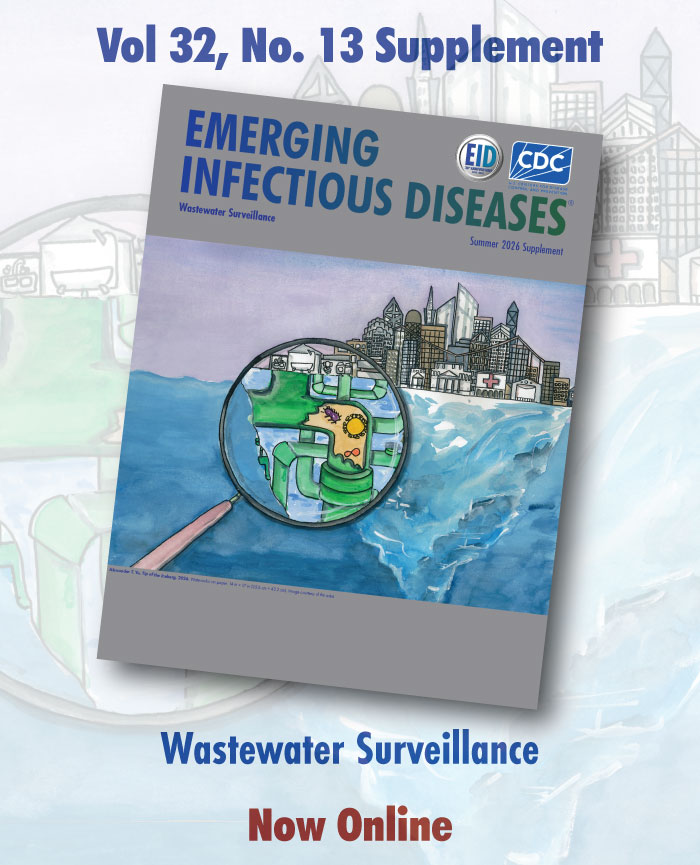
Wastewater Surveillance to Track Resurgent Measles Outbreak, Ontario, Canada, 2025 [PDF - 1.54 MB - 10 pages]
The province of Ontario, Canada, experienced a major resurgent outbreak of measles in 2025. We conducted wastewater surveillance concurrently with clinical-based surveillance to track measles incidence in southwestern Ontario, adjacent to the United States. Measles virus (MeV) signal in wastewater was positively associated with clinical cases but did not provide early alert of changes in measles incidence when resolved by epidemiologic week. Assessment of virus partitioning showed MeV RNA was broadly distributed in the liquid phase but is most concentrated in the solids. We adapted an assay for differentiation of vaccine and wild-type MeV and used it to detect vaccine genotype measles after a vaccination campaign targeting underserved groups. We estimated MeV shedding in wastewater through sampling of sewer laterals serving a hospital treating measles infections. This outbreak is a case study in which we highlighted the use of wastewater surveillance for measles while supporting method development in real time.
| EID | Corchis-Scott R, Mercier É, Mejia EM, Geng Q, Harrop E, Podadera A, et al. Wastewater Surveillance to Track Resurgent Measles Outbreak, Ontario, Canada, 2025. Emerg Infect Dis. 2026;32(10):1667-1676. https://doi.org/10.3201/eid3210.260092 |
|---|---|
| AMA | Corchis-Scott R, Mercier É, Mejia EM, et al. Wastewater Surveillance to Track Resurgent Measles Outbreak, Ontario, Canada, 2025. Emerging Infectious Diseases. 2026;32(10):1667-1676. doi:10.3201/eid3210.260092. |
| APA | Corchis-Scott, R., Mercier, É., Mejia, E. M., Geng, Q., Harrop, E., Podadera, A....McKay, R. (2026). Wastewater Surveillance to Track Resurgent Measles Outbreak, Ontario, Canada, 2025. Emerging Infectious Diseases, 32(10), 1667-1676. https://doi.org/10.3201/eid3210.260092. |
Historical Review
Variolation Techniques, Medical Explanations, and Dissemination in Late Imperial China [PDF - 1.85 MB - 9 pages]
Variolation in China has a long history, yet the method remains underrepresented internationally, having limited recognition of medical rationale and indigenous development. We reviewed medical texts and records from late Imperial China and compared variolation chronology, techniques, and explanatory frameworks used in China versus India. Variolation in China was already in practice no later than the Chenghua–Longqing period of the Ming dynasty (1465–1572 CE), earlier than that reported in other countries. Sources from China described garment/blanket, lymph, and scab-derived inoculum methods for smallpox prevention. Scab-derived inocula, intranasal administration, and repeated passage techniques reflected empirical efforts to improve variolation reliability and reduce risk. Concepts of fetal toxin and seasonal pathogenic qi made variolation intelligible within contemporaneous medicine in China. Records from China predated sources from India and contained more detailed descriptions of variolation practices, supporting indigenous development and highlighting China’s central place in the early history of prophylactic inoculation.
| EID | Guan L, Gu S, Pan Y, Rodewald LE, Fu C. Variolation Techniques, Medical Explanations, and Dissemination in Late Imperial China. Emerg Infect Dis. 2026;32(10):1677-1685. https://doi.org/10.3201/eid3210.260729 |
|---|---|
| AMA | Guan L, Gu S, Pan Y, et al. Variolation Techniques, Medical Explanations, and Dissemination in Late Imperial China. Emerging Infectious Diseases. 2026;32(10):1677-1685. doi:10.3201/eid3210.260729. |
| APA | Guan, L., Gu, S., Pan, Y., Rodewald, L. E., & Fu, C. (2026). Variolation Techniques, Medical Explanations, and Dissemination in Late Imperial China. Emerging Infectious Diseases, 32(10), 1677-1685. https://doi.org/10.3201/eid3210.260729. |
Dispatches
Emergence of Rabies in Cape Fur Seals, South Africa [PDF - 1.31 MB - 4 pages]
Rabies was diagnosed in Cape fur seals by using direct fluorescent antibody testing in South Africa, 2024. We investigated the origin of rabies virus in this species. Phylogenetic analysis revealed virus introduction from jackals into seals, followed by sustained viral transmission within the seal population and spillover into a domestic dog.
| EID | Ngoepe C, van Helden L, Shumba W, Roberts LC, Kriel D, Mparamoto M, et al. Emergence of Rabies in Cape Fur Seals, South Africa. Emerg Infect Dis. 2026;32(10):1686-1689. https://doi.org/10.3201/eid3210.260179 |
|---|---|
| AMA | Ngoepe C, van Helden L, Shumba W, et al. Emergence of Rabies in Cape Fur Seals, South Africa. Emerging Infectious Diseases. 2026;32(10):1686-1689. doi:10.3201/eid3210.260179. |
| APA | Ngoepe, C., van Helden, L., Shumba, W., Roberts, L. C., Kriel, D., Mparamoto, M....Sabeta, C. (2026). Emergence of Rabies in Cape Fur Seals, South Africa. Emerging Infectious Diseases, 32(10), 1686-1689. https://doi.org/10.3201/eid3210.260179. |
Fatal Infection with Dengue Virus and Avian Orthoavulavirus 1 in Traveler Returning from Saudi Arabia to France, 2025 [PDF - 1.61 MB - 5 pages]
A previously healthy 26-year-old man died of hemorrhagic fever with fulminant hepatitis and shock 36 hours after returning to France from Mecca, Saudi Arabia. Postmortem analyses detected low-level dengue virus RNA and positive NS1 antigen along with unexpected extremely high-titer disseminated velogenic avian orthoavulavirus 1 infection with elevated systemic cytokine responses.
| EID | Salmona M, Schlupmann S, Mailhe M, Chopin D, Richier Q, Lacombe K, et al. Fatal Infection with Dengue Virus and Avian Orthoavulavirus 1 in Traveler Returning from Saudi Arabia to France, 2025. Emerg Infect Dis. 2026;32(10):1690-1694. https://doi.org/10.3201/eid3210.260736 |
|---|---|
| AMA | Salmona M, Schlupmann S, Mailhe M, et al. Fatal Infection with Dengue Virus and Avian Orthoavulavirus 1 in Traveler Returning from Saudi Arabia to France, 2025. Emerging Infectious Diseases. 2026;32(10):1690-1694. doi:10.3201/eid3210.260736. |
| APA | Salmona, M., Schlupmann, S., Mailhe, M., Chopin, D., Richier, Q., Lacombe, K....Jaspard, M. (2026). Fatal Infection with Dengue Virus and Avian Orthoavulavirus 1 in Traveler Returning from Saudi Arabia to France, 2025. Emerging Infectious Diseases, 32(10), 1690-1694. https://doi.org/10.3201/eid3210.260736. |
Characteristics and Superspreading Potential of Andes Virus Person-to-Person Transmission [PDF - 686 KB - 4 pages]
By using historical contact tracing data, we estimated that 23.4% of case-patients caused 80% of Andes virus (ANDV) person-to-person transmission. We demonstrated a low but nonnegligible probability of observing a large-scale ANDV infection outbreak in a rodent-free setting consisting of close contacts, despite the historically self-limited person-to-person transmission of ANDV.
| EID | Guo Z, Pan K, Zhao Y, Ali S, Wang K, Cao L, et al. Characteristics and Superspreading Potential of Andes Virus Person-to-Person Transmission. Emerg Infect Dis. 2026;32(10):1695-1698. https://doi.org/10.3201/eid3210.260908 |
|---|---|
| AMA | Guo Z, Pan K, Zhao Y, et al. Characteristics and Superspreading Potential of Andes Virus Person-to-Person Transmission. Emerging Infectious Diseases. 2026;32(10):1695-1698. doi:10.3201/eid3210.260908. |
| APA | Guo, Z., Pan, K., Zhao, Y., Ali, S., Wang, K., Cao, L....Hao, Y. (2026). Characteristics and Superspreading Potential of Andes Virus Person-to-Person Transmission. Emerging Infectious Diseases, 32(10), 1695-1698. https://doi.org/10.3201/eid3210.260908. |
Monkeypox Virus in Healthcare Settings, Sierra Leone, June 2025 [PDF - 242 KB - 3 pages]
During the 2025 mpox outbreak in Sierra Leone, we assessed environmental contamination in 2 hospitals. Of 89 surfaces sampled, 6 (6.7%) surface samples, primarily from doors, were PCR-positive for monkeypox virus. Our findings highlight monkeypox virus surface contamination in healthcare settings and help prioritize infection prevention and control targets in resource-limited settings.
| EID | Jaba M, Saidu E, Kamanda ES, Frederick C, Liesenborghs L, Halbrook M, et al. Monkeypox Virus in Healthcare Settings, Sierra Leone, June 2025. Emerg Infect Dis. 2026;32(10):1699-1701. https://doi.org/10.3201/eid3210.251697 |
|---|---|
| AMA | Jaba M, Saidu E, Kamanda ES, et al. Monkeypox Virus in Healthcare Settings, Sierra Leone, June 2025. Emerging Infectious Diseases. 2026;32(10):1699-1701. doi:10.3201/eid3210.251697. |
| APA | Jaba, M., Saidu, E., Kamanda, E. S., Frederick, C., Liesenborghs, L., Halbrook, M....Kindrachuk, J. (2026). Monkeypox Virus in Healthcare Settings, Sierra Leone, June 2025. Emerging Infectious Diseases, 32(10), 1699-1701. https://doi.org/10.3201/eid3210.251697. |
Emergence of Macrolide-Resistant Bordetella pertussis, Peru, 2025 [PDF - 2.13 MB - 5 pages]
We report the emergence of macrolide-resistant Bordetella pertussis during a pertussis outbreak in Peru. Among 68 cases, 31% carried the A2047G gene mutation, conferring resistance to macrolides. Whole-genome sequencing revealed 2 genetically distinct groups, indicating multiple introductions into Peru. Our findings support strengthening surveillance for macrolide-resistant pertussis to inform control strategies.
| EID | Juscamayta-López E, Valdivia F, Rodríguez-Cueva C, Horna H, Quispe Y, Soto M, et al. Emergence of Macrolide-Resistant Bordetella pertussis, Peru, 2025. Emerg Infect Dis. 2026;32(10):1702-1706. https://doi.org/10.3201/eid3210.251477 |
|---|---|
| AMA | Juscamayta-López E, Valdivia F, Rodríguez-Cueva C, et al. Emergence of Macrolide-Resistant Bordetella pertussis, Peru, 2025. Emerging Infectious Diseases. 2026;32(10):1702-1706. doi:10.3201/eid3210.251477. |
| APA | Juscamayta-López, E., Valdivia, F., Rodríguez-Cueva, C., Horna, H., Quispe, Y., Soto, M....Da Costa, A. (2026). Emergence of Macrolide-Resistant Bordetella pertussis, Peru, 2025. Emerging Infectious Diseases, 32(10), 1702-1706. https://doi.org/10.3201/eid3210.251477. |
Detection of Divergent Highly Pathogenic Avian Influenza A(H5N1) Clade 2.3.4.4b Virus, São Paulo, Brazil, 2025 [PDF - 3.94 MB - 5 pages]
In 2025, we detected highly pathogenic avian influenza H5N1 virus in dead waterfowl at Ibirapuera Park, São Paulo, Brazil. Genomic characterization indicated a reassortant virus that emerged from locally circulating low pathogenicity avian influenza viruses and highly pathogenic North American lineages. Our results highlight cross-species transmission risk and underscore the need for enhanced surveillance.
| EID | de Araujo J, Thomazelli LM, Fabrizio TP, Fenner GO, Dorlass EG, Eisen A, et al. Detection of Divergent Highly Pathogenic Avian Influenza A(H5N1) Clade 2.3.4.4b Virus, São Paulo, Brazil, 2025. Emerg Infect Dis. 2026;32(10):1707-1711. https://doi.org/10.3201/eid3210.260723 |
|---|---|
| AMA | de Araujo J, Thomazelli LM, Fabrizio TP, et al. Detection of Divergent Highly Pathogenic Avian Influenza A(H5N1) Clade 2.3.4.4b Virus, São Paulo, Brazil, 2025. Emerging Infectious Diseases. 2026;32(10):1707-1711. doi:10.3201/eid3210.260723. |
| APA | de Araujo, J., Thomazelli, L. M., Fabrizio, T. P., Fenner, G. O., Dorlass, E. G., Eisen, A....Durigon, E. L. (2026). Detection of Divergent Highly Pathogenic Avian Influenza A(H5N1) Clade 2.3.4.4b Virus, São Paulo, Brazil, 2025. Emerging Infectious Diseases, 32(10), 1707-1711. https://doi.org/10.3201/eid3210.260723. |
Clinical Characterization of Invasive Meningococcal Disease Epidemic, Uzbekistan, 2026 [PDF - 728 KB - 4 pages]
Tashkent, Uzbekistan, registered 290 invasive meningococcal disease cases during January–April 2026; the case fatality rate was 8.3%. Meningeal signs appeared in only 3.1% of patients and were the sole signs associated with death. Neisseria meningitidis serogroup surveillance and conjugate vaccine introduction will be needed to prevent invasive meningococcal disease in Uzbekistan.
| EID | Rakhimov BB, Tuychiev LN, Khamzayeva NT, Tadjiyeva NU, Saidkasimova NS, Otamuratova NX, et al. Clinical Characterization of Invasive Meningococcal Disease Epidemic, Uzbekistan, 2026. Emerg Infect Dis. 2026;32(10):1712-1715. https://doi.org/10.3201/eid3210.261144 |
|---|---|
| AMA | Rakhimov BB, Tuychiev LN, Khamzayeva NT, et al. Clinical Characterization of Invasive Meningococcal Disease Epidemic, Uzbekistan, 2026. Emerging Infectious Diseases. 2026;32(10):1712-1715. doi:10.3201/eid3210.261144. |
| APA | Rakhimov, B. B., Tuychiev, L. N., Khamzayeva, N. T., Tadjiyeva, N. U., Saidkasimova, N. S., Otamuratova, N. X....Norboev, X. N. (2026). Clinical Characterization of Invasive Meningococcal Disease Epidemic, Uzbekistan, 2026. Emerging Infectious Diseases, 32(10), 1712-1715. https://doi.org/10.3201/eid3210.261144. |
Whole-Genome Sequencing of Measles Virus from 2025 Outbreak, Texas, USA [PDF - 1.76 MB - 5 pages]
We sequenced measles-positive samples from the 2025 outbreak in Texas, USA, and identified the expansion of a closely related genotype D8 lineage within broader strain diversity from North America. F:H419R was used as a lineage-associated genomic surveillance marker. Our findings demonstrate that whole-genome sequencing can strengthen measles surveillance and enhance outbreak investigations.
| EID | Juntawong P, Oh B, Bovio R, Lu J, Stanley S, Potter RF, et al. Whole-Genome Sequencing of Measles Virus from 2025 Outbreak, Texas, USA. Emerg Infect Dis. 2026;32(10):1716-1720. https://doi.org/10.3201/eid3210.260494 |
|---|---|
| AMA | Juntawong P, Oh B, Bovio R, et al. Whole-Genome Sequencing of Measles Virus from 2025 Outbreak, Texas, USA. Emerging Infectious Diseases. 2026;32(10):1716-1720. doi:10.3201/eid3210.260494. |
| APA | Juntawong, P., Oh, B., Bovio, R., Lu, J., Stanley, S., Potter, R. F....Kubin, G. (2026). Whole-Genome Sequencing of Measles Virus from 2025 Outbreak, Texas, USA. Emerging Infectious Diseases, 32(10), 1716-1720. https://doi.org/10.3201/eid3210.260494. |
Detection of Highly Pathogenic Avian Influenza A(H5N1) Virus in Cat and Rats during Outbreak in Backyard Poultry, United States, 2025 [PDF - 2.13 MB - 5 pages]
In 2025, highly pathogenic avian influenza A(H5N1) virus was detected in a poultry flock in Illinois, USA. Quantitative reverse transcription PCR, sequencing, and histopathology on cat and rat samples from the farm showed multiple positive tissues and high sequence identity to an avian isolate. Small mammals might contribute to H5N1 transmission.
| EID | Storms SM, Rathmann J, Hemker L, Vieson M, Wang L. Detection of Highly Pathogenic Avian Influenza A(H5N1) Virus in Cat and Rats during Outbreak in Backyard Poultry, United States, 2025. Emerg Infect Dis. 2026;32(10):1721-1725. https://doi.org/10.3201/eid3210.260418 |
|---|---|
| AMA | Storms SM, Rathmann J, Hemker L, et al. Detection of Highly Pathogenic Avian Influenza A(H5N1) Virus in Cat and Rats during Outbreak in Backyard Poultry, United States, 2025. Emerging Infectious Diseases. 2026;32(10):1721-1725. doi:10.3201/eid3210.260418. |
| APA | Storms, S. M., Rathmann, J., Hemker, L., Vieson, M., & Wang, L. (2026). Detection of Highly Pathogenic Avian Influenza A(H5N1) Virus in Cat and Rats during Outbreak in Backyard Poultry, United States, 2025. Emerging Infectious Diseases, 32(10), 1721-1725. https://doi.org/10.3201/eid3210.260418. |
Chlamydia psittaci Meningitis, Chile, 2023 [PDF - 695 KB - 4 pages]
We report a confirmed case of Chlamydia psittaci meningitis in Latin America, diagnosed in a 50-year-old farm worker from Chile. Diagnosis was established via cerebrospinal fluid quantitative real-time PCR and serology. The patient recovered after antimicrobial treatment. This case highlights the need to consider zoonotic pathogens in atypical meningitis.
| EID | Pinos Garcia Y, Rosas C, Elmohrez J, Gonzalez J, Tapia T, Hormazabal J. Chlamydia psittaci Meningitis, Chile, 2023. Emerg Infect Dis. 2026;32(10):1726-1729. https://doi.org/10.3201/eid3210.251985 |
|---|---|
| AMA | Pinos Garcia Y, Rosas C, Elmohrez J, et al. Chlamydia psittaci Meningitis, Chile, 2023. Emerging Infectious Diseases. 2026;32(10):1726-1729. doi:10.3201/eid3210.251985. |
| APA | Pinos Garcia, Y., Rosas, C., Elmohrez, J., Gonzalez, J., Tapia, T., & Hormazabal, J. (2026). Chlamydia psittaci Meningitis, Chile, 2023. Emerging Infectious Diseases, 32(10), 1726-1729. https://doi.org/10.3201/eid3210.251985. |
Baloxavir-Based Combination Therapy for Protection against Influenza A(H5N1) Clade 2.3.4.4b Virus Infection in Mice [PDF - 3.97 MB - 6 pages]
Highly pathogenic avian influenza A(H5N1) clade 2.3.4.4b virus continues to cause animal outbreaks and sporadic zoonotic infections. In a mouse model of lethal influenza disease, we compared oseltamivir, baloxavir, and molnupiravir monotherapies with 2-drug combinations. Baloxavir-based combinations improved survival, reduced lung viral loads, and prevented extrapulmonary dissemination, supporting H5N1 preparedness strategies.
| EID | Min S, Lee J, Kim B, Park J, Lee D, Lee G, et al. Baloxavir-Based Combination Therapy for Protection against Influenza A(H5N1) Clade 2.3.4.4b Virus Infection in Mice. Emerg Infect Dis. 2026;32(10):1730-1735. https://doi.org/10.3201/eid3210.260186 |
|---|---|
| AMA | Min S, Lee J, Kim B, et al. Baloxavir-Based Combination Therapy for Protection against Influenza A(H5N1) Clade 2.3.4.4b Virus Infection in Mice. Emerging Infectious Diseases. 2026;32(10):1730-1735. doi:10.3201/eid3210.260186. |
| APA | Min, S., Lee, J., Kim, B., Park, J., Lee, D., Lee, G....Song, M. (2026). Baloxavir-Based Combination Therapy for Protection against Influenza A(H5N1) Clade 2.3.4.4b Virus Infection in Mice. Emerging Infectious Diseases, 32(10), 1730-1735. https://doi.org/10.3201/eid3210.260186. |
Emergence of Genotype 2.3.1 Multidrug-Resistant Salmonella enterica Serovar Typhi Strain, West Africa, 2021–2025 [PDF - 1.72 MB - 5 pages]
Since 2021, a genotype 2.3.1, ciprofloxacin-resistant, multidrug-resistant (MDR) Salmonella enterica serovar Typhi strain increasingly has been detected in persons returning from West Africa. This strain locally acquired 2 different MDR plasmids over a ≈25-year period, underwent chromosomal integration of the IncHI1 plasmid MDR region, and finally acquired a gyrA mutation.
| EID | Njamkepo E, Pardos de la Gandara M, Nodari C, Moura A, Weill F. Emergence of Genotype 2.3.1 Multidrug-Resistant Salmonella enterica Serovar Typhi Strain, West Africa, 2021–2025. Emerg Infect Dis. 2026;32(10):1736-1740. https://doi.org/10.3201/eid3210.260813 |
|---|---|
| AMA | Njamkepo E, Pardos de la Gandara M, Nodari C, et al. Emergence of Genotype 2.3.1 Multidrug-Resistant Salmonella enterica Serovar Typhi Strain, West Africa, 2021–2025. Emerging Infectious Diseases. 2026;32(10):1736-1740. doi:10.3201/eid3210.260813. |
| APA | Njamkepo, E., Pardos de la Gandara, M., Nodari, C., Moura, A., & Weill, F. (2026). Emergence of Genotype 2.3.1 Multidrug-Resistant Salmonella enterica Serovar Typhi Strain, West Africa, 2021–2025. Emerging Infectious Diseases, 32(10), 1736-1740. https://doi.org/10.3201/eid3210.260813. |
Emergence of Plasmodium malariae and Co-endemicity of 3 Plasmodium Species Parasites, Khanh Hoa Province, Vietnam, 2023–2025 [PDF - 2.47 MB - 5 pages]
A large malaria outbreak caused by Plasmodium malariae parasites occurred in Khanh Hoa Province, Vietnam, in 2023. Since then, P. malariae parasites have persisted in the region alongside P. falciparum and P. vivax species, changing malaria patterns. Those findings reinforce the need for strengthened surveillance in the region.
| EID | Võ T, Van Khanh C, Lê H, Dung N, Nguyễn Đ, Nguyễn T, et al. Emergence of Plasmodium malariae and Co-endemicity of 3 Plasmodium Species Parasites, Khanh Hoa Province, Vietnam, 2023–2025. Emerg Infect Dis. 2026;32(10):1741-1745. https://doi.org/10.3201/eid3210.260751 |
|---|---|
| AMA | Võ T, Van Khanh C, Lê H, et al. Emergence of Plasmodium malariae and Co-endemicity of 3 Plasmodium Species Parasites, Khanh Hoa Province, Vietnam, 2023–2025. Emerging Infectious Diseases. 2026;32(10):1741-1745. doi:10.3201/eid3210.260751. |
| APA | Võ, T., Van Khanh, C., Lê, H., Dung, N., Nguyễn, Đ., Nguyễn, T....Quang, H. (2026). Emergence of Plasmodium malariae and Co-endemicity of 3 Plasmodium Species Parasites, Khanh Hoa Province, Vietnam, 2023–2025. Emerging Infectious Diseases, 32(10), 1741-1745. https://doi.org/10.3201/eid3210.260751. |
Research Letters
Highly Pathogenic Avian Influenza Virus Subtype 5 in Cetaceans, Brazil [PDF - 1.73 MB - 4 pages]
We identified highly pathogenic avian influenza virus subtype H5 in stranded dolphins along the coastline of Brazil during 2023–2025. Infected animals included species classified as vulnerable or endangered. Our results highlight the need for ongoing surveillance of cetaceans susceptible to viral infections, which pose an additional threat to threatened species.
| EID | Melgarejo AS, Tavares M, de Amorim DB, Estima SC, Paiva A, Soares-Oliveira CR, et al. Highly Pathogenic Avian Influenza Virus Subtype 5 in Cetaceans, Brazil. Emerg Infect Dis. 2026;32(10):1746-1749. https://doi.org/10.3201/eid3210.260051 |
|---|---|
| AMA | Melgarejo AS, Tavares M, de Amorim DB, et al. Highly Pathogenic Avian Influenza Virus Subtype 5 in Cetaceans, Brazil. Emerging Infectious Diseases. 2026;32(10):1746-1749. doi:10.3201/eid3210.260051. |
| APA | Melgarejo, A. S., Tavares, M., de Amorim, D. B., Estima, S. C., Paiva, A., Soares-Oliveira, C. R....Oliveira, L. R. (2026). Highly Pathogenic Avian Influenza Virus Subtype 5 in Cetaceans, Brazil. Emerging Infectious Diseases, 32(10), 1746-1749. https://doi.org/10.3201/eid3210.260051. |
Evaluation of Trichodysplasia Spinulosa Polyomavirus in Skin Biopsies, United States [PDF - 819 KB - 3 pages]
Trichodysplasia spinulosa polyomavirus (TSPyV) has been identified in human endothelial cell tumors. We evaluated 25 clinical cases of various inflammatory dermatoses in California, USA, for TSPyV by using RNAscope in situ hybridization. We did not detect TSPyV in any of the biopsy samples, suggesting that endothelial TSPyV is uncommon in inflammatory dermatoses.
| EID | Espinal IM, Charville GW, Lawrence L, Brown RA, Rieger KE, Fernandez-Pol S. Evaluation of Trichodysplasia Spinulosa Polyomavirus in Skin Biopsies, United States. Emerg Infect Dis. 2026;32(10):1749-1751. https://doi.org/10.3201/eid3210.261264 |
|---|---|
| AMA | Espinal IM, Charville GW, Lawrence L, et al. Evaluation of Trichodysplasia Spinulosa Polyomavirus in Skin Biopsies, United States. Emerging Infectious Diseases. 2026;32(10):1749-1751. doi:10.3201/eid3210.261264. |
| APA | Espinal, I. M., Charville, G. W., Lawrence, L., Brown, R. A., Rieger, K. E., & Fernandez-Pol, S. (2026). Evaluation of Trichodysplasia Spinulosa Polyomavirus in Skin Biopsies, United States. Emerging Infectious Diseases, 32(10), 1749-1751. https://doi.org/10.3201/eid3210.261264. |
Human Infection with Japanese Encephalitis Virus Genotype V, China, 2025 [PDF - 2.75 MB - 4 pages]
Japanese encephalitis virus genotype V (JEV GV) has caused multiple cases of viral encephalitis in South Korea. We report a human case of JEV GV in China, confirmed by serology, sequencing, and quantitative reverse transcription PCR. We confirm JEV GV infection in China, highlighting the persistent threat of this virus.
| EID | Zou W, Peng Y, Li J, Cai L, Tang W, Yang J, et al. Human Infection with Japanese Encephalitis Virus Genotype V, China, 2025. Emerg Infect Dis. 2026;32(10):1751-1754. https://doi.org/10.3201/eid3210.251876 |
|---|---|
| AMA | Zou W, Peng Y, Li J, et al. Human Infection with Japanese Encephalitis Virus Genotype V, China, 2025. Emerging Infectious Diseases. 2026;32(10):1751-1754. doi:10.3201/eid3210.251876. |
| APA | Zou, W., Peng, Y., Li, J., Cai, L., Tang, W., Yang, J....Liang, G. (2026). Human Infection with Japanese Encephalitis Virus Genotype V, China, 2025. Emerging Infectious Diseases, 32(10), 1751-1754. https://doi.org/10.3201/eid3210.251876. |
Human Papillomavirus Condylomas of Extragenital Site in Immunocompetent Man, New York, USA, 2025 [PDF - 314 KB - 2 pages]
Human papillomavirus types 6 and 11 are associated with mucosal condylomata acuminata, with rare reports of extragenital manifestations. We report a case of condyloma localized to the neck of an immunocompetent heterosexual man, without concurrent anogenital lesions. Our findings challenge theories of the site-specific tropism of these human papillomavirus types.
| EID | Fong S, Zampella JG. Human Papillomavirus Condylomas of Extragenital Site in Immunocompetent Man, New York, USA, 2025. Emerg Infect Dis. 2026;32(10):1754-1755. https://doi.org/10.3201/eid3210.260872 |
|---|---|
| AMA | Fong S, Zampella JG. Human Papillomavirus Condylomas of Extragenital Site in Immunocompetent Man, New York, USA, 2025. Emerging Infectious Diseases. 2026;32(10):1754-1755. doi:10.3201/eid3210.260872. |
| APA | Fong, S., & Zampella, J. G. (2026). Human Papillomavirus Condylomas of Extragenital Site in Immunocompetent Man, New York, USA, 2025. Emerging Infectious Diseases, 32(10), 1754-1755. https://doi.org/10.3201/eid3210.260872. |
Cocirculation of Human Monkeypox Virus Clade 1b with Varicella Zoster Virus, Uganda [PDF - 1.08 MB - 4 pages]
In July 2024, we reported information on the initial human mpox cases in Uganda. Genomic characterization of clinically suspected cases (July–December 2024) revealed cocirculation of several monkeypox virus clade 1b clusters and varicella zoster virus. Our findings highlight the need to refine differential diagnoses by molecular techniques and strengthen surveillance.
| EID | Bbosa N, Ssekagiri A, Namagembe HS, Nabirye SE, Kiiza R, Kabuuka D, et al. Cocirculation of Human Monkeypox Virus Clade 1b with Varicella Zoster Virus, Uganda. Emerg Infect Dis. 2026;32(10):1756-1759. https://doi.org/10.3201/eid3210.251264 |
|---|---|
| AMA | Bbosa N, Ssekagiri A, Namagembe HS, et al. Cocirculation of Human Monkeypox Virus Clade 1b with Varicella Zoster Virus, Uganda. Emerging Infectious Diseases. 2026;32(10):1756-1759. doi:10.3201/eid3210.251264. |
| APA | Bbosa, N., Ssekagiri, A., Namagembe, H. S., Nabirye, S. E., Kiiza, R., Kabuuka, D....Ssemwanga, D. (2026). Cocirculation of Human Monkeypox Virus Clade 1b with Varicella Zoster Virus, Uganda. Emerging Infectious Diseases, 32(10), 1756-1759. https://doi.org/10.3201/eid3210.251264. |
Age Differences in Pertussis Epidemics, New South Wales, Australia, 2015 and 2024 [PDF - 497 KB - 4 pages]
We compared data from the 2015 and 2024 pertussis epidemics in New South Wales, Australia. In 2024, we found twice as many notifications and a shift in distribution to older children. COVID-19 interventions and lack of circulation of pertussis likely contributed to an age cohort immunity gap and increased infections.
| EID | Madden EF, Ellis SL, Parisi A, Selvey CE, Amin J. Age Differences in Pertussis Epidemics, New South Wales, Australia, 2015 and 2024. Emerg Infect Dis. 2026;32(10):1759-1762. https://doi.org/10.3201/eid3210.260332 |
|---|---|
| AMA | Madden EF, Ellis SL, Parisi A, et al. Age Differences in Pertussis Epidemics, New South Wales, Australia, 2015 and 2024. Emerging Infectious Diseases. 2026;32(10):1759-1762. doi:10.3201/eid3210.260332. |
| APA | Madden, E. F., Ellis, S. L., Parisi, A., Selvey, C. E., & Amin, J. (2026). Age Differences in Pertussis Epidemics, New South Wales, Australia, 2015 and 2024. Emerging Infectious Diseases, 32(10), 1759-1762. https://doi.org/10.3201/eid3210.260332. |
Estimated Transmissibility and Case Fatality Rate of Bundibugyo Virus, Uganda, 2007 [PDF - 359 KB - 3 pages]
Because the epidemiology of Bundibugyo virus remains unclear, we reanalyzed the first recognized outbreak (Uganda, 2007). Adjusting for case under-ascertainment and the effect of control measures, we estimated the effective reproduction number (1.55, falling to <1 after intervention) and case-fatality rate (31%, declining to 25%). The underascertainment rate was 15%.
| EID | de Padua B, Akhmetzhanov AR. Estimated Transmissibility and Case Fatality Rate of Bundibugyo Virus, Uganda, 2007. Emerg Infect Dis. 2026;32(10):1762-1764. https://doi.org/10.3201/eid3210.261175 |
|---|---|
| AMA | de Padua B, Akhmetzhanov AR. Estimated Transmissibility and Case Fatality Rate of Bundibugyo Virus, Uganda, 2007. Emerging Infectious Diseases. 2026;32(10):1762-1764. doi:10.3201/eid3210.261175. |
| APA | de Padua, B., & Akhmetzhanov, A. R. (2026). Estimated Transmissibility and Case Fatality Rate of Bundibugyo Virus, Uganda, 2007. Emerging Infectious Diseases, 32(10), 1762-1764. https://doi.org/10.3201/eid3210.261175. |
Haemophilus ducreyi Bacteria Causing Cutaneous Ulcer Outbreak in Children, Sierra Leone, December 2025 [PDF - 1.69 MB - 4 pages]
We report a cutaneous ulcer outbreak in Sierra Leone in 2025 that predominantly affected ≈403 schoolchildren. The causative agent was confirmed as Haemophilus ducreyi, a bacterium traditionally associated with the sexually transmitted infection chancroid but more recently recognized as an emerging cause of lower limb cutaneous ulcers in tropical regions.
| EID | Zhang J, Lv P, Zhao T, Jiang H, Squire JS, Yonnie MS, et al. Haemophilus ducreyi Bacteria Causing Cutaneous Ulcer Outbreak in Children, Sierra Leone, December 2025. Emerg Infect Dis. 2026;32(10):1764-1767. https://doi.org/10.3201/eid3210.260727 |
|---|---|
| AMA | Zhang J, Lv P, Zhao T, et al. Haemophilus ducreyi Bacteria Causing Cutaneous Ulcer Outbreak in Children, Sierra Leone, December 2025. Emerging Infectious Diseases. 2026;32(10):1764-1767. doi:10.3201/eid3210.260727. |
| APA | Zhang, J., Lv, P., Zhao, T., Jiang, H., Squire, J. S., Yonnie, M. S....Mi, Z. (2026). Haemophilus ducreyi Bacteria Causing Cutaneous Ulcer Outbreak in Children, Sierra Leone, December 2025. Emerging Infectious Diseases, 32(10), 1764-1767. https://doi.org/10.3201/eid3210.260727. |
In Memoriam
In Memoriam: The Enduring Influence of Nancy J. Cox (1948–2026) [PDF - 786 KB - 3 pages]
| EID | Jernigan DB, Katz JM, Fukuda K. In Memoriam: The Enduring Influence of Nancy J. Cox (1948–2026). Emerg Infect Dis. 2026;32(10):1768-1771. https://doi.org/10.3201/eid3210.260830 |
|---|---|
| AMA | Jernigan DB, Katz JM, Fukuda K. In Memoriam: The Enduring Influence of Nancy J. Cox (1948–2026). Emerging Infectious Diseases. 2026;32(10):1768-1771. doi:10.3201/eid3210.260830. |
| APA | Jernigan, D. B., Katz, J. M., & Fukuda, K. (2026). In Memoriam: The Enduring Influence of Nancy J. Cox (1948–2026). Emerging Infectious Diseases, 32(10), 1768-1771. https://doi.org/10.3201/eid3210.260830. |
About the Cover
Smallpox History and Decisive Actions of George Washington [PDF - 964 KB - 3 pages]
| EID | Chorba T. Smallpox History and Decisive Actions of George Washington. Emerg Infect Dis. 2026;32(10):1772-1774. https://doi.org/10.3201/eid3210.ac3210 |
|---|---|
| AMA | Chorba T. Smallpox History and Decisive Actions of George Washington. Emerging Infectious Diseases. 2026;32(10):1772-1774. doi:10.3201/eid3210.ac3210. |
| APA | Chorba, T. (2026). Smallpox History and Decisive Actions of George Washington. Emerging Infectious Diseases, 32(10), 1772-1774. https://doi.org/10.3201/eid3210.ac3210. |