Global Dengue
This Travel Health Notice (THN) was originally posted on June 20, 2024, and is updated regularly based on the most current data.
Key points
- Dengue is a year-round risk in many parts of the world, with outbreaks commonly occurring every 2–5 years.
- Some countries are reporting increased numbers of cases of the disease.
- Dengue is spread by mosquito bites.
- Travelers to risk areas should prevent mosquito bites by using an EPA-registered insect repellent, wearing long-sleeved shirts and long pants when outdoors, and sleeping in an air-conditioned room or room with window screens.
What is the current situation?
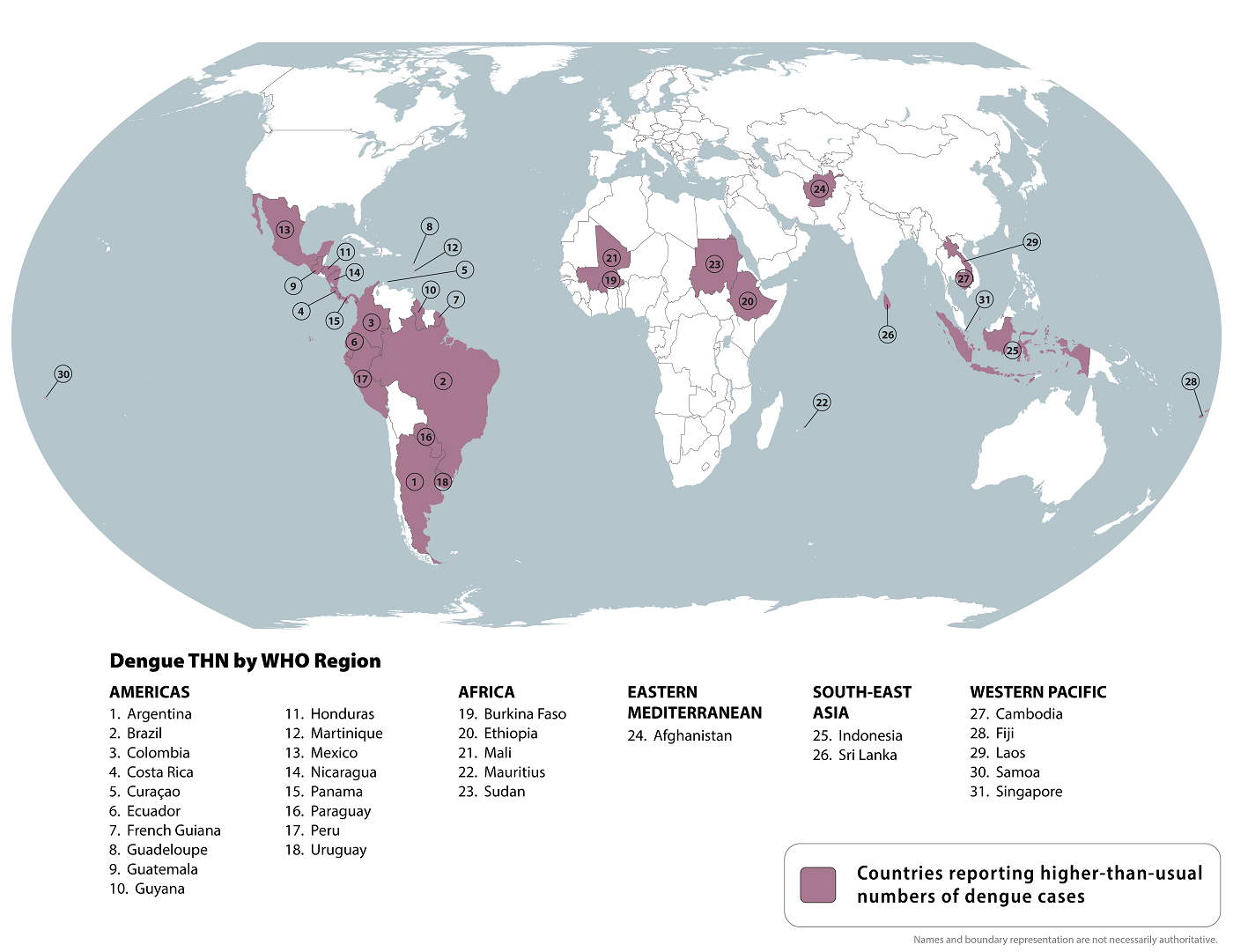
The countries listed below are reporting higher than usual numbers of cases, or CDC has identified a higher-than-expected number of dengue cases among U.S. travelers returning from those countries. Travelers visiting these countries may be at increased risk:
- Bangladesh
- Bolivia
- Cambodia
- Colombia
- Costa Rica
- Cuba
- Ecuador
- Kenya
- Malaysia
- Maldives
- Marshall Islands
- Panama
- Sri Lanka
- Vanuatu
- Vietnam
Countries are added to this list based on publicly available data. Not all countries with dengue transmission are on this list. Travelers should practice prevention measures for all areas with a risk of dengue.
Traveler Information
Clinician Information
- Dengue in CDC Yellow Book
- Dengue information for health care professionals
Dengue is a disease caused by a virus spread through mosquito bites. The disease can take up to 2 weeks to develop with illness generally lasting less than a week.
Symptoms from dengue include fever, headache, nausea, vomiting, rash, muscle and joint pain, and minor bleeding.
Dengue can become severe within a few hours. Severe dengue is a medical emergency, usually requiring hospitalization.
In severe cases, health effects can include hemorrhage (uncontrolled bleeding), shock (seriously low blood pressure), organ failure, and death.