Diphtheria in Sub-Saharan Africa
Key points
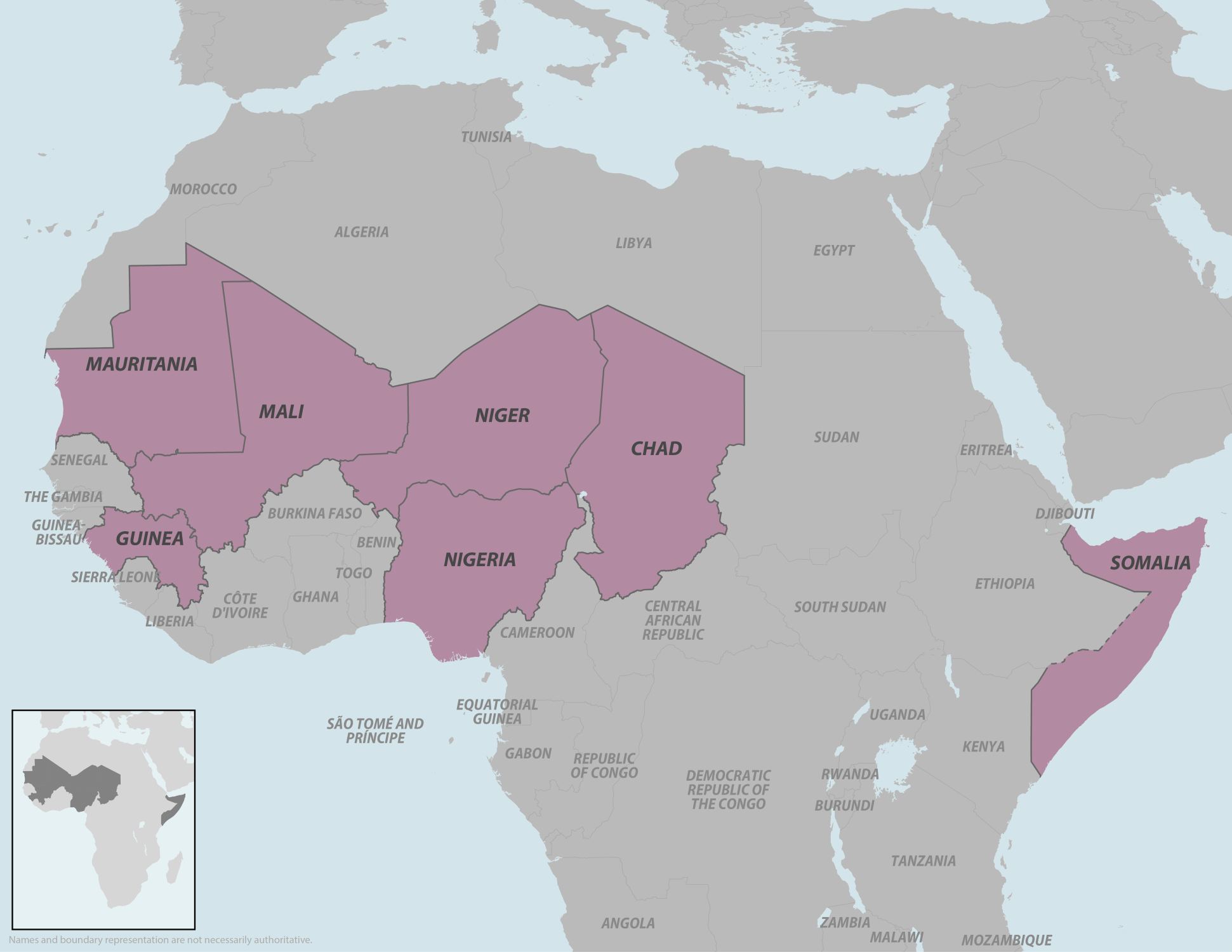
- There are outbreaks of diphtheria in the following countries (see map):
- Chad
- Guinea
- Niger
- Nigeria
- Mali
- Mauritania
- Senegal
- Somalia
- Vaccination against diphtheria is essential to protect against the disease.
- If you plan to travel to any of these countries:
- Talk to your healthcare provider at least 1 month before travel to discuss your risk for diphtheria and make sure you are up to date with your diphtheria vaccines, including, for adults, a Td or Tdap booster in the last 10 years.
- Avoid contact with people with symptoms of diphtheria, such as fever, sore throat, difficulty swallowing, change in voice, or shortness of breath.
- If you must be around a person with symptoms consistent with respiratory diphtheria, wear a respirator or well-fitting mask to protect yourself. The sick person should also wear a respirator or well-fitting mask, if they can tolerate it.
- Avoid touching other people’s wounds.
- Cover your nose and mouth with a tissue when you cough or sneeze.
- Wash your hands often with soap and water or use an alcohol-based hand sanitizer that contains at least 60% alcohol.
- If you experience symptoms during or after returning from travel, seek medical care immediately. Call ahead before going to a healthcare facility and tell them about your symptoms and travel.
- If you become sick after possible exposure to someone with diphtheria, it is important to start treatment as soon as possible.
- If you have close contact with an infected person, seek medical care as soon as possible. Your doctor may give you preventative antibiotics or recommend vaccination to prevent illness.
For Clinicians
- Close contacts of diphtheria cases are recommended to receive a Td or Tdap booster if their last diphtheria-containing vaccine was more than 5 years prior.
- If travelers are at higher risk for being in close contact with diphtheria cases based on their planned travel locations or activities, or for serious illness due to lack of timely access to health care, antibiotics, or diphtheria antitoxin (DAT), they should talk to their healthcare provider about a Td or Tdap booster.
Traveler Information
- Health Information for Travelers to Chad
- Health Information for Travelers to Guinea
- Health Information for Travelers to Niger
- Health Information for Travelers to Nigeria
- Health Information for Travelers to Mali
- Health Information for Travelers to Mauritania
- Health Information for Travelers to Senegal
- Health Information for Travelers to Somalia
- Diphtheria Homepage
- Diphtheria Vaccine Information
Clinician Information
Diphtheria is a serious illness caused by toxins produced by strains of Corynebacterium diphtheriae bacteria.
These toxin-producing bacteria most commonly infect the upper respiratory tract (respiratory diphtheria) and can be spread through respiratory droplets (coughing or sneezing). The bacteria may also infect the skin (cutaneous diphtheria) and other body parts, which can be spread through touching the open sores or ulcers of people sick with diphtheria.
Symptoms of respiratory diphtheria include mild fever, pseudomembrane in the nose or throat, sore throat, swollen glands in the neck, and weakness. This type of diphtheria is the most severe, and even with treatment, is fatal in 1 in 10 patients. Without treatment, up to half of patients can die from the disease.
Symptoms of cutaneous diphtheria can include an open sore or ulcer with a clear edge, pain, a rash with scales or peeling skin, redness, and swelling. These infections do not result in severe disease.
It is important to start treatment as soon as possible after a possible exposure to diphtheria, especially if the exposed person is unvaccinated or not fully vaccinated against diphtheria.
CDC recommends that everyone 2 months and older get vaccinated to protect against diphtheria.