Meningococcal Disease in the Democratic Republic of the Congo
Key points
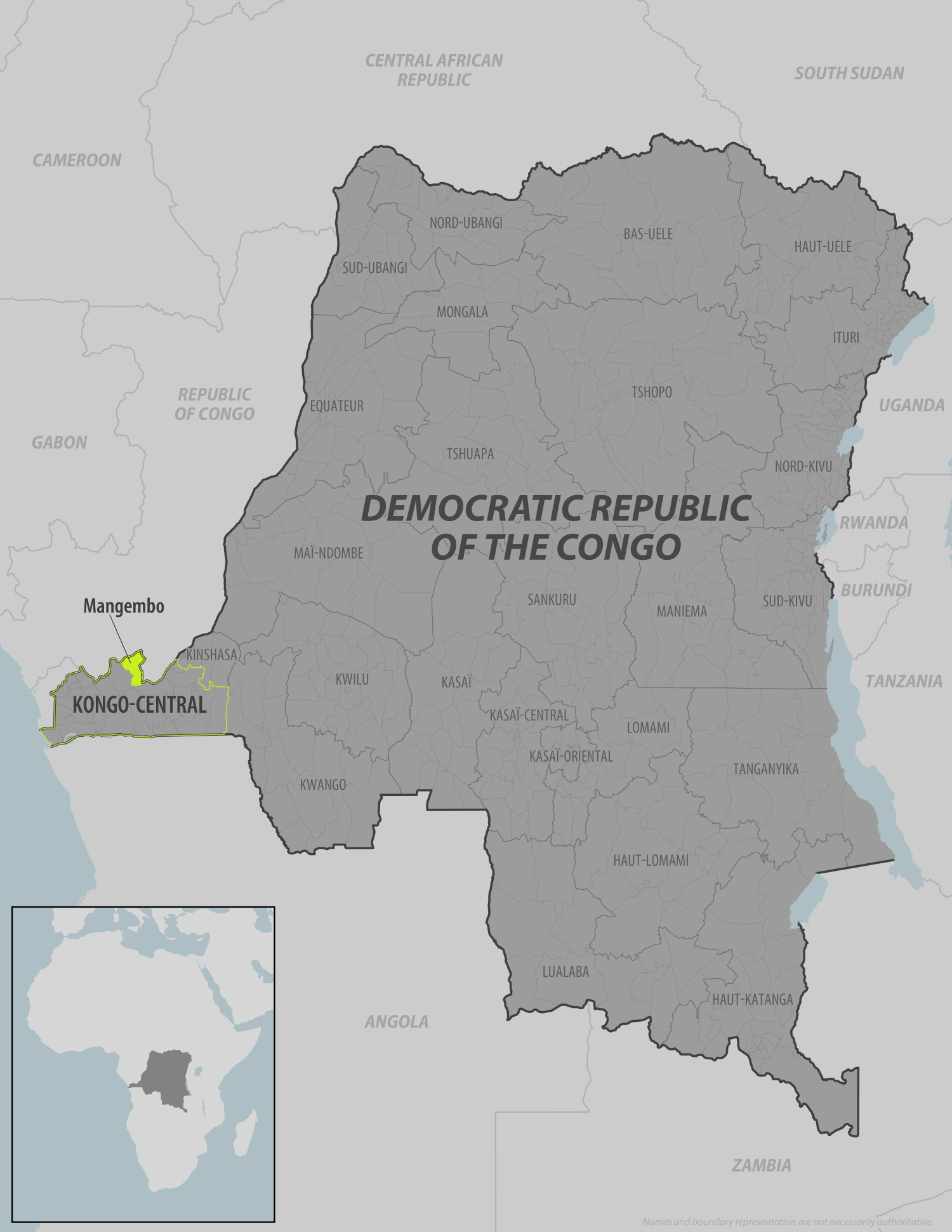
- There is an outbreak of meningococcal disease in the Mangembo Health Zone of Kongo Central Province (see map).
- This outbreak is caused by Neisseria meningitidis (serogroup W), which is spread through respiratory secretions or saliva.
- The best way to protect yourself is to get meningococcal vaccination.
- Seek medical care right away if you develop fever, headache, stiff neck, confusion, nausea, increased sensitivity to light (also called photophobia), vomiting, or a dark purple rash during or after travel.
Traveler Information
- Health Information for Travelers to the Democratic Republic of the Congo
- CDC Meningococcal Disease Website
- Meningococcal Vaccination
Clinician Information
- Meningococcal Disease in the CDC Yellow Book (Health Information for International Travel)
- Meningococcal Vaccines
Meningococcal disease is a serious bacterial infection (caused by Neisseria meningitidis) that leads to bloodstream infections or meningitis (inflammation or swelling of the protective lining of the brain and spinal cord). Both forms of the disease are serious and can be deadly in a matter of hours.
Generally, it takes close or lengthy contact to spread the bacteria. People spread these bacteria to others by sharing respiratory and throat secretions (saliva or spit).
The most common symptoms of meningococcal disease include fever, headache, and stiff neck. Additional symptoms may include altered mental status (confusion), nausea, photophobia (eyes being more sensitive to light), vomiting, and a dark purple rash.
The best way to prevent meningococcal disease is to get vaccinated. CDC recommends meningococcal vaccination for people who are at increased risk during an outbreak. People who have been exposed to someone with meningococcal disease may be recommended to take preventive antibiotics.
Even with antibiotic treatment, 10 to 15 in 100 people with meningococcal disease will die from their infection. One in 5 survivors will have long-term disabilities.